I like to write about movies of all sorts: old and new, good and bad, mainstream and obscure, local and foreign. Warning: some articles in this blog may be offensive to fans of James Bond, Jean-Luc Godard, and Andrei Tarkovsky's Solaris.
Pageviews from the past week
Saturday, 17 December 2016
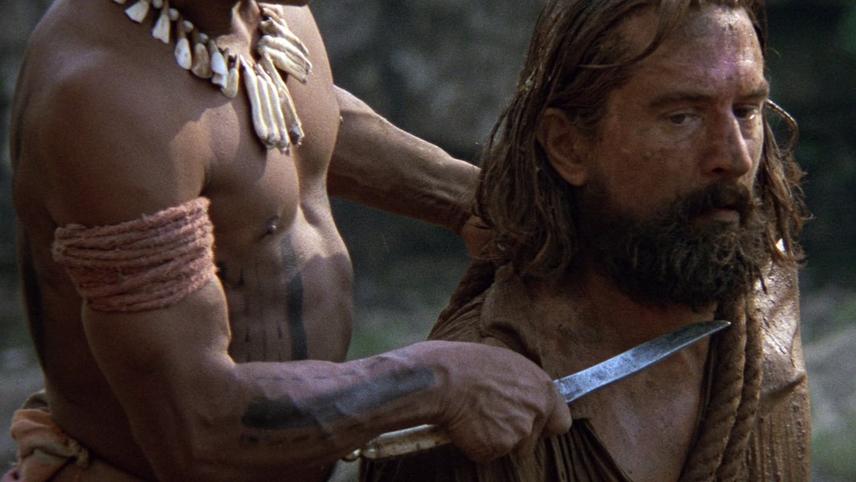
Twelve Wars to Christmas: Little Big Man (American Indian War)
Little Big Man is an odd movie, and although it is often labelled as a western classic, not really that great. It has a fairly decent first act that starts to lose direction in the middle, before building to an overly padded climax. It is also a film that has not aged well. It's hardly a progressive film when it comes to gender representation. The closest thing the film has to a strong female lead is Caroline (Carole Androsky), who is an expert gunslinger but is treated as extremely unsympathetic, what with her barrage of racist remarks and abandoning her younger brother (twice). Most of the few other women who appear only seem to understand marriage, having children, and submitting to a husband and display few, if any, strengths of their own. The fact that protagonist Jack Crabb (Dustin Hoffman) speaks multiple times of women as property doesn't make it any easier.
The film's use of the camp gay stereotype also brings out a lot of unfortunate implications. There is a character identified as Little Horse (Robert Little Star) who the narrator describes as "something for which there is no English word," but the meaning is obvious to the viewer. Little Horse is initially described as a man who is "feminine" because he prefers to spend time at home with the women instead of being a warrior (the narration claims that this preference is okay, but the gender implications are still there). Later on, he seemingly grows up to become a drag queen, but this was also a film made in 1970. It doesn't take a genius to realize the filmmakers intended to invoke gay stereotypes.
When Little Big Man was released in 1970, it may have made a larger impact to audiences of the time, but in 2016 this film is extremely dated in many ways and not a great depiction of the west, although it may have influenced later, arguably more successful, attempts to change the image of Native Americans in Hollywood.Still, the film does make a few statements of note about the American Indian Wars through the adventures of its protagonist. The story is framed as a 121-year-old man, supposedly the lone survivor of Custer's Last Stand, recounting his experiences in the war on both sides, with clues placed in the story that seem to suggest he is either lying or at least exaggerating facts for dramatic effect.
In the film's opening, we see Crabb and Caroline being found by a Native American warrior, and it is Caroline who is shown to be less civilized in her tendency to constantly assume the worst. When they are seen by one native, she immediately assumes that they are going to be killed, and when taken to camp assumes she is going to be raped. She then proceeds to ride off in the night while leaving behind her own brother, without any obvious practical reason for doing so. Said brother goes on to immediately be accepted into Cheyenne, which leads to one peculiar motif.
According to Crabb, the Cheyenne refer to themselves as "human beings," and this ends up being exactly what they call each other throughout the movie. I don't think I need to go into detail about what this means, but it does create an interesting contrast when he is found by the U.S. Calvalry. After spending most of his life with the Cheyenne and coming to see Old Lodge Skins (Chief Dan George) as a mentor, he gets brought to the fairly abusive Reverent Silas Pendrake for "moral" education. This "morality" consists of his wife Louise (Faye Dunaway) forcing her religious beliefs onto him, and claiming that it is superior to the "heathen" ways of the Native Americans.
This idea continues through the next few mentors that Crabb encounters. First Louise turns out to be a liar, especially when he sees her having an affair with a local shopkeeper. He then goes on to join with a swindler, who tries to encourage him to cheat customers, and finally Caroline, who turns him into a ruthless gunslinger and then abandons him as soon as he quits. All of these characters occur in the "civilized" world, while the Cheyenne who consistently refer to each other as "human beings" are more accepting towards Crabb. It shows the idea that the western world may not have been as "civillized" as they would like to think.
Friday, 16 December 2016
Twelve Wars to Christmas: The General (American Civil War)
In its day, Buster Keaton's 1926 comedy The General was a huge flop, but it has since gone on to become retroactively seen as a classic. Some would argue that it is one of Keaton's best films, and it has certainly become one of his best known to modern audiences. The film was loosely inspired by the Great Locomotive Chase of 1862, an incident during the American Civil War in which Union forces attempted to hijack a train and take it northward while sabotaging the tracks to cut off supply routes for the Confederate Army, only to be pursued and eventually captured.
Keaton's film is likely not an accurate recreation of what happened historically. Instead, he uses the story as a means to bring out his iconic brand of slapstick humor. It was not an easy movie to film either. In order to film the moving trains, cameras had to be placed on parallel tracks and move alongside the various locomotives used throughout the film. That said, Keaton does have some things to say about the American Civil War amidst the various stunts, accidents, and misunderstands of his bumbling protagonist Johnny Clay.
The General makes the clear and deliberate choice of avoiding any reference to the politics of the American Civil War. The film is shown from the perspective of the Confederacy, but for the most part the details of why anyone is fighting are left out. All that is established is that there are two factions: the North and the South, and both hate each other. Instead of establishing any background on the war, Keaton begins by placing the viewer in an unidentified southern town where he first introduces Clay as an everyman protagonist.
We learn that he is a fairly ordinary person who has "two loves" in his life, his engine (the titular General) and Annabelle Lee (Marion Mack) to whom he is presumably engaged. We see that Keaton is living what for the time may have been a fairly normal life, with him going to visit Annabelle's house and knocking on her door, unaware that she is standing right behind him. This brief but notable focus on everyday life is extremely important, because not long after we learn that the Civil War has begun. No mention is made of the politics or why the war is happening.
In fact, we only find out by word of mouth, one man passing the story on to our heroes (presumably after reading about it in a newspaper). Instead of focusing directly on the war itself, Keaton instead opts to place the emphasis on how it affects the people of this particular town, especially Johnny Clay and Annabelle Lee. Both are treated throughout the movie as civilians caught in the crossfire of a war they barely understand (only at the end does Keaton become a soldier, and even then not a very good one).
This lack of understanding comes to the forefront early on when we see the mentality that comes with the outbreak of the war. The people in town clearly have never served in the military before, and a sentiment quickly develops that the men have to enlist and fight for the south. Annabelle's father and brother immediately agree to this, and quickly press Clay into following. But Clay becomes so excited to enlist he actively cuts in line and almost walks right past the recruiting booth by accident. When they refuse to enlist him (under the assumption that Clay would be more useful as an engineer than as a soldier), he makes multiple repeated efforts which include a "disguise" which involves tipping his hat sideways and stealing other people's recruitment slips.
After all that, Clay fails to enlist and even though he had no say in the matter, finds his life shattered when he is immediately branded a coward. Annabelle's father later manages to twist the facts to make it sound like Clay was too scared to enlist (and describes being reluctant to go to war as a "disgrace"). This is unfortunately something that tends to happen when people who have never seen war up close get too patriotic. The same thing happened years later during World War I (and could easily have been witnessed by Keaton himself), another era in which men were peer pressured into going to war and faced with public shaming if they failed to do so.
This one action seemingly destroys the ideal life Clay had shown in the movie's opening. Annabelle, having been told by her father that Clay is a coward, refuses to speak to him, likely ending their relationship for now. The war has only just started and already Clay is beginning to feel its effects without being anywhere near any of the battlefields. His feelings are visually conveyed in one of the film's most iconic shots, in which Buster Keaton sits on the wheels of a steam locomotive while an engineer fails to notice. Keaton gets moved up and down in one direction, through a tunnel, showing the lack of control he has over what is going on.
As the movie progresses to some time later, we see that the Civil War has started to have a much greater effect on the South. Annabelle's brother appears to have been wounded, and his arm is in a sling. Her father has apparently faced even worse injuries, enough that she is taking a train to go see him. At this point, she is really more or less an ordinary person just trying to cope with a difficult situation, another victim of the war who ends up getting mixed up further by being in the wrong place at the wrong time. One small act of inconvenient timing leads to Annabelle being abducted by Union Soldiers and dragged into northern territory. Clay is not even aware of this happening, all he understands is that his train has been stolen and he needs to get it back.
Clay initially takes on this role purely as an engineer. The Union soldiers manage to sabotage the telegraph lines, so the only way to call for backup is to drive to the nearest outpost and alert the soldiers there. Even then, in all the commotion, Clay accidentally forgets to lock the transport car to his engine and ends up pursing the Union on his own. He does this entirely by accident and does not realize what has been going on until it is too late to turn back. Here, Clay finds himself alone, stuck in the middle of a war and not really on either side. All he is concerned about is reclaiming The General, and he lacks any real interest in what is actually going on.
Unfortunately, he also has to adapt to the difficult circumstances brought out by the Union soldiers, who routinely sabotage the tracks and pull a variety of tricks to try and get ahead. Clay has to resort to improvisation, relying only on whatever he can find, and even this is not always enough. We see that he quickly starts to run low on firewood and breaks his ax in the process. He does manage to find a canon, but it turns out not to be very effective. The first shot only launches a ball into his cab, the second nearly takes out his train. The only reason he is even able to keep the Union Army running is because they mistakenly assume that he is driving a train full of Confederate soldiers.
Clay's status as a civillian comes up later on, when in his pursuit, he witnesses a skirmish between the Union and Confederate armies. The film mixes various shots of soldiers on both sides along with Clay struggling to keep his head down while moving forward. In all the chaos, nobody seems to notice him, but he is able to witness the destruction that occurred in the war, if very briefly and from a (relatively) safe vantage point. All Clay wanted was his engine back, but now he is stuck in the middle of a war which he has no control over.
Eventually, Clay is finally forced to stop, but by this point there is little he can do. He has unwittingly followed the soldiers into Union territory, and now finds himself lost and alone. It is entirely by accident that Keaton manages to obtain information. He begins the sequence stopping at the first building he sees, where he tries to quickly obtain food. It is only coincidence that he ends up accidentally wandering into a military conference. The only reason he even learns Annabelle has been taken is because he manages to briefly glimpse her through a rip in the tablecloth, but during the conversation, he is mainly trying to avoid being caught.
Clay does manage to rescue Annabelle, but not out of any sense of patriotic duty. He does it because, as was established in the beginning of the film, he cares for her. While Clay did overhear information that would be useful to the south, his main goal is really to get out of Union Territory alive, and to do so he has to make a large gamble. The only viable way of quickly getting out is to sneak into a military trainyard and steal back the General, which is a long shot at best. One mistake could mean the difference between life and death in his case.
When Clay finally returns, he is almost shot after a sentry mistakes him for a Union soldier, and quickly has to change into a southern uniform. When he brings information to the people at home, it ends up being chaotic once again. Clay is quickly lost amidst the chaos of the battle. First he is just trying to focus on not getting run over in the street as cavalry charge into position. When he actually enters, his only weapon is a sword that fails to stay together, and spends much of it unsure of what to do. Every time he draws his sword, the blade falls off, making it largely useless except for one accidental victory (it manages to take out an enemy sniper).
Clay tries to co-ordinate some of the soldiers, but this proves ineffective as he keeps watching them die. In the end, it is nothing more than luck that gets him through his mess, and his accidental heroics end up getting him a promotion to lieutenant. Still, this hardly makes Clay's life any easier. Although he is able to win Annabelle back, he also finds himself struggling with new responsibilities and problems he was never prepared to handle. This is humorously shown by the film's final moments, when Clay and Annabelle try to have a private moment on the wheels of an engine (contrasting the earlier scene where Clay was alone in the same position) only to keep getting interrupted by the presence of a large garrison of soldiers.
In the end, Clay's life will never be the same. Even if things have ultimately worked out, he has been affected by the war just as everyone else has or will be, and he will continue to feel its effects (this is especially likely when one considers that the South lost the war, which could easily have a negative impact on Clay's personal life). The General is really a story about how ordinary people are affected when they are drawn into a war they do not understand, and how it can permanently change their lives.
Thursday, 15 December 2016
Thursday Movie Picks: Video/Arcade/Board Game Movies
This week, the theme for Wanderer's Thursday Movie Picks is video game/arcade/board game movies. This is an appropriate topic for me to discuss because, as you've no doubt seen reading my blog, I've been able to branch out into gaming. I've even written a bunch of articles on the subject of video games. Naturally, it seems to make sense to try and bring together the two things together. That, and I don't know a lot of board game movies.
eXistenZ (1993)
David Cronenberg's low-budget precursor to Inception isn't based on a specific game. What it does instead is focus on the potential consequences of full-scale immersion into a fictional world. The main theme running through the film is the question of just what is reality. Over the course of the film, we experience different levels of immersion, but in the end, it becomes very difficult to tell what is real and what is part of the game. In the end, the viewer's initial understanding of reality is brought into question, and we are left with just what does it mean to be real.
Lara Croft: Tomb Raider (2003)
I couldn't do a list like this without addressing what may just be one of the most iconic female protagonists in gaming (right now the only real competition Lara has for that title is the equally popular Samus Aran of Metroid). After making her debut in 1996, Lara has starred in sixteen video games (the most recent having just come out), and that is not even counting the novels, comics, animated web series, and movies which have placed her in a leading role. It was a large gamble placing a then-unknown Angelina Jolie in a role with such a reputation, but it paid off when this film launched her reputation as an action star.
Final Fantasy: The Spirits Within (2005)
Okay, so I know a lot of people were upset because this one didn't have much to do with the video game franchise it was named after. In its defense, the main Final Fantasy series comprises fifteen games that literally have nothing in common. Seriously, fifteen games lacking any continuing story or returning characters (although some of the individual installments have received their own sequels, which only makes it more confusing). The title is also an extreme misnomer anyway, seeing as the constant output of games makes it clear this is not the final fantasy and several installments have been closer to science fiction than fantasy. So I'm not entirely sure what the deal is with this franchise. Point is, to actually make the movie relate to what the games would be impossible seeing as none of the main installments have anything to do with each other. As for the movie itself, I personally enjoyed it. Some of the plot is a tad contrived but there is some really good animation and a fairly interesting world to explore.
Twelve Wars to Christmas: Master and Commander: The Far Side of the World (Napoleonic Era)
The life of a sailor is a challenging one, and the navy can be a difficult place. Naval warfare is very different from combat on land or by air, and arguably in some ways more challenging. In the old days, it was a team effort, requiring hundreds of people to co-ordinate together. One would have to first locate and identify the enemy, provide a suitable means of approach, and then organize the crew when attacking; a goal made even harder by the introduction of U-boats during World War I. But as long as there have been boats, they have been used for war.
Master and Commander: the Far Side of the World offers a look into the everyday life of men in the navy. The film opens with a title card identifying the year as 1805, with Napoleon Bonaparte's empire was quickly expanding. He had already conquered most of Europe, and not unsurprisingly there would have been a strong desire to see that he didn't get any further. Napoleon himself does not appear in the film, and the story focuses instead on one engagement which will ultimately be a small part of the overall war. Most of the film is set entirely on one ship, a member of the British fleet trying to stop an enemy vessel from entering the Pacific.
As the title card notes "oceans are now battlefields." It is true that this is not the first time naval warfare has been used. The Roman Empire had their share of warships, as did the Greeks and Egyptians. In the dark ages the Vikings would rely heavily on nautical strategies when attacking settlements. The Renaissance also saw its share of ship-based combat. But the title card is referring to naval combat never being on a scale as large as what it was by Napoleon's day. It goes with the old idea that war is constantly and relentlessly evolving, a theme that becomes an important part of Master and Commander: The Far Side of the World.
The enemy ship, the Arhceron, functions as the primary illustration of war's never-ending evolution. By the start of the film, only two years have passed and already Napoleon's campaign has been intense, but things get much worse when they realize what they are dealing with. Archeron turns out to be a new type of warship, one which is built to move faster, hold more guns, and take more damage. Presumably, this was not accidental, but likely an intentional design made to give the French a greater advantage because of the resistance put up by the English so far. This is itself one of the main reasons why war has changed so much. As the conflict progresses, both sides become determined to gain an advantage over the each other.
One of the best ways to do that is to come up with new weapons more powerful than those of the enemy. This of course often leads to the opposing side trying to find ways to counter those new weapons. This becomes a major part of the film. The crew becomes worried about Archeron reaching the Pacific because they are concerned about the implications of more ships like it being mass-produced. Likewise, it is also through new strategies that Jack Aubrey (Russell Crowe) is finally able to capture it. He acknowledges this idea towards the end of the film, when he comments on the military advantages that can come with studying nature.
But this is only on one of many themes explored in the movie. Much of the film revolves around everyday life aboard the ship. The battles are more or less routine (it's likely that there would have been drills to ensure the crew got to the right places) but also chaotic and unpredictable. From a distance, the Surprise takes a huge amount of damage and a large portion of the crew is lost, something made more difficult by the inability to predict exactly where enemy fire will strike. They barely have any time to react (the only warning they even get is a brief flash in the middle of a dense fog). It presents a very stressful situation for the Dr. Steven Maturin (Paul Bettany), who is struggling to look after the various wounded sailors.
Still, the battles only make up small portions of the film, with a lot of the story dealing with what happens in between. These men have been at sea likely for months on end, presumably far away from home and cut off from any real governing body, the rival crew being the only other people around, and conditions are not exactly the greatest. In those days, ships would have been extremely crowded especially in the lower decks, and offered next to no privacy. Not only was it very easy for disease to spread, but long periods at sea required conservation of fresh water, meaning that there could be long stretches of time before anyone had a chance to take a bath. And as if that wasn't enough, this was also before any workplace safety laws were in effect, meaning it was very easy for accidents to occur.
Understandably, this can have some particular psychological ramifications on people forced to live in these conditions for long periods of time, especially when many of them are likely uneducated and lack a clear understanding of what they are dealing with. Many of the issues that are dealt with are more or less general workplace frustrations. On several occasions we see the cooks in the galley struggling to prepare food while getting increasingly annoyed with impatient crewmen. There is also a brief sub-plot where some of the superstitious crew begin to think that one of the officers is the reason for a string of bad luck (eventually driving him to suicide).
One of the most prominent moments of this stress is with Aubrey himself. Early on, he is established to be a well-respected commander with a fairly successful career, but the crew starts to worry when he becomes too determined in his mission. Aubrey is a confident man, and even after being defeated twice by Archeron, still tries to pursue it. This determination gradually begins to impact his judgement. He intentionally refuses to stop and resupply (and denies a promise he made to Maturin) because he thinks he can still catch the ship. Aubrey is almost starting to turn into a Captain Ahab-like character. Like Ahab in Moby Dick, Aubrey is slowly becoming more obsessed with catching his opponent, the enemy ship in place of a white whale, and he is dangerously close to dragging the crew to their doom.
During this portion, Maturin acts as a moral center and the voice of reason. He repeatedly tries to plead with Aubrey to no avail. Maturin himself shows little interest in the military aspects of the mission, being more interested in observing the wildlife of the Galapagos Islands and the well-being of the crew. This shown in one scene where he displays amazement upon seeing an albatross, trying to observe it, an act which is contrasted by another crewman who only sees it as food and attempts to shoot it. This act gets Maturin injured, and it is only this accident that finally manages to snap Aubrey out of his Ahab-like state. Unlike Captain Ahab, Aubrey is eventually able to recognize his stubbornness upon watching an old friend face a life-threatening injury.
This leads to a portion of the film where Aubrey begins to change for the better. He shows genuine concern for Maturin and even assists in his surgery. Although he initially denies it (he tells Maturin "I needed to stretch my legs"), Maturin is shocked when he is not immediately trying to pursue Archeron. Instead, he gives the crew a break and plans to go home after a few days. This is an important detail, as the chance to improve morale allows him to think more clearly. In fact, the only reason they continue to pursue Archeron at all is because Maturin accidentally finds it docked on the other side of the same island.
Until now, Aubrey has only focused on military matters, but his decision to let Maturin explore ends up being rewarded; it is after being shown a stick insect and learning how it camouflages itself that a new strategy presents itself. In the first act of the film, Aubrey has relied primarily on a brute force approach, namely one that involves attempting to locate the ship and fire everything they have. It is only after observing camouflage in nature that he is able to find an alternative; one that involves outwitting the enemy ship rather than attacking directly. They do this by disguising themselves as a whaling crew, and making the ship appear damaged and vulnerable before striking at the enemy.
Still, the final battle ultimately proves to be a costly one. A large portion of the crew is killed in the process, with the French suffering heavy casualties, and in the end, this is only one battle of a much larger war. The final scene emphasizes this, and that what we are seeing is only a temporary victory. It turns out that the enemy Doctor was an impostor, leaving open the possibility that the "captain" was just a corpse dressed in his clothes and that there is a trap involved. In short, they may have won the battle, but that does not mean they will win the war. All we are seeing here is a small victory in a war that will continue for ten years.
Wednesday, 14 December 2016
Twelve Wars to Christmas: The Mission (Colonialism)
In researching this article, I was surprised at how few movies there actually were on the subject of colonialism. Even the American Revolution has rarely been shown on screen, and most of what I could find was old John Wayne movies from the 1950's which likely glorified colonialism and the slaughter of Native Americans. But of the few that have been made, there is one that stands out. Roland Joffé's the mission is on the surface a critique of Spanish and Portugese Imperialism, with a particular emphasis on the consequences of the Treaty of Madrid in 1750.
It is also a story about many other things: political intrigue, humanity, indifference, racism, redemption, the complex politics and agendas that allow atrocities to happen, the futility of religion, the futility of war, the cost of human greed, and the cost of human kindness. It is a complex film on many levels, with so many themes to explore that go beyond the its famous waterfall sequences. It is a story about moral uncertainty, and asks how far one is willing to go for what they believe. From the very beginning of the film, it is a story of hope and hopelessness, and ultimately a question of whether love truly conquers all.
The film opens with a framing device, Cardinal Altamirano (Ray McNally) dictating a letter to the King of Spain in which he relates the events depicted in the film. This one sequence of narration quickly sets up everything that is to follow. We are introduced to the three main parties who come into conflict: the Catholic Church, the Spanish, and the Portuguese. All three have their own agendas, with a concern for power and control, and none are ideal. Altamirano describes the impact the Church has had on the local population, making the statement that they are human beings and emphasizing it through a statement that they have displayed a passion for music.
This brief statement sets up one of the most important motifs in the film; the association of music with compassion. Whether it is through the diegesis or through Ennio Morricone's remarkable score, the film constantly uses music as a metaphor for humanity, and draws a particular association with the Indigenous people. When the narrative begins, we see a Priest tied to a cross by the local natives and sent over a waterfall, likely because they were not happy about a man they never saw before trying to force his religious beliefs on them.
But when Gabriel first climbs the waterfall, it is playing his oboe that draws their attention and begins to earn their respect (one of the natives breaks it, but another man immediately recovers the pieces and seems to apologize). Later on, it is the presentation of a child's singing that Father Gabriel (Jeremy Irons) uses in a (failed) effort to convince Spanish governor Don Cabeza (Chuck Low) that the natives are human. At the very end, in a desperate effort to uphold his beliefs, Gabriel leads a choir towards the attacking Portuguese army.
It is also in this first act, when Gabriel climbs a waterfall (something that will become a recurring motif throughout) and begins constructing his mission, that we are introduced to the film's other main character, Rodrigo Mendoza (Robert De Niro). When he is first seen, he is (not unjustifiably) treated as someone to be despised. A first time viewer could easily be forgiven for being taken off-guard by the character arc he eventually faces. Mendoza's first scene depicts him capturing and trapping natives with the intent of selling them as slaves, much to Gabriel's anger.
He then travels to a Spanish Colony where he sells his kidnapped slaves to Cabeza for money, an act which nobody seems to question, but there are more layers beginning to emerge as learn more about his life. It turns out Mendoza is more complex than he initially appears. We see him meeting with his brother Felipe (Aidan Quinn), with whom he appears to be very close, It is only through a crime of passion, and with the death of a white man, that Mendoza is able to realize the kind of man he has been. It is here that he once again meets Gabriel, and begins to turn himself around. Mendoza begins his character arc only facing the guilt of his brother's death, but this will set in motion a complex arc that ultimately sees a man we expected to despise but come to respect.
Mendoza agrees to join Gabriel, and undergoes a "penance" which makes for one of the film's most famous sequences. The guilt that Mendoza feels is symbolized through his climb up the waterfall, while tied to a net filled with armor, swords, weapons, and other heavy objects that serve as reminders of his former life. Accepting his own guilt proves to be very difficult, just as the challenge he faces on the waterfall. On several occasions, Gabriel is approached by Father John Fielding (Liam Neeson) who tries to have the net removed, but Gabriel states that it can only happen when Mendoza is ready. He even has one opportunity to lose the net, when it gets caught and Fielding cuts the rope, but Mendoza only climbs back down and reattaches himself.
It is only at the top that Mendoza is finally released, but ironically is the way it presents itself. Mendoza's freedom comes not from Gabriel or through any sense of faith, but from the very people he once enslaved. Upon reaching the end of the climb, one of the natives cuts the rope and throws the net over a waterfall. This small act marks the beginning of Mendoza's redemption. The act of tossing the net into the water below represents his overcoming his guilt. Not forgetting it, what has happened happened (and it later resurfaces when a native boy recovers Mendoza's sword, presumably from the net) but being able to recognize that he can still change. In the end, it never is any sense of religious faith that changes Mendoza, but his experiences living among the natives. Even when Mendoza becomes a Jesuit himself, he never fits in perfectly, often disagreeing with Gabriel and later finding it necessary to resign.
Unfortunately, there are other problems going on. We also see the complex politics that have been going on. There are three parties: the Spanish, the Portuguese, and the Catholic Church, all under pressure from political agendas enforced in Europe. The Portuguese are interested in expanding their territory, and the Spanish are interested in profit. No consideration is made toward the natives who live in the area. If anything, there seems to be a strong interest in taking them as slaves, as both Portugal and Spain have no problem with owning slaves (the only difference being that one country does it openly while the other denies it).
It is here that the themes of humanity really start to present themselves. Gabriel and his fellow Jesuits are called to a court where Altamirano is forced to represent the Church, with Cabeza serving to represent the political and financial interests of Spain and Portugal. He is shown to be ruthless and biased in his efforts, with only profit as a major concern. When Gabriel tries to use a child's singing as proof of the natives' humanity, Cabeza dismisses it, calling him "a child of the jungle. Nothing more." He speaks of nothing but subduing the natives. His arguments range from partial information to outright lying, and ultimately uses Mendoza's attempt to call him out as proof that the Jesuits are disorganized and incompetent.
This conflict eventually builds to the film's final act, when Altamiro is faced with the decision to close the missions in order to show the Church's authority. In doing so, he leaves the natives confused, and forces the Jesuits to choose between their loyalty to the Church and to the natives. It is here that Mendoza makes the difficult choice to take up arms, one motivated ironically by the recovery of his sword- a reminder of his previous life and the instrument which led to his brother's death, now being used to defend the very people he used to enslave.
At the moment, it is becoming more difficult to know the right course of action. Even Gabriel questions it with one line: "if might is right, then love has no place in this world." Gabriel tries to stick to his belief in peace, while the others agree to fight. As we see, several missions are being attacked by the Portuguese, probably taking the natives as slaves and forcing mothers away from their children. It is a desperate fight. The natives are hopelessly outnumbered and outgunned. Mendoza's tricks are a long shot at best. But even attempting to fight is better than surrendering.
When the army attacks, the Priests and Natives manage to put up a fight, but in the end they fail. It is here that Mendoza completes his character arc by dying for the same people he used to enslave, and ironically due to an act of kindness. The others are all killed. But in the end, what really has been accomplished? The Mission is destroyed, and the priests are all dead, but the Portuguese soldiers also faced heavy losses. What is left for the victors but ruins and the memories of those lost.
Cabeza seems to think it was a success. When asked if the massacre was necessary, he claims it was for a "legitimate cause." Cabeza is the only one who got anything out of this. A whole bunch of people were killed for one already rich plantation owner who found the shifting boundaries profitable. It is yet another instance of the unfortunate American tradition of killing entire groups of people to make a quick buck (something that had already occurred with explorers such as Christopher Columbus and Hernán Cortez; and would later show up again in the American Indian Wars). With little consideration for the native population.
In the end, the Church is only comparatively better than the other parties involved, but even it is far from a perfect solution to the problem. While Altamirano tries to find a reasonable solution and questions the ethics of his actions, he is ultimately pressured by other political powers to make a decision that supports the colonists. The mission is referred to several times as a "sanctuary..." specifically one which allows the indigenous population freedom from slave traders, but even this is not a perfect solution. The mission was only able to remain running under Spanish rule, and now that the Portuguese have taken over there is no legal means of protecting it.
The final moments of the film present an emotional reminder of everything that has happened. In this last scene, we see a handful of natives, children who have managed to survive the massacre and find themselves scavenging what is left. All that remains of what was once they had called home is a handful of broken objects left in the river. In keeping of their association with music, one of the children is seen taking a broken violin. Although its strings are not properly attached, he takes it as if it were a priceless treasure. The children climb into a canoe, trying to find a new place to call home and facing an uncertain future in the wake of colonial oppression.
Tuesday, 13 December 2016
Twelve Wars to Christmas: Gladiator (Ancient Warfare)
Of all the great civilizations that developed in the Ancient World, few have captured the imagination like Ancient Rome. Beginning in what is now the capital of Italy, Rome would build one of the most powerful armies in the world (at least by the standards of the era) and conquer much of Europe, Asia, and Africa (they only failed to take North and South America because they did not realize those continents existed). They were not the first conquerors, nor would they be the last. But historically they were the most successful.
The Roman Empire would rule most of the world for over a thousand years, longer than any conqueror before or since. Over the years, they would expand continuously and faced a number of worthy opponents, some of the most famous including Spartacus and Boudica, and as the Empire grew it faced a continued succession of wars with other nations. Between their military might (something made more powerful by their ability to study and adopt techniques used by their enemies) and their strategic power, Rome was largely uncontested.
Roman history is long and complex, and depending on a variety of factors they may be seen in very different perspectives ranging from brave warriors to ruthless tyrants. Nobody is entirely sure how Rome got started, the historical facts having been displaced by the myth of Romulus and Remus. Whatever happened, it grew into a powerful republic with the first Emperor traditionally identified as being Julius Caesar. Rome would become a powerful nation, presenting military and political strategies still studied today.
Of course, Rome was not without its darker side. Roman law explicitly stated that women have no rights. In fact, at least one of the Romans' many wars started because of their misogyny: Boudica was inspired to take up arms and drive the Romans out of England when they denied her and her daughters the right to her husband's land. The Romans also advocated slavery. The practice of buying and selling human beings as property was more or less a part of everyday life, especially for the rich who were generally expected to own at least a few. When Spartacus tried to end the practice, the Romans threw everything they could at him to stop his revolution.
But amidst the complex history and culture of Ancient Rome, there is one part that has stood out more than any other: the gladiatorial games. One of the most popular forms of entertainment in the era was to attend a Coliseum (hundreds were built throughout the Empire, but the most famous one is located in Rome and still partially intact) and watch a variety of differently scheduled fights. Normally these would have been between men, but the occasional female gladiator often proved to be a huge hit with crowds (probably a lot to do with the audience being largely male and women often being naked).
Ridley Scott's Gladiator is, to the best of my understanding, one of the most thoroughly researched and historically accurate interpretations of Rome. It is true that some liberties were taken in its portrayal of historical figures, namely Marcus Aurelius (Richard Harris) and Commodus (Joaquin Pheonix). While Maximus Decimus Meridius (Russel Crowe) is fictional, he does draw inspiration from several real people. These include the Roman athlete Narcissus, Commodus' historical murderer; and Spartacus, a gladiator who fought against Rome. But there are much deeper layers to the film beyond its remarkable attention to detail.
The story begins with a set of a series of title cards which present a very cold outlook on the Roman Empire at present. We jump right into the end of a Roman military campaign that we are told has been going on for twelve years, with the intent of wiping out the "barbarian" tribes of Germainia (a region in Europe at the time). During this time, we are introduced to Maximus, a well-intentioned general who fights for "the glory" of Rome. But just what does it mean to find "glory" in battle and to "serve Rome." This becomes one of many questions faced throughout the movie, especially when it becomes more difficult to answer with the political upheavals that occur later on.
From the beginning, there is a common sense that the Romans have seen a non-stop series of wars with the only change being in who they fight. Marcus Aurelius sums this up in his conversation with Maximus, when he claims to have only seen "four years of peace." This statement becomes all the more powerful when one recognizes his old age and the constant references to how he is "dying." Maximus himself is hardly optimistic. On the battlefield, he is treated as nothing more than a man doing his job. As a soldier, he follows orders, and his only goal is the hope that he will eventually return home.The beginning of the film depicts a massive battle scene with one of the Germainic tribes, but there is no glory to be found.
When the rival tribe emerges, they are shown to be ruthless and determined to see the Romans driven out, but at the same time, the Romans are not willing to negotiate or leave (fun fact: the war chants used by the Germainic army are taken from the 1964 film Zulu). Maximus is successful in defeating them, but at a cost. The battle is shown through a barrage of quick cuts that make it difficult to follow, a choice which gives a much clearer sense of what it would have been like to fight in such a war.
Realistically, it would have been hard to co-ordinate so many people when the battle is mainly fought in close quarters with swords. In order to survive, one would have to be extremely quick on their feet. On top of that, there is also another problem that could easily occur, and one which is depicted in the film. Amidst all the confusion, it can become harder to tell the difference between friends and enemies. In the middle of fighting, Maximus shows that even one of Rome's best generals is not immune to this problem when he almost stabs one of his lieutenants by mistake.
The battle is won, but there is little satisfaction to be found in their victory. Even Marcus Aurelius (who led the campaign) is sick and tired of the war. Maximus is more concerned with his own losses than any potential gains. He spends much of the first act worrying both about the soldiers who were killed and wounded in the battle; and his longing to return home to his family. The only person who shows any interest is Commodus, who only arrives in time to see the aftermath. When asked what he would like in return for his services, Maximus states that he would just like to return home.
Commodus is established early on to be interested mainly in power more than anything else. He is convinced that he will be proclaimed the new emperor, believing himself to be the only viable option. Marcus Aurelius alludes to this when he speaks to his daughter Lucilla (Connie Nielson), whom he claims would have made a great Caesar "if only you were born a man." This is also the exact reason why Marcus instead chooses Maximus to succeed him. He knows that he is less likely to be influenced by political agendas and will "return power to the people." It is only in the movie's final moments that this request is granted (in the form of Maximus giving it as his first and last wish before dying).
Commodus is not so keen on the idea, as it turns out. He decides he wants to make Rome great again and kills Marcus before he can make his decision public. From a political standpoint, it is a very smart move, without Marcus himself to voice his decision the soldiers are more likely to take Commodus' word over Maximus, and the limited medical knowledge of the era would have made it harder to identify that Marcus was strangled. He tries to have Maximus killed, but it turns out his experience with the local terrain allows him to easily outwit his captors and escape. Only when he returns home he discovers his family has been killed, presumably on Commodus' orders.
Scott takes an interesting approach to depicting Commodus' rise to power by drawing from, of all things, Leni Reifenstahl's Triumph of the Will. The first shots of Rome, especially the image of the eagle statues and the establishing shots, are taken straight from the infamous Nazi Propaganda film. This is an unusual approach, but it may be more fitting than one would expect. A lot of Nazi ideology was inspired by Ancient Rome. In addition to being an inspiration for the Nazis' political structure and military strategies, a lot of Roman imagery was re-appropriated for Nazi propaganda. This also gets alluded to through dialogue, where Commodus states that he needs to get rid of the senate and that Rome needs a strong leader who can do what needs to be done, not unlike the reasoning that got Hitler (or, for that matter, Donald Trump) elected.
Thus ends the first part of the film, and sets in motion what will become the primary focus: gladiatorial combat. Maximus is found by slave traders who take him as property and eventually sell him to a former gladiator. It is here that the film begins to move in some interesting directions especially when we arrive at the Coliseum in Rome which becomes the main setting. The focus moves from the Roman wars to the popular Roman entertainment of gladiatorial fights. Scott provides some heavy criticism of the practice, noting the peculiar fascination members of the audience have with watching the fights.
"Win the crowd" Maximus is told he must do to in order to win his freedom. The crowd is always treated as a collective. We know it is there but no individual members are ever emphasized. In some cases we can barely see it. This is not an unreasonable choice, given the recurring theme that the crowd represents Rome itself. It is through winning over the crowds that Maximus is finally able to face Commodus at the film's climax. But of the various fans who attend the games, the only one who gets any focus is Lucius, (Spencer Treat Clark) Lucilla's son who opens up one peculiar motif: the role of gladiator combat as a sport.
Lucius, along with many of the unnamed members of the crowd, appears to idolize gladiators, and Maximus in particular. He cheers him on, excitedly asks him questions about his trade, even pretending to be a gladiator for fun. In a way, he is really not that much different from the various children in the 1920's who eagerly attended baseball games where they cheered for Babe Ruth or Shoeless Joe. Although 1920's baseball provides a great example, one could also link it to modern viewers of sports who idolize particular players and cheer them on.
A lot of the film likes to emphasize the role of gladiator games as a sport. The bulk of the film takes place in an Coliseum, which is essentially the Roman equivalent of a stadium. There are athletes and sponsors who present particular matches, complete with an announcer who likes to make the fighting dramatic. They even show vendors handing tossing bread into the audience, very much like getting a hot dog or popcorn at a baseball game. Even having a lot of the gladiators be slaves is not too unusual when one looks at the contracts used for baseball teams in the 1920's (which were basically a different kind of slavery).
In fact, the historical gladiator games were treated so much like modern sports culture that Ridley Scott had to remove some details to keep his film from seeming too cartoon-ish. One surprisingly common practice that didn't make the film was the use of gladiators in advertising. It is fairly common today for companies to hire popular athletes to endorse products such as energy drinks and shoes, and Rome had its own equivalent. It was not unusual for gladiators, especially very successful ones who were popular with the crowds, to be hired for product endorsements. Usually this would have occurred in the form of an off-duty gladiator standing in the street and talking about how much they love a particular product. Scott cut this from the film because he was worried that audiences would never believe it.
Monday, 12 December 2016
[Insert Bad Call of Duty Pun Here]
So I needed something to do with myself and I decided to try and watch a film on Netflix. As it happened, there was one I've heard a lot about recently called Spectral. I had not gotten the greatest impression from the trailer but I decided to give it the benefit of the doubt just to be sure. Turns out, it's not worth it, which is unfortunate because there could have been some potential with the ideas, but of course there's a lack of investment and a variety of problems that make this fail. Plus it's basically just Aliens except without all the good stuff.
It is sometime in the near future, and the American government is at war with Moldova (a country between Romania and the Ukraine). Some "insurgents have developed a new superweapon that is invisible to the naked eye, immune to bullets when detected, and can kill soldiers instantly. Dr. Mark Clyne (James Badge Dale) is a tech person who builds stuff for the military and gets recruited to try and figure out a way of countering the new superweapon. This of course means he has to go on a patrol with some other soldiers and... basically it's more or less the same as what happened in Aliens.
Now let me get one of the biggest problems in this film out of the way: what is up with the lack of female characters? There is a grand total of one woman in the entire film (played by Emily Mortimer) and she is cast as a CIA analyst or something along those lines (basically, a role that keeps her from taking part in combat). Every soldier we see depicted is male, which is ridiculous. This is a film released in 2016 that is supposed to take place in the future. There is literally no valid excuse for the lack of female soldiers.
I mean, would it really have hurt the filmmakers at all? Adding some diversity would have probably made the cast a lot easier to follow, and it would have been more interesting. Not to mention, this film is friggin' ripping off Aliens. You know, the film which is best known for its rather strong array of female characters, including multiple female soldiers. Was the writer watching some strange custom edit that censored out all the footage of Vasquez? Because I seem to recall her role being a pretty hard to miss. It just seems really weird that they would ignore that. If you're going to steal from Aliens, at least try to steal the good stuff.
![]() |
Even disregarding the obvious plagiarism, there is absolutely no reason the filmmakers had to make this decision. Much as I've criticized Call of Duty, they at least tried to address the issue (even if it took almost a decade). Here, there is no attempt. Do these people just not understand that women can serve in the army now? Including combat positions? The American military's already opened up combat positions for women in the rangers, marines, and now even the friggin' NAVY SEALS. Why is it that a film supposedly set in the future is so aversive to showing strong women. This is extremely rediculous.
Even disregarding this rather absurd oversight, there isn't really anything of worth to be found here. The film is not very good at being coherent beyond the flimsy excuse for a plot. Adding to that, there is nothing to get invested in with the actors. Even the people who appear to be intended as the main characters have absolutely no depth or anything to make them worth the time and investment. The rest of the cast is just a bunch of guys in cheap armor waving toy guns around. It is not worth the effort.
So in conclusion, don't bother with Spectral. It is a dull and uninteresting film not worth anyone's time. In fact, don't even watch it. Then you're just telling Netflix you want to see more sexist garbage like this, and we don't need any more cheap sci-fi films that lack common sense or direction. So just don't watch this one at all and save yourself the frustration that comes with all the stupidity of these filmmakers.
Wednesday, 7 December 2016
Could Lara Croft be Gay? And Other Issues of LGTB Representation
Much as right-wing conservative jerks continue to try to suppress gay rights, the fact remains that LGTB characters are slowly making their way into mainstream media. Already we've seen this appearing within the fandom of recent incarnations of Star Wars with J.J. Abrams' statements that he hopes to introduce gay characters in future movies (some fans speculating that it has already happened). Now Wonder Woman, one of the biggest superheros of DC Comics (not to mention one of the most iconic super heroines of all time) is officially bisexual, although we still have yet to see if this aspect of her character will carry over into the upcoming movie or remain confined to the comics.
In both cases, this makes sense. The reveal of Wonder Woman's bisexuality may have been a surprise to the casual reader, but for many comic book enthusiasts it only confirmed what they already knew. The idea that Diana had engaged in same-sex relationships would seem logical when one considers she was born on an island that for a thousand years was populated entirely by Amazonian women (long story). Given the large number of women on the island (not to mention the fact that it was only one generation that never aged for such a long time) it would be hard to imagine they never felt any sexual urges. That, and they avoided contact with any rivals who would have tried to impose their values on them, so with men in short supply sex could only happen between women.
Star Wars has started to gain some interest from the LGTB community as well. J.J. Abrams has openly stated that he wants to include openly gay characters in future installments (although whether Disney will allow it is another story). There are already a variety of fan theories on the matter, one of the most popular being Finn and Poe Dameron as a romantic couple. There are also fan theories that have retroactively gone back over the original Star Wars films which suggest Luke could be gay or bisexual.
It is also worth noting that Rey never shows sexual interest in anyone over the course of The Force Awakens. Finn ends up being nothing more than a good friend, and there is the odd detail that when he asks her if she has a boyfriend, Rey's response is "none of your business." True, it could just be that Rey is a reclusive person and did not want to disclose her personal life to a man she barely knew, but there is another possible interpretation of the remark. After all, we only get a brief glimpse into her life on Jakku, and it is probably fair to assume she knows other people besides the local salvage dealer and the mean scavenger across the street. She also got hostile when Finn asked about a "cute boyfriend;" perhaps because she has a girlfriend somewhere on Jakku.
While movies are still struggling, same-sex relationships are showing up a lot more often in television. The Walking Dead has already introduced at least two openly gay characters (Aaron and Tara) to the regular cast, and both have had on-screen relationships. Game of Thrones has also followed this example, first with the recurring character of Renly Baratheon. There were also some early episodes that suggested a homoerotic dynamic between Danearys Targaryen and her advisor Missandei. Finally, it has been confirmed that Yara Greyjoy is either lesbian or bisexual (in any case, she clearly doesn't mind having sex with other women). Jessica Jones also included Carrie Ann-Moss as the openly lesbian Kate Hogarth, and while she was hardly the most likeable character on the show (an anti-hero at best), it is worth noting that little focus is placed on her homosexuality, and the character arc is one that could just as easily happen to a straight person.
But there may in fact be another iconic character who could work as homosexual or bisexual. Lara Croft remains one of the most iconic characters in gaming, and has branched out into several other mediums. Lara's role is generally that of an action hero, and her sexuality is not usually given any significant focus. In fact, it's practically unstated at all. There is very little information on Lara's sexual habits.
The official Tomb Raider franchise presently consists of 17 video games, four novels, two comic book series, two movies, and an animated web show (though not all set in the same timeline). Lara herself has been played and voiced by too many actresses to count. She has been on adventures all over the world, dealt with all kinds of artifacts, and encountered a variety of different characters and situations. In fact, Lara herself is often the only thing that really remains consistent between different incarnations, which often introduce new friends and enemies for her to deal with (though some occasionally see revivals now and then).
What becomes very interesting is if, even disregarding the multiple continuities, across the entire franchise, Lara has encountered a variety of men, but only one has ever become any kind of love interest. Lara has shown zero sexual interest in any of the other men she has encountered. Most of them have been nothing more than good friends or assistants to Lara. The closest person to a love interest has been Terry Sheridan (Gerard Butler) in Tomb Raider: The Cradle of Life. Even then, the romance is not exactly all that strong.
First off, he is established to be a dangerous criminal from the start who ended up in a Russian prison. It is mentioned that they did at one point have a relationship, but Lara seemed totally okay with letting him stay in prison for years. The only reason she even lets him out is because she needs him to accomplish her immediate goal. Even after they become partners, the relationship between them is tense at best. Lara spends the whole film distrusting him and even goes as far as to handcuff him to a bedpost to ensure he can't follow her. When Terry still pursues Lara anyway, he ends up double-crossing her and finally being killed.
Lara does show guilt after killing Terry, but the fact that she was willing to do so proves her feelings weren't getting in the way. The idea of Lara being psychologically affected after killing a man is also not that unusual, and does not immediately prove she loved him. Near the end of Tomb Raider Anniversary, Lara finds herself forced to kill a human for what is implied to be the first time. Said character, Larson, was an annoying misogynistic pervert who had repeatedly gotten in the way. That did not stop Lara from trying to talk him down and feeling guilty when she is finally forced to kill him. The 2013 Tomb Raider also presents a different account of Lara's first time killing someone; early in the game she is captured and nearly murdered by a would-be rapist, and still has a total nervous breakdown after shooting him.
So in the entire franchise, Lara's only romantic partner was a selfish mercenary who had sex with her a couple times only to get himself killed (by his alleged girlfriend) as soon as he started acting stupid and almost destroyed the world. While Lara has interacted with a number of men, she never showed sexual interest in any of them. This includes a variety of men with whom Lara displayed a totally platonic friendship. Even her relationships with the ones who have lived in her mansion are generally treated as being between co-workers, with no indication of sexual intent.
By contrast, a lot of Lara's more meaningful interactions (at least in the games) have often been with other women. Legend, Anniversary, Underworld, and the 2013 reboot all have men in supporting roles but place a heavy emphasis on Lara's relationships with other women. In Anniversary, there are a few men who serve as minor antagonists, but the main conflict is between Lara and the Atlantean Queen Natla. Underworld revolves largely around Lara going up against three female antagonists (one of whom is an old friend seeking vengeance after she was presumed dead).
Throughout the reboot, Lara interacts with a variety of other survivors both male and female. However, the strongest relationship she displays with any male character is that with Roth (who is much older and serves as a mentor/father figure to Lara). The relationship that drives much of the story is that with Lara's own friend Sam Nishimura, who is early on established to be an old friend and one of the people who knows her best. In fact, a lot of Lara's emotional development revolves on her relationship with Sam moreso than any other character in the game.
While Lara clearly shows that she wants to get everyone off the island, it is Sam that she shows the most concern for. The two are quickly established to be longtime friends and very close, apparently having been to college together. Early on, Lara expresses concern for Sam and finds relief when they are briefly reunited. Later on, Lara becomes especially determined to rescue Sam after she has been kidnapped by the Solarii Brotherhood, literally risking life and limb to save her on what could easily be a suicide mission. Later on, when Roth is killed protecting Lara, it is Sam who takes the time to comfort her. Finally, Lara ends up going to great extremes to rescue Sam once again at the game's climax, before finally getting her off the island.
The close relationship between them is arguably a stronger bond than perhaps anyone Lara has ever come into contact with over the entire franchise. None of the male survivors treat Lara as anything more than a friend (if anything, there's no obvious indication that her sex has any bearing on how she interacts with others), and she never shows a particular interest in boyfriends. This is a trait that carries over from previous incarnations of the character as well. In the first Tomb Raider film, the men who appear are either partners (Bryce, Hillari), enemies (Manfred Powell), or somewhere in the middle (Alex). Even the one boyfriend she had in The Cradle of Life didn't have a particularly strong connection.
The fact that Lara's most meaningful relationships have been with other women provides some interesting material. Given that she ended up killing Terry, one could make the argument that Sam is the closest thing Lara has had to a love interest. This has already sparked a lot of interest among fans of the game. One doesn't need to look much further than a google search to uncover fanart that shows the two women in intimate positions. They are obviously very close, but the evidence makes it entirely possible that the character of Lara Croft herself is lesbian when one looks at all the facts, even if the idea is one that is only now being recognized and embraced.
Video games in general seem to be among the more progressive in terms of representing homosexuality, with some companies that have done a very good job at handling this. Bioware has on multiple occasions allowed the player to choose their character's sexual orientation. Knights of the Old Republic introduced the first (and for a long time, only) lesbian character into Star Wars canon, and made her a romantic option for a female player character. Mass Effect 2 opted to have several characters with romantic options regardless of the player's sex. Mass Effect 3 takes it a step further by not only including bisexual options, but also having two characters who Shepard can only romance if they are the same gender: Traynor and Cortez. Both openly admit to being gay, and not one character bats an eye.
Assassin's Creed may also have made a few steps in the right direction. Most of the games have not felt the need to go into detail about the protagonists' sex lives, and a lot of them take place in eras that weren't exactly great times to be openly gay, but that doesn't mean there has never been subtext. Plus, the assassins (and to a lesser extent the templars) have never been totally bound by the social norms of the eras they lived in. The Templars do appear to be slightly more patriarchal (though that hasn't stopped them from having strong women, if not as often) but the assassins were recruiting women long before the suffrage movement began, and they don't seem to discriminate by race. If they're not going to let dominant prejudices get in the way, than who's to say they don't accept homosexuality?
Liberation in particular appears to go this route, although only a few have actually noticed this. The game introduces the series' first female protagonist, Aveline De Grandpre, who proves to be a very strong character. What seemed really weird is that fans seem to feel the best romantic option for her is Connor, the half-Native American protagonist of Assassin's Creed III who took part in the American Revolution. Seriously? Connor appears in only one level of Liberation, where he assists Aveline on a mission and no romantic tension is present. In fact, most of Connor's attitude is at best that of a co-worker. Aveline does have a much closer relationship to her friend Gérald, but she sees him more as a brother than anything else (the game does tease the viewer with one moment where it looks like Gérald is going to propose, but it turns out he just wants to return some equipment).
The character who arguably makes the most sense as a romantic partner would be Élise Lafleur, a smuggler on the bayou who becomes a close friend of Aveline. They do become particularly intimate with one another, and Élise seems to regard Rousillion as nothing more than a partner-in-crime. The two are good friends, but show no obvious attraction beyond that. Aveline on the other hand becomes especially close to Élise, with the two becoming loyal companions and working together several times throughout the game. They also spend a lot more time alone together compared to Avaline's interactions with other characters. It could be interpreted that there is something deeper going on...
Still, explicitly gay protagonists remain elusive. Though Mass Effect and Skyrim both allow the player to choose their character's sexual orientation (the latter even allowing for same-sex marriage) these are dependent heavily on the choices made by the player. If a canon is established, they are not always accepted as the "official" version of events (as in Knights of the Old Republic, where the so-called "canonical" version of the story rejects the fact that the game allows a lesbian romance in favor of a male Revan in a heterosexual relationship).
Most of the time, if the issue does come up, it is only in the form of subtext (as in Tomb Raider and Liberation) or being able to choose from multiple romantic options (as in Mass Effect and Skyrim). There are exceptions to the rule. Borderlands: The Pre-Sequel introduced the character of Janey Springs, who is explicitly lesbian. Mad Moxxi has also been established to be bisexual, having had a variety of both male and female lovers (though she has only been married to men). Interestingly Athena, a playable character in the Pre-Sequel who also made several other appearances across the series, was later confirmed to be in a relationship with Springs.
One franchise that could easily lend itself to a greater array of homoerotic readings and representations of homosexuals is Call of Duty, especially now that Don't Ask, Don't Tell has been abolished. This may in fact be easily possible, given the structure of the games. The majority of the games in the series are narrative structured around male bonding and camaraderie, with the player getting most invested in their teammates (one of the main narrative problems with Black Ops II was that it tried to be about the main antagonist, leaving little room for investment in the player characters).
Relationships do become a major part of the games, and this is very useful from a narrative perspective. Over the course of Modern Warfare, the player gets to know several characters, and the camaraderie that is established with Gaz and Price becomes important because knowing who you are fighting with makes the campaign more meaningful. It also makes it all the more emotional when the player is forced to watch friends die in action. Ghosts focuses heavily on family relationships, with much of the story revolving around two brothers and their father.
But while there may be a strong effort to produce characters the player can get invested in, that does not mean there are no limits to how far the writers will go. Ordinarily, there are only one or two other soldiers the player needs to keep track of, and often there is no huge effort to get to know them beyond their military careers. This includes the fact that very little (if anything) is stated about their personal life, which includes potential relationships. Given the general lack of romance in Call of Duty, this would make it theoretically possible that basically anyone in the games could be homosexual.
In fact, there may be one character who could be read as displaying elements of homoerotic subtext: Viktor Reznov in World at War and Black Ops. In both games, he is depicted as a very aggressive and psychotic individual with an obsession for killing the enemy and fulfilling a seemingly insatiable desire for "vengeance." That is, except for one small detail: he shows a remarkable amount of affection towards Dmitri Petrenko, one of the main playable characters in World at War who also appears in a flashback during Black Ops.
Reznov shows a lot of affection towards Dmitri, often complimenting him even while scolding his other troops and bragging about how much he wants to kill Germans. Reznov goes on to allow Dmitri to place a Russian flag on top of the Reichstag Building and shows genuine concern when the latter is injured. The flashback in Black Ops also reveals a post-war mission in which Reznov lost a lot of his soldiers, but he is shown to be particularly hurt when he is forced to watch Dmitri killed by a chemical weapon. Seeing as the games in which he appears are set during World War II and the Cold War, respectively, it is not surprising that Reznov would want to avoid admitting to it, but it could mean that he is a lot more complex than he initially seems.
Subscribe to:
Posts (Atom)