Pageviews from the past week

Tuesday, 11 March 2014

John Carpenter's Dark Star: An Incredible Debut


In 1974,  a low-budget science fiction parody called Dark Star was released to theatres, directed by an unknown filmmaker named John Carpenter and co-written by Dan O’Bannon. At the time very few people saw it, and the movie faded into obscurity for years before eventually achieving the status of cult classic (something that would happen surprisingly often to its director in his later films). It is likely those people had no idea the inspiring history behind this movie.

Dark Star originated as an hour-long college short that was the product of a collaboration between two men, both of whom would go on to work in much greater projects. The first is John Carpenter, who I have voiced my admiration of before (in fact I've even had the chance to meet him), and this is a fine beginning to a long and extraordinarily diverse career.


The other major contributor is of course Dan O'Bannon, who both co-wrote and stars in the film, and also played a major role in special effects (actor Brian Narelle has a few interesting stories about working with him on set). You might not recognize that name right away, but you may have heard of a few of his later projects, probably most famously the script for the 1979 sci-fi/horror classic Alien (which, incidentally, was partially inspired by some of this movie). He also did special effects for Star Wars and wrote the screenplay for Total Recall.


 Now to make a long story short, Dark Star originated as a student project which would have been about an hour long. Later on John Carpenter and Dan O'Bannon made a deal with Jack H. Harris, who agreed to give the movie a theatrical release if they could extend it to a feature running time.

It is the mid-21st century, and humanity has explored beyond the boundaries of the solar system and begun to colonize other worlds. Ahead of these massive expeditions are smaller missions sent to pave the way for colonization by destroying unstable worlds.


Among these many brave men sent ahead are the crew of Dark Star, a spaceship that has been travelling through hyperspace for 20 years. The crew are all bored out of their mind and have lost any interest in their mission (even the odd chance of finding intelligent life doesn't so much as slightly lighten the mood). The commander was killed by a faulty seat, but still (sort of) retains semi-consciousness with his body carefully frozen. 


Meanwhile the ship is slowly falling apart because nobody wants to do any maintenance, and the navigator, Lt. Talby, has completely isolated himself to the point of spending most of his time literally staring off into space.


Indeed, a lot of the humor comes from the strange situations the characters end up in due to the ship's malfunctions. The crew are faced with piling disasters that cause more and more trouble as the movie goes on. Probably the part most people remember best is the infamous alien who is obviously played by a painted beach ball with webbed feet. At first glance this may be an area where the film's low-budget status shows, but the alien does still manage to take on a life of its own and convincingly act like a living creature. The film even takes advantage of the fact that it is obviously played by a beach ball, using it as a source of humor. 


Later on, we get other memorable moments, but the other part that most people remember is of course the sub-plot involving Bomb #20, an artificially intelligent bomb that is irrevocably determined to explode. The solution? Why, teaching it the basic fundamentals of rationalism, of course.


For a movie made on (by film making standards) an extremely low budget the movie’s visuals are surprisingly good. The exterior shots of the ship are very convincing, as are the views of the characters in weightlessness while outside.


The picture and sound quality are also far from perfect by normal standards, but as it was originally a student film one can hardly expect absolute perfection in that particular area. The music is also quite fitting. Most of the film we have a synthesizer score playing in the background, which fits in nicely with the the low-budget quality of everything else. Of course, that's also not getting into the really catchy theme song, which as amusing as it is does help to emphasize the longing desires of the main characters.

All this of course builds up to a surprisingly emotional final scene. I'm not going to give away the details, and yes I am aware that it draws inspiration from a certain Ray Bradbury story, but I'm not sure if there could have been a better way to end the movie.


Dark Star may not be a film for everybody. It has a very distinct brand of humor and should be observed with an open mind, but if you are a fan of John Carpenter or Dan O’Bannon and interested in seeing their beginnings—or just looking for an unique comedy with dark and subtle humor, it is certainly worth checking out.

Monday, 10 March 2014

Avatar is NOT Pocahontas or Dances With Wolves... It's The Mission


 In 2009, James Cameron released his hit movie Avatar. When it came out it was a sensation, everybody was talking about how incredible it was. However, somehow or another people suddenly began hating it, and it became "cool" not to like it. Though it's been a few years since I last saw Avatar in full I never jumped on the bandwagon when everyone else spontaneously started hating it, but that's not what I'm here to discuss.


What I'm interested in looking at is a specific criticism of Avatar. What people often say is that it's either Pocahontas or Dances With Wolves in outer space. There are some similarities in plot, but when you get down to it, it's actually closer to an entirely different movie.


The Mission was a dramatic period piece released in 1986 with Jeremy Irons and Robert De Niro. Irons plays Father Gabriel, a Spanish Jesuit missionary tasked with converting a South American tribe. He journeys into their land, climbing a waterfall in the process, and manages to gradually win them over with music from his oboe. Meanwhile, De Niro plays Rodrigo Mendoza, a slave trader who captures and sells the natives of the region. That changes when, in a fit of jealousy, he kills his brother. Riddled with guilt, Mendoza seeks redemption by becoming a Jesuit and joins Father Gabriel and his fellow priests at their new mission. Things seem to go well at first, until certain political developments in the relationship between Spain and Portugal threaten everything.


Now plot-wise, Avatar may be closer to The Mission than either Dances With Wolves or Pocahontas. Let's break down the basic plot. In both cases, the basic set-up is similar. You have a character who is basically sent in by an authority to live among a native population for the ultimate benefit of their superiors. In Avatar, Jake Sully is working for a corporation, while in The Mission, Father Gabriel is working for the Church.


So in both cases, our heroes venture into the territory of the native population and gradually win their respect. In fact in Avatar, there is even talk about Grace running a school for the natives, essentially a mission of sorts, though the fact that Jake Sully does become integrated into their society is a bit reminiscent of Dances With Wolves.


This brings us to the next big development in the plot of each. While our heroes are spending time among the natives, their superiors are making decisions that don't take them into account. In Avatar the conflict is driven largely by a desire to recover a valuable resource which is in high abundance under the tree where the native tribe is living. In The Mission, the Spanish government is offering the area to that of Portugal, with Cardinal Altamirano (Ray McAnally) being sent in to make the difficult decision of whether any missions should be left alone.


Either way, the authorities come to desire the land, and want the native tribe out of the way. The one thing that stands in the way is the protagonists, who have come to sympathize with the tribe and eventually decide to take action.


This brings us to the climax of both films. Now granted, in Avatar, the final battle and the initial invasion of the natives' home are spaced out, but they're still similar in structure. In either case, the authorities resort to violence to get what they want, and the protagonists attempt to make a stand. The result is a massive bloodbath with extensive casualties on both sides. 


Now technically, the outcome is slightly different in each film, but in either case, most of the cast is killed one by one. In Avatar they do ultimately triumph, though with most of them dying in the process, while in The Mission the protagonists put up a tough fight but are ultimately massacred by the invading Portuguese army. Still, both films see the heroes standing up for the native tribe against seemingly impossible odds.

I won't make any judgments about Avatar regarding whether this affects it as a film, but if you look closely, the resemblance to Dances With Wolves or Pocahontas isn't as overt as some make it out to be. The truth is that while there are similarities, the story of Avatar is far closer to The Mission.

Sunday, 9 March 2014

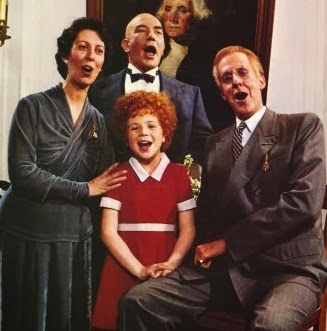
The Controversy Surrounding "Annie"


I recently found out that apparently there is an upcoming re-interpretation of Annie. For those of you who aren't familiar with the story, it originated as a series of newspaper comics in the 1920's titled Little Orphan Annie, but it is probably better known for the broadway musical adaptation which was later adapted into the 1982 movie of the same name by John Huston. Yes, the John Huston

Yes, believe it or not it turns out all these films were made by the same person. I was also quite surprised.


The basic premise is fairly straightforward: a little girl named Annie is living in an orphanage during the Great Depression. She lives a miserable life, as she and the other orphans present are constantly harassed and practically enslaved by the owner, Miss Hannigan. However, she is eventually allowed to spend Christmas with a lonely millionaire named Warbucks, who becomes exceptionally touched by Annie and decides to adopt her. Complications later arise when Miss Hannigan tries to stop them and joins two of her old friends (who also happen to be newly-released crooks) in an elaborate scheme to make a fortune for themselves.

Now, on with the point of this article. This isn't ground I would normally trend but it was an area I found particularly surprising. Recently I learned that there is a new treatment of Annie coming out. The controversy doesn't have much to do with the movie itself. As far as I can tell it's still the same basic story (though from the few still images I've seen they might have modernized it). It has to do with a somewhat more drastic change.

So those of you who are familiar with the 1982 film, the comics, or the stage version, you'll probably know Annie has a very distinct image. She's usually depicted as a redhead, with her hair cut short and curly. Well, the directors of this film decided to do something a bit different.


This has been the subject of discussion on numerous IMDB threads and I have heard that there has been a lot of negative backlash towards this choice. Yes, the controversy stems entirely from the fact that a black actress was cast in the role. Some people are supportive, others insist that Annie should always be a redhead. Now I personally am not a huge fan of Annie and I don't expect to be seeing this version in theaters, but I'll confess I was surprised and not sure what to think by this choice, as well as the controversy.

I'm in no position to judge the actress playing Annie, nor will I assume one way or another the quality of this film or whether she'll be able to pull it off. I guess what it really all comes down to is whether or not it works within the story. If it were to use the original setting of the Great Depression it might be harder to pull off believably, given this was a period where racism was a lot more common, but on the other hand it could add a new layer of depth if that were to be taken into account. In the present day, however (which appears to be what it's going for), the idea of an orphanage of mixed-race children does seem more likely.

As I said, I won't make any assumptions about this film. I won't claim I'm super-hyped to see it as I'm not a fan of the source material, but I thought it might be interesting to address this controversy and try to share some of my thoughts on it. I'll confess I was surprised by this choice if only because I was used to the more traditional image, but I can't see anything particularly wrong with it, and if you have any problems with it... well, the 1982 version isn't going anywhere.

Thursday, 6 March 2014

French Cinema I like


In this blog I have said a few things that aren't necessarily pleasant about certain films or filmmakers. I've voiced a few times that I don't like Jean-Luc Godard, and I may have also mentioned before that Jaques Tati's Playtime was a movie I found more excruciatingly long than funny, mainly because I felt its scenes didn't have much of a connection, the jokes were poorly timed, and everything seemed to just keep going on and on and on and on and on much longer than it needed to.

So as you can imagine I may have said a few things about French Cinema that haven't exactly been pleasant, but I'd like to make it clear that I've got nothing against French Cinema personally. I might not be overtly fond of the French New wave era and the work that resulted from it (especially Godard), but I have seen some good French movies, and so I thought that it might be good to write a little bit about some of these films to prove it.

So to start, I think I might bring up another movie I was required to watch for the same class in which I was subjected to Playtime and Tout va bien. This movie was released roughly a decade before the two aforementioned films, in 1956, and was set in a Nazi Prison during World War II. This was a movie called A Man Escaped.


Admittedly, I was a bit nervous going into this film, but I thought it was actually pretty well done. The plot centers around a young man named Fontaine, who was a member of the French resistance before being arrested and taken to a Nazi Prison. However, against all odds, Fontaine manages to systematically and carefully devise an elaborate plan to get out. Complications arise, though in particular a cellmate who he may or may not be able to trust.


I found the general step-by-step structure of the movie to be interesting. The whole story is confined to the knowledge of the protagonist, but that makes it all the more interesting when we see him finding creative ways to improvise the necessary components to find his way out as well as to keep the guards from figuring out what he's doing. Of course, in addition to that, there is also a sense of fear, as Fontaine knows he is taking some huge risks and the slightest mistake could cost him everything, especially given some of the daring things he has to do (which includes dismantling the door to his cell, it makes a bit more sense in context).

It all builds up to a tense climax when Fontaine finally carries out his plan, and the exceptional build up makes the ending all the more satisfying.


So next, I'll bring up a classic that often comes up whenever I find myself talking about French Cinema. This is an exceptional piece of comedy as well as a good example of French cinema at its finest. What we have here is a charming little film called Amélie.


Plot-wise, it's a fairly straightforward premise: a young waitress named Amélie Poulain has an experience that inspires her to try and bring happiness to everyone around her, and naturally comedic shenanigans ensue. The jokes are great and well-timed, and even the ones that go on longer manage to be humorous without wearing out their welcome.

Of course, part of what makes this movie so great is the world that it creates. Amélie herself is a very interesting and complex character. We see that she is intelligent, creative, and resourceful, has noble intentions and really puts her mind to her goals, but she also has her problems. She is very shy and has difficulty confronting strangers, especially the man she likes, which in turn interferes with her own happiness. However, there are a number of other great characters she interacts with over the course of the movie, each of whom have their own little stories that she manages to play into.


Finally, I'll bring up a more obscure movie titled The Big Blue. This film was technically shot in English, but made by a French director (who later went on to make several better-known movies, including among other things The Fifth Element). This is a more complicated film than the previous two in terms of story, but has something very interesting to offer. Admittedly it was one that I wanted to see so bad I had to resort to illegal downloading when I realized it was impossible to get on DVD where I live, but it was worth it.


The plot of this movie is a bit harder to explain. It's centered around two professional divers, one of whom is a little bit... too fond of it, to the point where he sometimes seems to be more like a dolphin than a human. Along the way a journalist from America played by Rosanna Arquette enters the picture and forms a close relationship to both men as they partake in various diving competitions.


The plot is exceptionally complicated and might not be easy to follow, but the interactions between the characters are solid (if at times a bit strange) and of course the underwater photography is just unbelievable.


So there you are: three great examples of French Cinema at its finest. This was originally going to be a review of Jaques Tati's Playtime, and I still stand by my thoughts on that along with Godard, but I decided I've said enough things for now against French Cinema and thought that instead perhaps it would be worthwhile to show some of its more positive aspects.

Wednesday, 5 March 2014

Midichlorians Were a Bad Idea... But not For the Reasons you may think


Say what you will about the Star Wars franchise. I personally am not much of a fan, probably because I got a little bit too into it when I was younger. The whole franchise has a massive fanbase, and where people stand varies. Some say the classic trilogy is best, some say A New Hope (or if you really want to be a purist, Star Wars) is the only good one. Others say Empire Strikes Back is the best. Others enjoy the whole saga and extensive expanded universe, some people prefer to stick to the movies.

Whatever you may think about Star Wars, there is one area in particular where many seem to agree, and that is on the quality of The Phantom Menace. It did have a few positive elements that got attention, but most of those were greatly overshadowed by its problems. One of the biggest controversies of course was the introduction of "midicholorians"- or the explanation that the Force was merely a series of microbes in your bloodstream rather than any kind of magic.

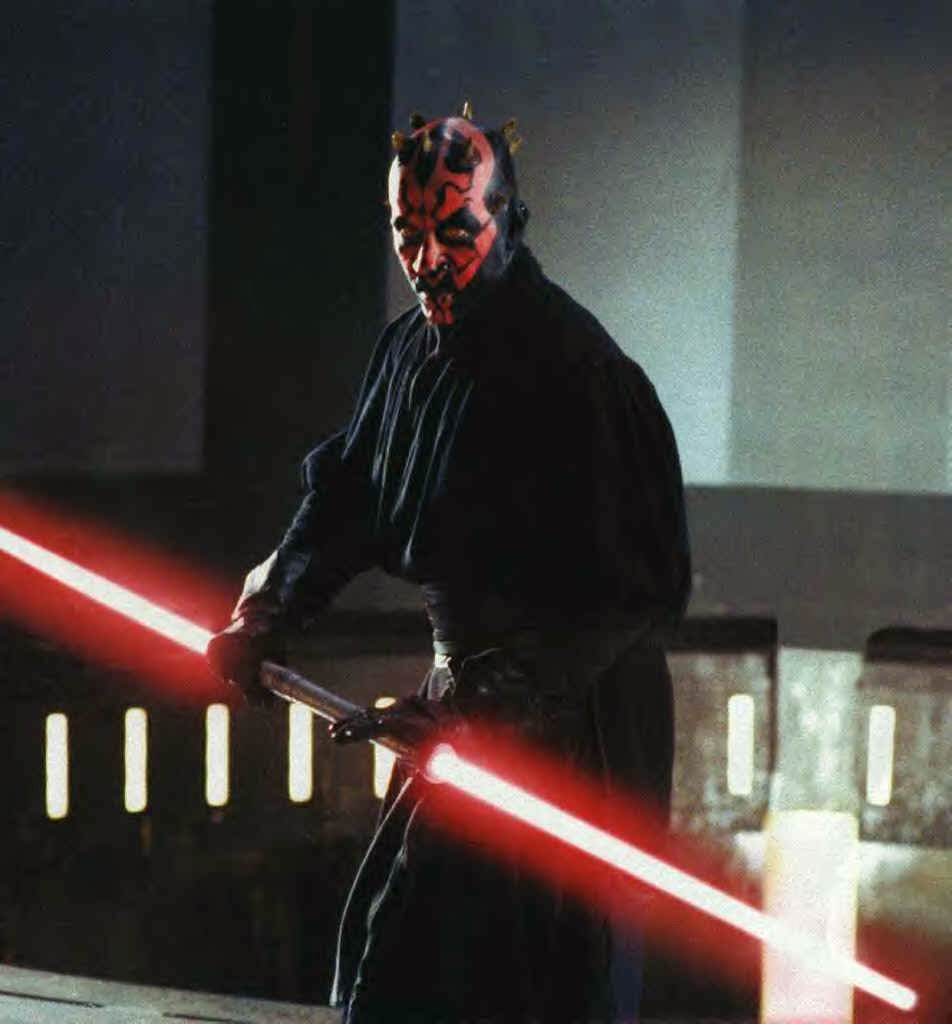
The one thing anyone remembers positively about The Phantom Menace: Darth Maul and his double-bladed lightsaber.


Considering where I stand with Star Wars it really doesn't matter to me precisely how the force is explained, but a lot of fans were outraged when after three movies treating the force as supernatural, George Lucas suddenly decided to try and give it a scientific explanation. I have heard that they were ideas George Lucas had from the start, but it was never brought up. Still, I can say that midichlorians aren't exactly a great idea. Heck, I've even expressed interest in writing some Star Wars related material that would attempt to reconcile the whole thing (probably by explaining something along the lines of midichlorians being misinterpreted, simply the most comprehensible part of an otherwise impossible to understand Force, or just something commonly found in those who are sensitive to it). However, my uncertainty about midichlorians is less to do with any kind of demystification and more a case of bad execution.

Now to start, I think it is worth bringing up that one criticism I've given towards Star Wars before is that, when you get down to it, it fails logic on so many levels. I could probably easily make a long list of scientific fails across the franchise, but I'll just provide you three of the most especially prominent errors.

1. Complete Disregard to Einstein

To provide a simple explanation for some extremely complicated science, basically the speed of light is finite, and it is also the fasted speed that can possibly be reached, at least by all known physics. Going at the speed of light causes a massive time distortion. 

In short, if you were to actually travel at the speed of light, time would slow down for you while progressing normally outside. If you were to travel say... 25 light years (a measure of distance in astronomy, basically how far light can travel in one year), it may only be a year for you, but outside 25 years will have passed. Go back to Earth, and 25 more years will have passed, everyone you know will have aged fifty years while you are only slightly older than when you left.


On Star Wars the characters routinely "jump to light speed" as though this was nothing. They don't even so much as use a techno babble hand-wave to justify this. As nonsensical as Star Trek's science could get they at least tried to get around this issue with warp drive.

In actuality, if real science were to be considered, and George Lucas still wanted them to go at light speed, the story of A New Hope would play out quite a bit differently. The exact distance travelled is not specified, but in actuality, even if only a few days passed aboard the Millennium Falcon, outside there would be a significant difference. By the time they got to Alderaan, the entire empire and rebel alliance would have aged significantly (assuming they didn't die of old age) and Princess Leia would be long dead.

2. Sound Does Not Travel Through Space

This is a huge mistake that has been made so many times in so many science fiction stories. It's insane how many films fail to realise the simple fact that space is a vacuum and therefore sound waves cannot travel. It's actually extremely rare to see a work of science fiction that actually gets it right.

2001 is one of the few movies with the nerve to actually show space scenes in dead silence. Even the ones that got it right will occasionally try to cover it up with music.


3. Asteroids Don't Work Like That

Another old fashioned sci-fi cliche to be invoked by Star Wars is a chase between the hero and the bad guys through a lethal asteroid field. These are thousands of ginormous rocks that are incredibly close to each other, the kind of thing no sane person would ever enter on their own accord else they crash and die in a fiery explosion.


Yeah, the truth is that while asteroid fields do exist (we have one in our own solar system), they are in fact ridiculously easy to navigate. An asteroid field as seen in The Empire Strikes Back would quickly be crumbled into dust. Real asteroids would be miles apart, and the only way to actually crash into one would be either if done intentionally or through sheer stupidity. 

Basically, if a chase like in The Empire Strikes Back were to happen in reality, flying into the asteroid field would have made no difference. Then again the Empire has power over the bulk of the galaxy and access to the most sophisticated technology available yet somehow can't even afford to train its soldiers to shoot straight or hold its own against an army of teddy bears with bows and arrows.


So those are three basic scientific problems with the franchise, how does this say anything about midichlorians?

Well, to start off, it is clear looking at those three examples alone, that unlike say... George Pal or Stanley Kubrick, George Lucas doesn't seem concerned about scientific accuracy. He is probably more interested in the story or the visuals than whether they make sense when the details are fact-checked with actual science. 

So then why is it that he suddenly decides to go and try and find a scientific explanation for the one element that was treated as supernatural? I have no problem with some sort of explanation being applied but why did George Lucas choose the Force of all things to try and explain scientifically? If he's going to do that why not also try to explain how the characters in his world are able to get around the time dilation that would come from jumping to light speed or why asteroid belts are so ridiculously close together? 

Whether George Lucas had always intended them to be there or not, the midichlorians were never mentioned in the original trilogy, but brought up straight out of nowhere in a few lines of dialogue of The Phantom Menace. There's no in-depth look at it or attempt to reconcile with the Force's more supernatural treatment in the Classic Trilogy. All we get is "oh by the way, the Force is just microbes, moving on". 

Perhaps if handled differently the midichlorians could have been an interesting idea and even accepted by fans. As it stands, the fact that George Lucas tries to offer a scientific explanation to the Force seems very out of place in a franchise that otherwise seems to have no regard for how science works.

Sunday, 2 March 2014

The Sci-Fi Ghetto... Why?


In an article last month, I talked about Gravity and brought up the question of whether there was any chance a science fiction movie had any chance of winning something bigger than Best Visual Effects at the Oscars.

To answer the question I brought up, yes, Gravity has to an extent managed to succeed where 2001 failed. My hope was to see it win one of the big awards. Best Picture would have been great, but I would have been satisfied with Best Leading Actress or Best Director. I figured it was probably a long shot, since I knew the Academy would probably throw the worst movie of the year onto the list of nominees before they gave Best Picture to a science fiction film. The odds always seemed to be far more in favor of 12 Years a Slave and far more people talked about that one but I kept polling for it anyway.


My efforts were rewarded, though admittedly not to the extent I had hoped. Gravity lost Best Actress and Best Picture, but managed to win Best Director. As far as I know, this may in fact be the first ever science fiction movie to do so, or at least the first since science fiction became an established genre in the 50's. Before Gravity, the best a science fiction movie could ever hope for was Best Special Effects. Anything higher was a nomination at best, never a win.


The whole phenomenon known as the "sci-fi ghetto" is one that I find particularly frustrating. This is a strange and completely pointless issue wherein snobbish critics as well as writers can't fathom the idea of sci-fi being anything more than cheap b-movies, serials, and pulp magazines (never mind the fact that H.P. Lovecraft, Ray Bradbury, and quite a few other great sci-fi authors made their name writing for pulp). Now everybody is entitled to their opinion, and some may be more appreciative of a certain genre more than others. I for one am not a huge fan of musicals, romantic comedies, or documentaries. However, while finding out a movie is a musical or romantic comedy may not initially compel me to go see it in the theater I'm not above making exceptions. Neither are these hypothetical guys, but the difference is they're not so keen to admit to it.

Now, once in a while I do find a musical or romantic comedy or documentary I actually find myself liking. I'm more than willing to admit that while I'm not super keen on those particular genres I did enjoy Singin' in the Rain along with Breakfast at Tiffany's or Roman Holiday. However, those who endorse the sci-fi ghetto have a slightly different outlook. To them, all science fiction is cheap and a waste of time. The result is that when an author not interested in the genre writes a book that clearly should fit within science fiction or a critic sees a science fiction movie they actually like, they try to rationalize it as not being science fiction. It's absurd. You don't see me claiming that Singin' in the Rain is simply a love story with a musical background, or that Breakfast at Tiffany's is "a story about people." 

Quite a few films that should fit into the science fiction genre are often cast out because of this: movies like The Road, The Time Traveler's Wife (the science fiction aspect of which is so obvious it's in the friggin' title), and Never Let Me Go among others. 


A story about a man who travels through time because of a peculiar genetic defect... um... how exactly is this not science fiction again?


While I was hoping for more, I've also been hoping that the success of Gravity  at winning Best Director might mean a chance to break out of the ghetto. For the first time a science fiction movie actually got one of the most prestigious awards. Is it not possible that this may pave the way for science fiction films of the future, maybe even one that will eventually win Best Picture?

David Lynch's "Inland Empire" vs. Federico Fellini's "8½"


I've brought up this strange apparent paradox before and I've often tried to figure out a solution. There are certain acclaimed directors whose work I have criticized largely because they don't make much sense. However, I then find myself turning around and talking about how great other filmmakers are despite the fact that they too could have the same arguments made about them. Even I've occasionally taken a stab at more surreal writing from time to time.

This brings me to the big question: when is surrealism a good thing? Where does surrealism end and laziness and incompetence begin? What is it that seems to work in the movies of David Lynch or Stanley Kubrick that I fail to see in the likes of Jean-Luc Godard or Federico Fellini?

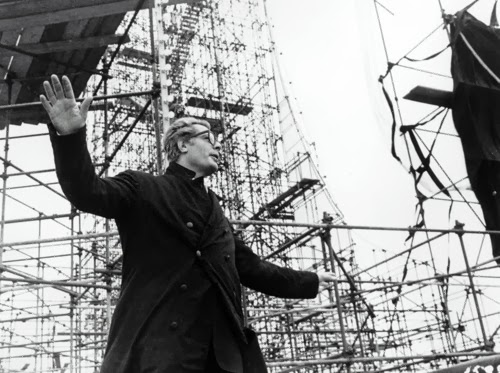
Now if you are a frequent reader of my blog or know me personally you might already know I'm a huge David Lynch fan, and this detail in particular I find rather curious considering that despite my feelings on Fellini, I happen to know for a fact he was a huge influence on Lynch. Don't believe me? Let's ask the man himself:


So this brings up a peculiar case. One of my favorite directors was heavily inspired by a man whose work I can't stand, and if you've ever seen any of Fellini's movies it's not too hard to see the connection. (though it's also not too hard to see how Lynch may have been inspired by Kubrick, another one of my favorite directors). A film by Fellini such as makes just about as much sense as Lynch is known for, if not in fact even less.


In fact, if you look at them closely, Fellini's and Lynch's Inland Empire seem to have a similar plot. Both films utilize a similar structure, providing a surreal fantastical journey framed around a character trying to make a movie. 


In 8½ it's a struggling director named Guido, in Inland Empire it is an upcoming actress named Nikki.  In each case we see the central character trying to make this film but undergoing personal issues that get in the way. Guido is apparently going through some sort of writer's block, while Nikki is seemingly struggling to deal with the stress that may inevitably come with an extremely demanding lead role.

In both cases, we see the strange ways their respective protagonists try to deal with their stress. Guido and Nikki seem to retreat into their minds for refuge, which results in surreal delusions, hallucinations, and fantasies. As their "stories" (I use that term loosely for both) progress, the lines between the world of their movie, the world of reality, and the world of the characters' fantasy begin to blur. 


For Guido and Nikki, this blurring of fantasy and reality eventually reaches its peak when everything begins to come crashing down around them. Both end up dying in a metaphorical sense: Guido is pressured by critics and ducks under a table (which looks more like a cage in which he is trapped) before shooting himself. Meanwhile Nikki encounters a group of women we've seen several times over the course of the movie, an encounter which results in her being stabbed by a screwdriver and left to bleed to death on the sidewalk between two homeless people who fail to notice her presence.


These two scenes suddenly bring us back into something that might be considered reality. Both Nikki and Guido are still alive, and they are on the set of their films. We find out that Nikki's been acting the whole time and she is congratulated for her excellent performance, while Guido is almost ready to give up on his movie but changes his mind. In other words, both seem to overcome their psychological problems and complete their films.

Finally, both and Inland Empire manage to end on a very ambiguous note. Inland Empire ends by returning to Nikki's house, where the movie began. This leads into a very odd segue as a woman with a prosthetic leg steps into a room and utters "sweet". The ending of makes just about as much sense, where just as Guido is about to start shooting, every single person who has appeared at any point in the movie suddenly appears on set, but the focus shifts toward a marching band, and in particular a young boy dressed in a white version of Guido's schoolboy outfit.


I draw this comparison precisely to emphasize the peculiarity of this situation. I tried to be fair to both films but I won't claim to respect any more than I have said, nor will I claim Inland Empire is my favorite of Lynch's films. Still, I find it curious considering how similar these two are that I am fascinated with Lynch but can't quite seem to get into Fellini.

Friday, 28 February 2014

The Pacing of Andrei Tarkovsky's "Solaris" vs. Stanley Kubrick's "2001: A Space Odyssey"


I have voiced my opinion on this matter before. I could not stand the tediously slow pacing of the 1972 Russian science fiction film Solaris, and in fact prefer the 2002 version with George Clooney. I still stand by that opinion, but it does leave me somewhat curious, especially in light of a conversation I have recently had with a friend regarding this movie. He still said that there was something he found interesting about Solaris, and it led me to wonder what it was that the film was saying to him but not to me.

My main criticism of the film. the needlessly slow pacing, was pulled off well in several other movies, like 2001: A Space Odyssey. This leads me to wonder what it is about the pacing that works for me in 2001 but not in Solaris, since it seems a lot of people see something in there that I don't.

So I guess a good place to start is by confronting the main issue: the pacing. Both films make use of slow pacing, but why is it that I find it tedious in Solaris yet beautiful in 2001. I complained that a lot of scenes in Solaris went on much longer than they needed to, but so does 2001. For instance we have the docking sequence that goes on for five whole minutes to "The Blue Danube". Theoretically speaking this could have been done in a much shorter time: they could have just showed the shuttle landing on the station and Floyd getting off, but they opted to show its complete journey, even though very little happens along the way.


I suppose it may have something to do with the content of these scenes and how they are being done. In 2001: A Space Odyssey we get a variety of beautiful sweeping shots of outer space as we follow the shuttle to the Space Station V. Of course, while this scene certainly goes on longer than would be necessary to get the point across, it is still showing us something interesting.

Taking this into account, it could be that part of the problem I have with the pacing of Solaris is there really isn't anything interesting to be done with the slow pacing of the first hour. My biggest problem with this was the violation of "show, don't tell". We spend a lot of time hearing a bunch of people talking about this mysterious planet of "Solaris" and how it affects people, but that's kind of it. This whole conversation could have been much shorter and to the point (which it was in the 2002 Clooney version). Whereas in 2001 we're seeing some interesting shots of space to keep us going, in Solaris we're mainly seeing men sitting around and talking.

The riveting early scenes of Solaris, an intriguing philosophical science fiction story of a group of bearded men in a room talking about an alien planet you'd rather actually be seeing.


Okay, so this seems like a straight forward explanation. While the long and drawn out scenes of 2001 had some interesting things to show, particularly the technology and at one point the vast lunar landscapes, many of the scenes of Solaris were set indoors and focused on people talking in ways that could have been much faster. That sounds simple enough, right?

Hang on, aren't we forgetting something?


Oh yeah, 2001 does take its time getting to the space scenes. In fact we start by spending a fair bit of time following a group of apes running around a desert and hitting stuff with bones. This part does take a little while to get going and could be frustrating to a first-time viewer. So it turns out that both films seem to take their time getting somewhere. In a movie called 2001: A Space Odyssey you have to sit through an extended series of sequences centered on a group of apes, while in Solaris we spend a fair bit of time with our protagonist on Earth.

So this raises the question of what makes 2001 different? Part of it may be that while it takes its time the "Dawn of Man" sequence of 2001 takes full advantage of the fact that it is being presented in a visual medium. Not a word is spoken, and while in both films we get some scenic views there is a bit more visually interesting material to be found in 2001


As I've pointed out, a lot of the opening of Solaris is people talking, with scenes that don't really go anywhere. Special mention goes to the extended montage of POV tracking shots of various automobiles roughly 30-40 minutes in, where we simply have the camera looking through the front window of various cars as they drive along different roads. Really, the entire opening could have been done in a single scene with a short exchange: 

"Hey Kris, I hear you're depressed about your wife dying and I thought maybe I could offer you a job to help keep you occupied."

"Okay, what's the job?"

"There's this space station around another planet and the crew have been acting weird. I'd like you to go evaluate them and see what's going on." 

"Alright, I'll go."

DONE, then Kris goes to the space station and the plot gets started. Instead, we spend an hour watching automobiles drive along roads, Kris walking through fields, and listening to people lecture us about the alien planet.

By contrast, 2001's "Dawn of Man" sequence does offer a lot more than just people talking. While we spent a fair bit of time watching a bunch of apes running around and shouting, there is a sense of progression in the apes' intelligence as they gradually learn to find new ways to survive using the first tool: a bone turned into a weapon.

We also get some intriguing design elements. In particular is the monolith. The design is simple enough: a large black rectangle, but the way it clearly appears out of place in the natural world around it helps to arouse the curiosity of both use the viewers and the apes (our ancestors). The haunting music also helps to draw our attention to its incomprehensibility, something that makes us curious and builds up a sense of mystery for the rest of the film. It builds our intrigue when billions of years later, a group of scientists encounter an object whose shape we recognize from this early scene, and then of course there's the famous graphic match of the bone being thrown into the air and turning into a spaceship.


So it seems the problem stems largely not from the slow pacing itself, but what is done with it. It is clear that Solaris seems to speak to other people in ways it fails to do so to me. My friend mentioned that he liked the fact that the opening scenes gave off a meditative state, and though I did not feel it when watching the movie, on some level I can see how this might be the case (a lot of the shots of Kris being alone with nature, for instance). In 2001 many of the longer scenes are those which serve to show the technology of the future, while the character interactions are usually quite brief. In Solaris many of the long scenes are those which feature people talking, with less interest in the visuals. 

I still stand by my opinion that the George Clooney version of Solaris is far better than the Tarkovsky version, and I won't pretend to like the latter film any more by analyzing it, but I thought it might be worthwhile to examine closely what I consider to be its main problem.

What do you think? Is there is there something about the Tarkovsky version that speaks to you, but evidently not to me? Perhaps you're in the same position as me, or perhaps you're in the reverse. Maybe there is something about 2001 that doesn't speak to you the same way it does to me yet something you find oddly endearing about Solaris