Pageviews from the past week

Showing posts with label George Lucas. Show all posts

Wednesday, 13 August 2014

Star Wars Needs More Women


Okay, Star Wars fans, I've got a little challenge for you. I'd like you to think of as many different characters as you can from only the six films by George Lucas himself, so no expanded universe or Clone Wars series (either of them). Now I imagine a lot of you immediately think of lightsabers and thus make the association of Jedi or Sith (at least, those of you who don't think of Han Solo or Jar Jar Binks). Now, let's lower the range a bit, I want you to think of as many different Jedi as you can. There's plenty to choose from: Obi-Wan, Anakin, Mace Windu, Luke Skywalker, and Yoda. You starting to see a pattern here?

Now let's narrow the range even further: how many female characters can you think of? Okay, you might have several, but how many can you think of that even have so much as a single line? Furthermore, how many can you recall that actually play a part in the central narrative of any of the films? Not very many. Really with such a large cast across six films there's a grand total of two women who have central roles? (I'm not including Zam Wesell or Mon Mothma, who had minor contributions but little screen time)

You also ever notice how the prequel films introduce so many Jedi characters and yet most, if not all the ones who are actually relevant to the plot are men? Yes, we do see several female Jedi but how many of them even get so much as a single line. At best they're little more than a bit part or an extra in a battle scene.

Really, when you get down to it, the female Jedi characters we do see like Adi Gallia, Shaak Ti, Aayla Secura, or Yaddle (imagine Yoda with a ponytail) are little more than background roles and/or redshirts with no dialogue. The only reason we have any idea who these people are is because of supplemental material and the expanded universe taking the time to flesh them out.


It's a shame really, we have all these cool female Jedi we could develop, and instead the films opt to make the only significant female characters ones who rely on blasters (and before you say anything, yes I am aware that Leia became a Jedi eventually, that wasn't in the films), but it doesn't stop there. As I've said, across a series of six films there have been a grand total of two significant female characters in the form of Padme and Princess Leia.

Granted both were pretty tough but Leia spent most of A New Hope being held in a prison (even if she put up a fight before getting caught), but across the original trilogy we see almost no other women in the Rebel Alliance. The only other female character we get at all is Mon Mothma, who takes no part in the action and only serves to provide some exposition necessary to the climax of Return of the Jedi.

I mean the rebels are led by a woman, so why is it we never see a single female soldier other than Leia among them? Considering their circumstances you'd think they would be willing to take all the help they could get, and yet the rebel armies we do see in the opening of A New Hope, on Hoth in The Empire Strikes Back, and on Endor in Return of the Jedi were all composed entirely of men, outside of Leia of course.


That's not even getting into the flight squadrons we see in A New Hope and Return of the Jedi going up against both Death Stars. You could make an argument that misogyny could be added to the Empire's long list of crimes but the Rebellion is made up of... rebels, they can't exactly pick and choose their resources.

And you know what the worst part is? They almost did have a woman among them. It turns out that for Return of the Jedi there were actually scenes shot of a female X-Wing pilot among the squadron attacking the Second Death Star. Don't remember them? Well, that's because they were all cut from the film and one line of dialogue spoken by a woman was dubbed over by a man. Yeah, that's right, George Lucas couldn't handle the idea of women fighter pilots and actually decided that maybe the film would be better with an all-male squadron. Really?


Now I can't say much about what's going to happen with the upcoming films, but I'm almost tempted to go out and say that, disregarding content of the expanded universe, the Star Wars franchise could in fact be considered to be sexist. Now, I can only speak on the six films that have already been made. Perhaps the three upcoming Disney films will do better on this issue, but as it stands, Star Wars really could benefit from having more well-written female characters.

Monday, 14 July 2014

Against the Crowd Blogathon: Is Kingdom of the Crystal Skull Really that Bad?


So it's a bit late to participate in Wendell Ottley's Against the Crowd Blogathon but I've only contributed half of what he asked for. I did a long-winded rant about John Carpenter's Halloween, but I also needed to find a movie everybody else hated that I actually liked. I could certainly find a few just by browsing John Carpenter's filmography. Even if they had their flaws I personally enjoyed Escape From L.A. and Ghosts of Mars and I even found thought The Ward had some good scares. Still, I wanted to find something a bit different.

I recall I was just getting back into the Indiana Jones franchise when I heard the news of a fourth movie in production. LEGO was producing sets based off the films and I had started to watch the original trilogy for the first time in years and quickly got hooked. There was a lot of hype for the plans to make a fourth Indiana Jones movie but like The Phantom Menace and Prometheus it received a whole bunch of negative backlash upon release. The strange thing is I actually kinda liked it, and I don't think a lot of the negative criticism is entirely fair.


First off, it was definitely a smart move to change the time period. I mean even if Harrison Ford agreed to dye his hair brown I don't think there would be any way they could make him look exactly like he did 33 years ago, so updating the setting to reflect the actor's aging makes perfect sense. Furthermore, the original trilogy was based on 1930's adventure serials. Kingdom of the Crystal Skull updated the time-frame to the 1950's, by which point those had gone out of style and been replaced by science fiction serials, so it's not too great a stretch to look at those for inspiration instead.

This gives me the perfect opportunity to address one of the biggest complaints about this film: the aliens. A lot of people have criticized the film for featuring aliens for various reasons. The biggest one is that supposedly it conflicts with the previous installments, specifically because of the presence of the Ark of the Covenant in Raiders of the Lost Ark which implies the Judeo-Christian God exists in this universe. 


The part that they overlook is that three different religions are "validated" in the original trilogy: Raiders of the Lost Ark draws from Judaism, The Temple of Doom draws from Hinduism, and The Last Crusade draws from Christianity. The films have never been fully consistent about what (if any) religious figures exist in this universe, so really there's no reason aliens couldn't be present either. You could also make the case that the "religious" artifacts featured in the previous films were also the products of these aliens and they're just sufficiently advanced as appear "magic" and inspire various religions.

I will also go ahead and address the other big criticism, which is the infamous "nuclear fridge" sequence. It is a bit of a strange choice on the part of Spielberg and Lucas but a lot of people insist that this scene is too unbelievable to be taken seriously. While I can see where they are coming from, I feel it is worth pointing out that the previous films weren't exactly grounded in reality.


Raiders of the Lost Ark had Indy getting dragged along a road by a fast-moving truck and still being able to beat up a bunch of armed men with only a few bruises to show for it. The Temple of Doom has an equally unrealistic scene where Indy his companions escape from a plane by jumping out in a life raft while at a high altitude (the Mythbusters even tested this and proved it to be impossible; it could be done with an escape slide but that's not what was used in the movie). 


That same movie also featured a man ripping out a prisoner's still-beating heart with his bare hands. The Last Crusade had Indy stop a pursuing Nazi by jamming a flagpole into the wheel of his motorcycle causing it to flip into the air (also tested and proved impossible by the Mythbusters). While it's still a strange idea, by Indy's standards the fridge scene really isn't that far-fetched.

A lot of people also complained about Indy having a son, but I didn't think Shia LaBeouf was that bad in the role. (Yes, I'm defending one of his movies. You can start pelting me with rotten fruit now) The idea of giving Indy a son was actually an interesting choice, especially given the last film was about Indy's relationship to his father. 

That's actually another thing, a lot of people have criticized the choice to kill off Henry Jones Sr. because it supposedly conflicts with the events of The Last Crusade, even though it was addressed in that movie. While the Holy Grail has healing powers (even healing what might otherwise have been a lethal gunshot wound), the only way to get eternal life from it would require you to remain in its presence (as that knight had done), which means staying in those ruins because the grail isn't allowed leave.

Now one choice that I think was a very good one was the decision to bring back Marion Ravenwood, Indy's original love interest, instead of trying to find him a new one like The Temple of Doom and The Last Crusade did. Marion was probably the best of the various love interests. She had the right balance of qualities. Willie Scott was too much of a damsel in distress, always screaming and finding ways to cause lots of trouble (even Indy got fed up with her at times). Elsa being a femme fatale was an interesting turn but Marion was the most complex. She was strong and certainly capable of being tough but also had her limits, and that made her the best fit for Indy. 


Now, is Kingdom of the Crystal Skull as good as Raiders of the Lost Ark? I don't know if I'd go that far, but I personally think it's a fun little adventure movie that really doesn't deserve a lot of the backlash it's gotten since its release. It's got some great action, takes the franchise in a few interesting new directions, and even addresses some of the issues of the previous installments.

Wednesday, 16 April 2014

The Issue of Jar Jar Binks


Of course, it's become popular since it's release to hate on The Phantom Menace (and to a lesser extent the following to films of the Star Wars prequel trilogy). The precise reasons vary. Some have criticized Jake Lloyd's performance as Anakin, others cite George Lucas's very strange decision to suddenly try to have the force explained scientifically despite not exactly giving much regard to science anywhere else in the franchise, and plenty of others have mocked Qui-Gon for not exactly making the smartest choices. The one area that seems to be universally hated about The Phantom Menace was the character of Jar Jar Binks.


If Jar Jar has any fans at all, they are greatly outnumbered by those who hate him. I can't deny this guy was rather annoying. Even back in my days as a Star Wars nerd I was never particularly fond of him (though granted it may also have to do with me being the kind of person who preferred to follow human characters, since I was never a big fan of Wookies either). Even George Lucas himself toned down the character in the later films, reducing Jar Jar to a small supporting role in Attack of the Clones and having a brief cameo in Revenge of the Sith where he doesn't even have any lines.

Heck, I don't know if there is any way you could defend his character. He's loud, he's got a really annoying way of talking (which I have also heard described as being potentially racist, as it vaguely resembles "jive talk" stereotypically associated with African American culture), and most of his scenes consist of him just being stupid or overly goofy without really contributing anything to the plot. In fact, there's even a fairly well-received fan edit simply called The Phantom Edit that, among other things, removes most if not all of Jar Jar's scenes.

Now, to be fair Jar Jar does have one contribution to the narrative, though given the movie's poor contribution it's one that probably could have been done without him. When Jar-Jar is first introduced, he talks to Qui-Gon and Obi-Wan about the Gungan City which is safe from battle droids for the moment (apparently having forgotten that the reason he was living in the swamp was because he was banished from said city). This allows the Gungan civillization to be introduced to the audience, setting up part of the climax. If there was no scene introducing the Gungans early on, than they would seem to come out of nowhere and confuse viewers when they started playing a role in the final battle.


That said, it is a fairly small contribution and there probably are several better ways that same exposition could have been handled. We had Obi-Wan and Qui-Gon on the run from these massive armies through a swamp, and they have breathing equipment for swimming underwater (a bit odd, given they expected to simply be negotiating aboard a spaceship). They could have cut out Jar Jar entirely and just had Obi-Wan and Qui-Gon get cornered at a large body of water, dive in, and find the city by accident. That would have allowed a brief confrontation with the Gungans just long enough to ensure we know who they are when they show up later. Alternatively, Jar Jar could have had his role toned down, perhaps if he provided the necessary exposition but after that point took more of a background role, or at the very least staying on Naboo during the scenes set on Tattooine or Coruscant.

In fact, you could make a case that Jar Jar actually contributed more to the plot of Attack of the Clones despite his reduced role. In The Phantom Menace, Jar Jar provides some important exposition at first and then spends the rest of the movie getting into unfunny slapstick shenanigans that don't really contribute anything to the overall movie. In Attack of the Clones, Jar Jar only has a few scenes in which he has somehow gained a position of government,


However, he actually is responsible for a crucial plot point in that he is the one to give Palpatine complete control over the senate. That of course pretty much sets in motion the entire downfall of the republic and of course everything that happened in the classic trilogy. To paraphrase the Nostalgia Critic: everything that happens between A New Hope and Return of the Jedi you can blame entirely on Jar Jar.

Among other things, Jar Jar Binks was single-handedly responsible for all the people who died when Alderaan was obliterated by the Empire.


Jar Jar was never really even a necessary addition to begin with. George Lucas loves to have a bit of comic relief, but he already had that under control. After all, what fan of the Star Wars saga doesn't remember C-3PO and R2-D2? These two characters provided plenty of moments of humor while also actually being complex and interesting in the way they play off of each other. Even when they do get separated, they usually have something to contribute to the story. R2 definitely has his share of heroic moments, and while C-3PO's contributions may not always be obvious, his interactions with the other characters usually makes up for it. Jar Jar just kind of bumbles around and doesn't really have anyone to play off of. 


In fact, it's especially ironic that George Lucas decided to make a new comic relief when you consider that both C-3PO and R2-D2 actually appear in The Phantom Menace, the latter even getting to save everybody at least once. Now granted, C-3PO's role is more of a cameo in that film, but these two droids are probably the second or third most popular characters across the entire franchise (after Darth Vader and maybe Han or Leia). Perhaps The Phantom Menace might have worked better if George Lucas stuck to his successful efforts at comic relief rather than trying to force in an unnecessary new character.

Wednesday, 5 March 2014

Midichlorians Were a Bad Idea... But not For the Reasons you may think


Say what you will about the Star Wars franchise. I personally am not much of a fan, probably because I got a little bit too into it when I was younger. The whole franchise has a massive fanbase, and where people stand varies. Some say the classic trilogy is best, some say A New Hope (or if you really want to be a purist, Star Wars) is the only good one. Others say Empire Strikes Back is the best. Others enjoy the whole saga and extensive expanded universe, some people prefer to stick to the movies.

Whatever you may think about Star Wars, there is one area in particular where many seem to agree, and that is on the quality of The Phantom Menace. It did have a few positive elements that got attention, but most of those were greatly overshadowed by its problems. One of the biggest controversies of course was the introduction of "midicholorians"- or the explanation that the Force was merely a series of microbes in your bloodstream rather than any kind of magic.

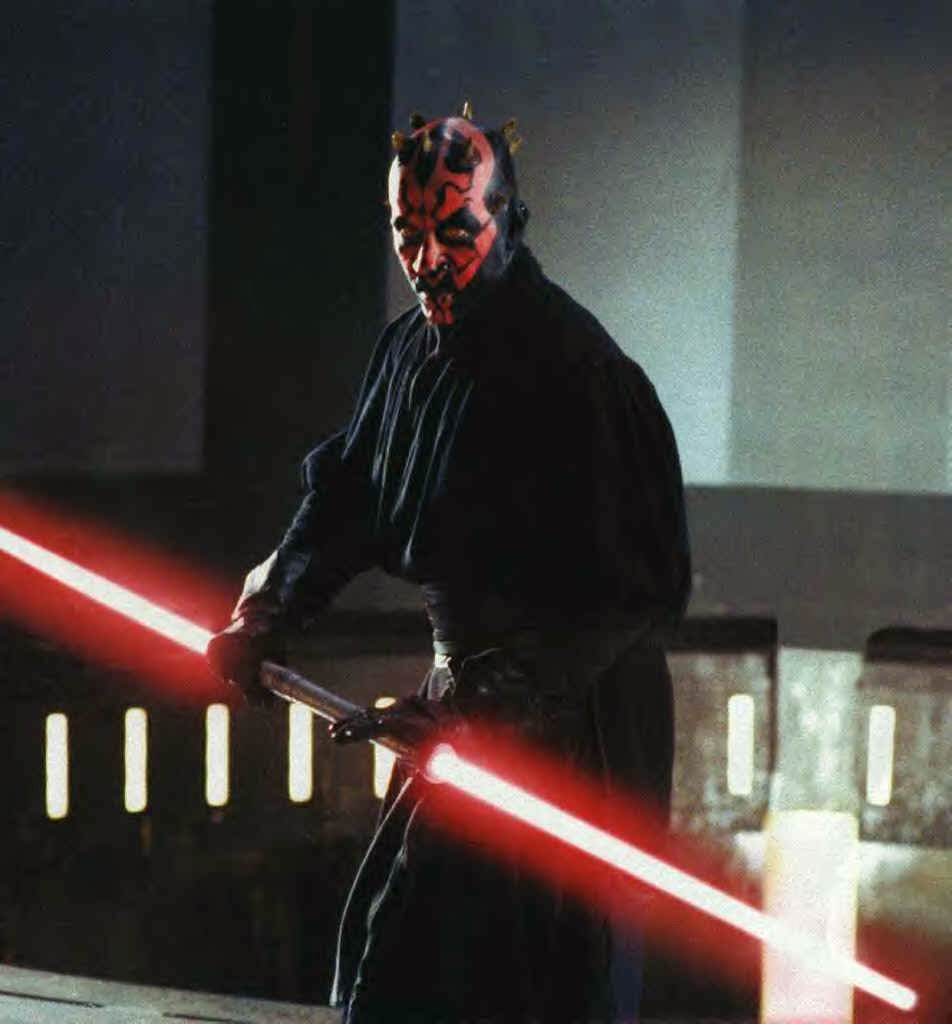
The one thing anyone remembers positively about The Phantom Menace: Darth Maul and his double-bladed lightsaber.


Considering where I stand with Star Wars it really doesn't matter to me precisely how the force is explained, but a lot of fans were outraged when after three movies treating the force as supernatural, George Lucas suddenly decided to try and give it a scientific explanation. I have heard that they were ideas George Lucas had from the start, but it was never brought up. Still, I can say that midichlorians aren't exactly a great idea. Heck, I've even expressed interest in writing some Star Wars related material that would attempt to reconcile the whole thing (probably by explaining something along the lines of midichlorians being misinterpreted, simply the most comprehensible part of an otherwise impossible to understand Force, or just something commonly found in those who are sensitive to it). However, my uncertainty about midichlorians is less to do with any kind of demystification and more a case of bad execution.

Now to start, I think it is worth bringing up that one criticism I've given towards Star Wars before is that, when you get down to it, it fails logic on so many levels. I could probably easily make a long list of scientific fails across the franchise, but I'll just provide you three of the most especially prominent errors.

1. Complete Disregard to Einstein

To provide a simple explanation for some extremely complicated science, basically the speed of light is finite, and it is also the fasted speed that can possibly be reached, at least by all known physics. Going at the speed of light causes a massive time distortion. 

In short, if you were to actually travel at the speed of light, time would slow down for you while progressing normally outside. If you were to travel say... 25 light years (a measure of distance in astronomy, basically how far light can travel in one year), it may only be a year for you, but outside 25 years will have passed. Go back to Earth, and 25 more years will have passed, everyone you know will have aged fifty years while you are only slightly older than when you left.


On Star Wars the characters routinely "jump to light speed" as though this was nothing. They don't even so much as use a techno babble hand-wave to justify this. As nonsensical as Star Trek's science could get they at least tried to get around this issue with warp drive.

In actuality, if real science were to be considered, and George Lucas still wanted them to go at light speed, the story of A New Hope would play out quite a bit differently. The exact distance travelled is not specified, but in actuality, even if only a few days passed aboard the Millennium Falcon, outside there would be a significant difference. By the time they got to Alderaan, the entire empire and rebel alliance would have aged significantly (assuming they didn't die of old age) and Princess Leia would be long dead.

2. Sound Does Not Travel Through Space

This is a huge mistake that has been made so many times in so many science fiction stories. It's insane how many films fail to realise the simple fact that space is a vacuum and therefore sound waves cannot travel. It's actually extremely rare to see a work of science fiction that actually gets it right.

2001 is one of the few movies with the nerve to actually show space scenes in dead silence. Even the ones that got it right will occasionally try to cover it up with music.


3. Asteroids Don't Work Like That

Another old fashioned sci-fi cliche to be invoked by Star Wars is a chase between the hero and the bad guys through a lethal asteroid field. These are thousands of ginormous rocks that are incredibly close to each other, the kind of thing no sane person would ever enter on their own accord else they crash and die in a fiery explosion.


Yeah, the truth is that while asteroid fields do exist (we have one in our own solar system), they are in fact ridiculously easy to navigate. An asteroid field as seen in The Empire Strikes Back would quickly be crumbled into dust. Real asteroids would be miles apart, and the only way to actually crash into one would be either if done intentionally or through sheer stupidity. 

Basically, if a chase like in The Empire Strikes Back were to happen in reality, flying into the asteroid field would have made no difference. Then again the Empire has power over the bulk of the galaxy and access to the most sophisticated technology available yet somehow can't even afford to train its soldiers to shoot straight or hold its own against an army of teddy bears with bows and arrows.


So those are three basic scientific problems with the franchise, how does this say anything about midichlorians?

Well, to start off, it is clear looking at those three examples alone, that unlike say... George Pal or Stanley Kubrick, George Lucas doesn't seem concerned about scientific accuracy. He is probably more interested in the story or the visuals than whether they make sense when the details are fact-checked with actual science. 

So then why is it that he suddenly decides to go and try and find a scientific explanation for the one element that was treated as supernatural? I have no problem with some sort of explanation being applied but why did George Lucas choose the Force of all things to try and explain scientifically? If he's going to do that why not also try to explain how the characters in his world are able to get around the time dilation that would come from jumping to light speed or why asteroid belts are so ridiculously close together? 

Whether George Lucas had always intended them to be there or not, the midichlorians were never mentioned in the original trilogy, but brought up straight out of nowhere in a few lines of dialogue of The Phantom Menace. There's no in-depth look at it or attempt to reconcile with the Force's more supernatural treatment in the Classic Trilogy. All we get is "oh by the way, the Force is just microbes, moving on". 

Perhaps if handled differently the midichlorians could have been an interesting idea and even accepted by fans. As it stands, the fact that George Lucas tries to offer a scientific explanation to the Force seems very out of place in a franchise that otherwise seems to have no regard for how science works.