Pageviews from the past week

Wednesday, 15 April 2015

Announcing Non-Action Week: YOU Pick the Movies


I need some help. For the past few months, since roughly December I've been struggling with an addiction to action films. Sometimes I seem to be watching action movies almost exclusively, and I need to break away from them. Unfortunately, right now it might be a bit too stressful due to my exams, but I can begin as soon as they're over, starting on May 4 and going on until May 8. You remember back when I did Free Action Movie Week? The idea was that I'd obtained a bunch of free action films and I had people vote on what films they wanted to see me review over the course of a week.

Well, that was such a success that I started thinking about revisiting the same sort of ground during the summer. I went through a few ideas, including one where people would vote on films from the preliminary list I made for the Blindspot Challenge that didn't make the final list. Unfortunately, most of the films on the preliminary list that I have access to I have seen since then, including 12 Years a Slave, Blue is the Warmest ColourDjango Unchained, and White Christmas (two of them I've also reviewed). Some of the preliminary list are still available here, but there isn't much left to vote on out of the ones I know with 100% certainty I can access before I plan to begin.

Instead, I've decided to broaden the spectrum a bit. I've got a serious addiction to action films and I need to break off and do something different. I'm having trouble breaking it off on my own, and while the severity of this addiction has varied, it has at times made it harder to watch or appreciate other genres. For this reason, I need to find something different, and as soon as exams are done, I hope to do precisely that. There is another problem, though, and this is where you come in. A major flaw in my character is my tendency to be extremely indecisive, especially in situations like this with regards to what films I want to watch. I figure the best approach is to take the element of choice right out.

So here's the deal: I have compiled a list of 10 films (semi-randomly selected) that I have in my drawer but have not yet gotten around to seeing (or in some cases, have only seen part of due to my mood at the time). All of these are films that don't seem like they could be considered "action" (though some could be considered precursors to the modern action film). This list covers a wide variety of different genres including romance, adventure, musical, comedy, and crime; as well as spanning several decades, going as early as the 1930's There's even a mix of different nationalities, including Canadian, American, and German cinema. What I would like you to do is to post in the comments below your top five choices out of my list. How you order your list is up to you, but I want your five favorites from the choices I have.

Once I get through with my remaining exams, I will tally up the votes and select the five most popular titles to watch between May 4 and May 8. Each day, I'll watch one of the movies and review it here on my blog, starting with the least popular on Monday and working my way up to that one really popular one that everyone wants me to see. It should be a great activity and one that will allow me to push the boundaries of my comfort zone in terms of movie watching. All I need you to do is tell me which of these films you want to me to watch.

Tuesday, 14 April 2015

Thursday Movie Picks Meme: Police Movies


This week, the theme for Wanderer's Thursday Movie Picks Meme is police movies. The idea behind this activity is simple. Each week she picks a theme, and anyone participating has to come up with three movies that fit the established criteria. I've been falling behind on this activity on the past few weeks, but now I'm back in action with a great list. In this case, the topic was suggested by me so it only makes sense that I take part in it somehow. All I have to do is come up with three films centered around the police. Graham Chapman once said that he'd like to see "more fairy stories about the police" but unfortunately I don't have any movies depicting police officers running around with little fairy wands and using magic to solve crimes.


However, I was still able to come up with three action films I have enjoyed that each center around the police. I've tried to cover different types of police films, since  they come in several different forms. For instance, I've refrained from including more than one buddy cop film. I've also stuck primarily to films that treat the police in a positive light (as well as trying to find less obvious choices) and I've covered a few different genres including action, science fiction, horror, and comedy. Here are my three choices for police films:

Ghosts of Mars (2001)


A lot of people dislike John Carpenter's first film to be produced in the 21st century, and his last film before taking a decade-long hiatus, returning in 2010 with The Ward, then disappearing again from filmmaking. I actually enjoyed it, crazy as that may sound. It has some strange ideas, but it is a fun action movie and it would count as a police film since it centers around a police unit (although somewhat unusual in that it is a predominantly-female unit working on a terraformed Mars). It does have some interesting action, even if it is a bit campy at times with some weird editing and a rather inaccurate depiction of Mars that probably draws a lot from Total Recall.

S.W.A.T. (2003)


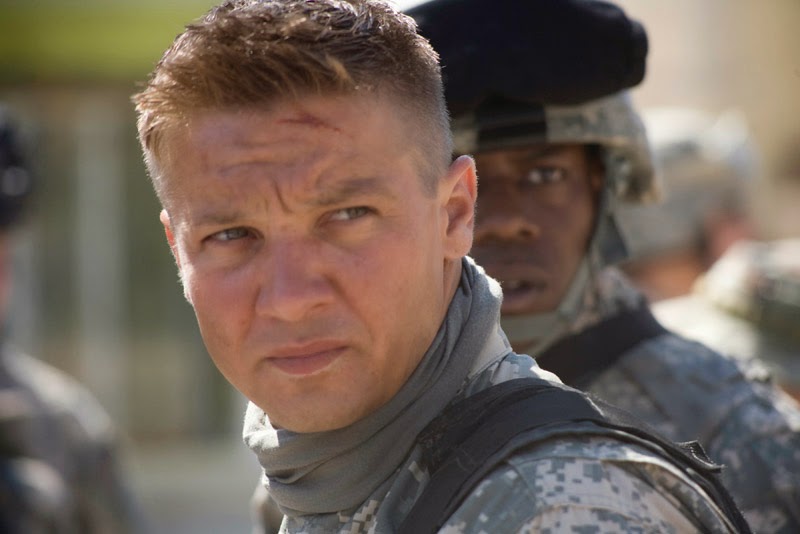
S.W.A.T. is a fun movie with plenty of action, and according to IMDB it's actually a fairly accurate depiction of how SWAT teams operate. It was interesting to see the SWAT team front and center for once, seeing as a lot of action movies put them in minor roles or as background characters. Also a nice touch is the fact that we get to see a rare positive image of a female SWAT officer played by Michelle Rodriguez (a lot of movies like to just cast the SWAT team as all-male when they appear in minor roles, Speed being a notable exception). Oh, and one of the villains is played by a young Jeremy Renner (who later went on to become famous for his role as Sgt. First Class William James in The Hurt Locker and Hawkeye in The Avengers).

Hot Fuzz (2005)


Now this one is a classic. Edgar Wright's hilarious satire of 90's buddy cop films (complete with exaggerated homoerotic subtext) is the second installment of his "Cornetto Trilogy" (it was preceded by Shawn of the Dead and followed by The World's End) , but this one is probably the best (though that's only comparatively speaking, the other two installments are also great in their own right). It exploits, spoofs, deconstructs and reconstructs every action movie cliché you can think of, and uses them to its full advantage. Its also fast-paced and loaded with suspense, and one worth seeing a few times just to spot all the different clues and how everything is very carefully set up.

What Makes a Strong Female Character?


If you've been following my blog, you should already know that I am an active feminist considering my numerous articles pertaining to the treatment of women in cinema. I've got so many articles on the subject it can be hard to keep track. Having a strong female character is a selling point for me in most films. I have been known to criticize films that lack strong female characters when there has been no apparent reason for it (I don't care what the trolls on IMDB say, I still stand by everything I have said about Black Sea and Outpost 37, there is no reason why either of those films had to have all-male casts).

Ironically, a lot of my favorite movies such as 2001: A Space Odyssey, 20,000 Leagues Under the Sea, Lawrence of Arabia, Zulu, The Thing, and The Hurt Locker are films that have either all-male or predominantly male casts. Most of those films had some sort of justification for doing so, however. While I have indeed made a case for why Captain Nemo could be played effectively by a woman, this possibility would probably not occur to people working in 1954 though it doesn't seem to have occurred to any filmmakers since, considering later adaptations of the book simply tried to shove in a love interest, which of course brings up yet another absurd misconception I've discussed at lengthZulu and Lawrence of Arabia were both based on historical events in which only men were involved. The Thing could have worked with a female lead, but by utilizing an all-male cast, John Carpenter subverts his own slasher formula (which generally favors the virgin girl) making it harder to predict the outcome.

2001: A Space Odyssey was also being made at time when the space program was still very male-dominated (the only two women who had been in space at the time were both Russian, the first American woman in space did not happen until 15 years later). It is slightly more progressive than other films of its time in that it does depict female astronauts, even if they are mostly background roles and given little focus. The Discovery crew is still all-male, although considering three of them die in hibernation before we get to know them it makes very little difference. Many later science fiction films drawing off of 2001 also attempt to include at least one major female character, sometimes even making her the protagonist.

Still, I find a strong female character to be a great selling point for any film. You put a strong female lead in and I will go to see it. More movies need to do precisely that, and the studios need to realize that strong female characters are what people want to see. That leads me to precisely this question: what exactly is a strong female lead? When the subject of great female characters comes up, people usually either Ellen Ripley from the Alien series or Sarah Connor in the Terminator franchise, but there are plenty more examples of well-written women appearing in movies. What exactly does make a great female character? How does one go about writing such a person?


To be fair, there is no one true way to write a "strong female character". It takes skill, that much cannot be denied, but precisely what is required depends heavily on the film and the story. After all, there is a big difference between how a strong female character might be treated in an action film compared to a romance or historical fiction movie. In all of these genres, the definition of a "strong female character" is going to be interpreted differently. In an action movie, she'll be expected to get tough. In a romance, the female lead has to have a solid chemistry with her partner, one in which she does not come off as too submissive. Historical fiction often deals with periods and cultures that were repressive towards women, so the writer will have to get creative in making a female lead "strong" while also working around the social restrictions imposed at the time (not unlike how many of history's strongest women made their names).

Writing a "strong female lead" is more or less the same as creating a strong male lead. A "strong character" should have the right balance of qualities to fit within the world of the film. They should have a certain amount of depth, and perhaps a back story in some form even if it is a simple or partial one. Independence can be a great quality in a character of either gender, but even that can be overdone. Playing up one quality too much is an easy pitfall for anyone. One of the main reasons the Rambo films don't work (aside from Sylvester Stallone's horrible acting) is that there is not enough time spent on developing the protagonist and allowing the audience to develop a connection with him. Rambo lacks any sort of character depth, and his personality amounts to taking off his shirt and waving a machine gun around. He has no motivation, goal, or anxieties, basically nothing to make him seem human enough for the viewer to care what happens to him.

Depth is naturally a crucial part to any strong female character. The female lead in any movie does not always have to be "strong" in a literal sense (though many of them are), but they should be complex and intelligent. One of the best female characters in my stories was a mentally ill astronaut who almost killed both herself and her crew over a probe (it's complicated). This particular character worked because of her complexity, and the fact that we got a glimpse into her mind. She does in fact have a reason for behaving the way she does.

This element is especially crucial when dealing with female leads in historical fiction, especially if we're discussing a film set in say... Victorian England. This was a period that had some very clearly enforced gender roles, with women usually being seen as inferior (and only a handful of jobs available compared to the many offered to men). Understandably, writers wanting to authentically represent this period in history will want to factor into account the popular opinions of women. At the same time, their audience will have trouble accepting these world views, and the best way around the problem is to give the female characters sufficient depth of character and perhaps some skills that can prove useful in the story.

The only thing is of course that the writer will have to factor into account the restrictions that would have been imposed on women during the Victorian Period. A woman who wanted to break the mold would therefore have to be very smart. This would have had to be the case for many women of power in the past, including female monarchs like Queen Elizabeth I and Queen Victoria. Women would have to be able to think outside the box, and find less obvious ways of obtaining their power. These characters might not be warriors (though history is not without its stories of warrior women, many of whom were also quite smart), but their strength would be in their mind and their cunning.

While not technically a work of historical fiction, Game of Thrones offers several great examples of such situations. The show is set in a patriarchal society, which should hardly be surprising since the kingdom of Westeros is obviously inspired by Medieval Europe (only now with zombies and dragons). This means that in order to depict strong female characters (of which there are many), George R.R. Martin had to get creative in writing their personalities. While a few of the women completely subvert the world's expectations of gender and become warriors themselves (Brienne of Tarth and Arya Stark), many of them instead have the strength of wit and creative thinking.

Danearys Targaryen certainly has to work for her power, but she gradually manages to assemble an army and even a small empire all through out-of-the-box thinking. She accomplishes far more than her brother, who attempted the same thing only to suffer death by molten gold before he could do anything even remotely useful. The same arguably goes for many of the other female characters in the show, such as Cersei Lannister (who also happens to be one of the top schemers) and Catelyn Stark (who for three seasons was perhaps the only person keeping what was left of the Stark family together).


Intelligence is a great quality for any character. Unless it is intended for humorous effect, stupidity is generally a very easy way to keep audiences from enjoying anyone. Certainly a lot of the best female characters can be complimented for their intelligence, but that alone does not necessarily make a great character. While it can certainly help, it is also possible to make a character too smart, perhaps to such a level where they become less believable. Simply having a woman being able to shoot a gun does not automatically make her a strong character, nor does simply having her be intelligent.

Intelligence combined with depth is a very good way to put your female lead on the right path. She has to have just that right balance of qualities. Making her intelligent can be effective to be sure, but she should also be human. Part of what makes Ripley work as a character is that while she is tough and resourceful, she still has emotions. Throughout Alien, Ripley is obviously frightened by the titular monster, and during the climax she actually has a lot of difficulty staying calm when she finally expels the monster that killed her crewmates into space. What makes her strong is that she is able to overcome those anxieties, and even when overwhelmed with terror she is never ready to give up.


Many people remember Ripley taking on the Queen at the end of Aliens. These people often forget that the the same movie begins with Ripley struggling to cope with the disorientation of waking up 57 years after the events of the previous film and finding out that her daughter has died of old age. It is made extremely clear that Ripley is severely traumatized by her experiences aboard Nostromo, so much so that she is initially reluctant to join the marines. These moments all help to show that even though Ripley is competent and more than capable of taking care of herself, she is still affected by everything she has been through and is not perfect.

Another great example would be Maya in Kathryn Bigelow's Zero Dark Thirty. Much like Ripley she is a tough character who spends the whole movie becoming increasingly determined to catch Bin Laden. She never gives up her search, and ultimately succeeds in finding him despite a mountain of obstacles. At the same time, she does have her emotional struggles to cope with. When a close friend is killed by a suicide bomber, Maya is clearly affected by it and struggles to cope with her loss (although at the same time, it also gives her further drive to keep hunting Bin Laden). Later on she also has to deal with further mental strain when she cannot pull a car out of the driveway without being fired upon. Also worth noting is the final scene in which Maya begins crying, unsure of what to do with herself now that her determination has finally paid off.


On the other hand, you also want to make sure that the female character does not get too emotional. This is a very easy pitfall to encounter. If she spends too much time crying instead of getting things done, that is generally a sign that something is wrong. What you need is just enough emotion to make the character seem human, while also trying to balance it out with her other qualities. Ripley would never have worked if she spent all of Alien cowering in the corner with Lambert, but if she had not displayed her fear during the climax the scene would have been much harder to believe. Aliens would have made no sense if the time dilation experience by Ripley were not addressed, or if there was no psychological effect stemming from all of her crewmates being wiped out by the alien.

Then of course, we move into the trickier areas of female representation. Perhaps one of the most common and widely-despised roles for women is the damsel in distress. This particular role is seen as an icon of sexism in the media, seeing as it is almost always a woman who gets captured and has to be rescued by a man (there are cases of the reverse, but not as often, and very few, if any, of women being saved by women). The worst cases are of course where it is the central driving force of the narrative, and the whole story is about the man's quest to rescue the princess or whoever is serving as the female lead. In general, my advice to writers would be to avoid this situation at all costs. Hollywood has more than enough distressed damsels, and we don't need any more.

However, sometimes the "distressed damsel" is necessary to the narrative in some way. In the event that it is, there are a few things one can do to reduce the unfortunate implications. The first thing I would say is to avoid narratives that require a damsel to be held captive throughout. It also helps to give the damsel some depth of character; don't just have her cry and wait to be rescued. Maybe give her some strengths she can display while being held hostage. Holly McClane may have spent most of Die Hard being a prisoner of the villains, but she was also the person who took responsibility for keeping the hostages organized and did everything she could to help them under the circumstances (she also gets to punch a nasty reporter in the face after finally getting out).

Princess Leia spent most of A New Hope a prisoner (and she did have to get rescued by the male heroes), but she at least put up a fight before being captured and her strength was in her ability to resist the Empire's implied torture without giving up the information they wanted. It also probably helped that her action girl characteristics were played up in The Empire Strikes Back and Return of the Jedi (though even those weren't perfect by modern standards), but in the context of the original film, she was a big deal simply for being a strong leader who did not easily give in to her captors. If she had, those Death Star plans would never have reached the rebel alliance and the victory at the end of the film would not have been possible.


In terms of the rescuing, I would also say we need more characters like Cassandra Anderson in Dredd who are able to rescue themselves. I have written several of these in my own scripts, but others should as well. In fact, out of my entire body of work: including my scripts, novels, and short stories, I have only had one woman who actually needed to be saved by a man, and those were very specific circumstances. In that instance, the woman (who was otherwise a very strong character) had suffered a severe head trauma and the man who saved her was literally the only other person there, and thus the only one who could help her. Also, it was somewhat balanced by the fact that there was also a danger that posed just as much a threat to him, so he was saving himself at the same time. However, I would say the best thing to do if a story must go this route, is to try and have a balance in the cast, with a strong female lead having a role in rescuing the damsel in distress.

Ultimately, there are many ways one can approach the subject of writing a "strong female character" depending on the context and genre of the story, but there are a few elements that seem to be consistent. The two most important parts appear to be depth of character and intelligence in just the right balance: enough depth to make them human but enough intelligence that they can handle whatever situation they face. A strong female lead does not necessarily have to be capable of handling firearms or beating people up (though qualities like this often help). What she should be is self-reliant. Even if the story features a romance, she should still be able to carry her own weight in the relationship without being dependent exclusively on the man (Jane Smith Mr. and Mrs. Smith being a great example of such a character). In any case, we need more strong female characters, and I hope this advice will be beneficial to other writers interested in making a difference.

Sunday, 12 April 2015

Blindspot: Gangs of New York (2002)


I won't go on the record to say that this one is my favorite Blindspot so far, and I will also confess it was not one I obtained under the most pleasant circumstances. It happened when I was in college, back when I was still collecting films by Lynch and Cronenberg. At the time, both directors proved extremely elusive, and for whatever reason it was very hard to find films by Lynch (with the exceptions of Blue Velvet and Mulholland Dr., though Lost Highway appears to have since become easier to obtain). I'd just figured out how to use my debit card and I was having some trouble controlling how much I'd spend at a time on films. Adding to that, because of how frustrating it was locating films by either director, I started to find other targets to search for in between. This came from Martin Scorsese's crime films.

Gangs of New York was one I picked up for no real reason other than because I'd enjoyed some of Scorese's other films while I was also buying Lost Highway and Inland Empire. I had no real reason to buy it at the time, and for a few years it sat in the drawer, probably out of personal shame. I'm not proud of those days, and while I still struggle sometimes with saving money I have since made a more concerted effort to avoid spending recklessly on films. Still, a few films remain in my collection from incidents like this one (another film on my Blindspot list, Atonement, was also obtained through similar circumstances). That naturally made it perfect material for the 2015 Blindspot Challenge.

When people think of the 19th century, the images that often come to mind are those of upper-class Victorian England. I'm talking about the fancy houses, the men in suits, ties, and top hats, women in elegant dresses. Typically the men are in business or some respectable career, smoke thick cigars, and like to drink tea. The "Victorian gentleman" is itself one of many stereotypes commonly associated with the English people. What many do not understand is that the world was far more complicated than that, and what we get here is another side to that same era. This is arguably the greatest strength displayed by Gangs of New York, as it was interesting to see this angle normally reduced to the background. Instead the lower class is placed front and center, and while I can't be 100% certain of its historical authenticity, it certainly makes for an interesting world.


It is the mid-19th century, and the American Civil War has just begun. It is a dark time for the American working class of New York, who live in a town torn apart by crime and prejudice. Every day thousands of Irish immigrants arrive in America only to be met with hate from the so-called "Natives" who through backwards thinking actually have a range of outrageous assumptions about the new arrivals that sadly weren't too uncommon for the time. At the same time, the society of New York has been split into various "tribes" in the form of gangs in constant conflict with each other. The most powerful of these gangs is led by a nasty man known as Bill "The Butcher" Cutting, who has eliminated most of the competing gangs and even bought out some of the authorities (and is also extremely vocal about his bigoted worldviews).

Also thrown into the mix is Amsterdam Vallon (Leonardo DiCaprio), the son of a gang leader (Liam Neeson) killed by Cutting fifteen years earlier. Amsterdam is not pleased with the actions of Cutting, but manages to find a place in the latter's gang and works his way to being second in command. However, despite all outward appearances, Amsterdam is still loyal to his Irish heritage, and plots revenge against Cutting. Meanwhile, he also finds an unlikely friendship and eventual romance with a young Irish thief named Jenny Everdeane (Cameron Diaz), who proves to be quite talented and a valuable ally. However, in the end, it is left open whether any change has really happened, with the ending montage suggesting that modern New York is not that much different.

One thing I will note I was pleasantly surprised by was the general moral ambiguity that came with this story. The film makes a point of highlighting early on just how messed up a world the characters are living in, with several very real issues for the period. These included situations like rivalries developing between early fire departments, something that actually happened quite often and caused a lot of trouble (two different groups would show up at the same emergency, and then get distracted fighting over which one gets to put out the fire). The racism and backwards thinking, like the various characters who claim that the Irish and people of colour are "stealing jobs" from white men, is absurd today but also not unusual for the 19th century.

The main character himself is not so much likable as interesting, but it helped that he was never fully portrayed as being the good guy. He may have had some sympathetic goals but on several occasions his methods are called into question and it is never totally certain if he is doing the right thing (this calls to mind similar vigilante themes explored in Scorsese's earlier film Taxi Driver). Cutting also makes a decent antagonist, though sometimes his mustache seems to be a distraction from the overall performance. The rest of the supporting cast do okay as well, though there aren't very many who particularly stand out.

One exception to that rule is Everdeane, who I will have to admit I was pleasantly surprised by. My initial expectations of the film included her simply being a love interest and motivation for Vallon, and while that was partially true it turned out to be a lot more complicated than that. Writing strong female characters into historical movies is note easy, especially in a period like the Victorian Era, but here they really pulled it off. She's a thief but she is also smart and capable of looking after herself (and indeed, saves herself on multiple occasions, as well as Vallon at least once), all while maintaining the illusion of being an "ideal" 19th century girl.


Another area where I can definitely give this film credit is its pacing. The full movie is almost three hours long, but it actually moves fairly quickly. I don't recall any specific point at which I felt a scene was going on longer than it needed to, and I could see it was trying to use the long runtime to its advantage. The only trouble was that there is a lot going on in that time. Maybe not quite as much as a movie like The Godfather or Scorsese's later film The Departed, but still a lot. The central narrative: that of Vallon, Everdeane, and Cutter, is pretty straight forward and easy to comprehend, but there are plenty of other characters and sub-plots that can be easy to lose track of.

I won't say that Gangs of New York is my favorite Blindspot so far, but it proved to be an interesting experience, and I'm certainly glad I watched it. It has its flaws but it is a compelling story with some amazing period detail that shows a side of history often overlooked. I'd recommend checking it out if you like Scorsese or want a good crime film, and even with the long running time it hardly feels like it's that long. If I were to label Scorsese's best crime films, I would probably choose either Goodfellas or Taxi Driver, but Gangs of New York is a reasonable second or third option, and I will say that it is definitely better than Raging Bull.


Thursday, 9 April 2015

So Fetch Friday: Why, Lynch, Why?


I've got one less essay to worry about now, but there are still other things going on. I had my first exam this week, and it was stressful to prepare for but it's done, so I've got one less to worry about. That just leaves one more plus a take-home exam. In other words, I'm more or less done, and I'll be completely finished in a matter of weeks. My classes are over now so it's just finishing everything up. It's been a bit stressful for sure but having one out of the way is good at the same time.

On the bright side, I finally got one of my stories published. A short story I wrote titled Hello Earth: A Lunar Odyssey was published in an online magazine dedicated to publishing the work of people registered with accessibility services at the university (which I am, though there may be people with far worse conditions than I have). Now I'd love to just post a link right here and let the whole world see my creative work, but at the present moment I can't do that. It's nothing personal. There were other people who contributed to this publication and right now it's going to be too much of a hassle to check with everyone involved to make sure it's okay for me to publicly share their work (which I would technically be doing). However, if I can get the approval of my publishers, I might be able to privately send the link to a few of my blogging friends. If you'd like to read it, you can leave your e-mail address below and I'll send it out if I get the go-ahead.

The story itself is pretty simple, it's a science fiction piece about an astronaut who is the lone survivor when her ship crashes on the moon. The rest of the story is about her experiences being the first woman on the moon and her wandering its surface unsure if she will be rescued in time. It's a bit depressing, I know, though I've written some far more bizarre pieces (I've also got a science fiction story about an astronaut who develops maternal feelings toward her probes). Funnily enough, this one started as a simple writing exercise and was inspired by a Kate Bush song ("Hello Earth", hence the title) but ended up growing into something bigger. It's funny how some stories come about, isn't it.

Now that my classes are done, my schedule is a bit out of sync. I haven't actually done a lot of movie-watching this week. Most of what I have been finding myself doing is re-watching action movies I happened to have in my collection: Die Hard, Air Force One, The Heat, Basic, and Battle: Los Angeles. Basic is actually quite an underrated film in my opinion. Aside from being very well done in terms of action and suspense, it has a pretty good array of strong female characters, and it's nice to see a film make an effort to create a positive image of women in the military. Connie Nelson is great but the real gem is the presence of Nunez as a female Army Ranger treated almost literally as just one of the guys. They even avoid falling into the obvious pitfall of oversexualizing her (if anything, several of the men wear far less than she ever does), instead keeping her in practical combat gear and even having her spend most of her screen time under warpaint.


To me, this touch is especially impressive since I've been told that the U.S. Army didn't even allow women to enlist as Rangers at the time Basic was made, though from what I understand they have since started to opened up the ranks. I think they've opened up the Marines as well to women. Now if they would just get around to integrating the Navy SEALS they would be more on par with the Canadian army. Speaking of military branches, did you know Canada has an equivalent to the Navy SEALS? Yeah, me neither. Apparently that function is served by an organization called Joint Task Force 2, which isn't as sophisticated as the SEALS but apparently has proven to be quite effective.

The one new film I have managed to see is Kathryn Bigelow's Strange Days. It was certainly an... interesting experience. There was something intriguing and compelling about it but I'm not entirely sure I fully understood it all. Something about a new form of technology that could literally record events through people's eyes and then allow other people to experience it and then Tom Sizemore had some plan to frame Ralph Fiennes for a bunch of murders and there were some dirty cops involved or something. It was also a bit jarring since the world depicted looked absolutely nothing like 1999 (it's a bit like how Escape From New York claims to be set in 1997).  One lesson I've learned as a writer, and the first piece of advice I give to anyone interested in writing science fiction: if your work is set in the future, never, under any circumstances, put a year on it. All it does is give people reason to point and laugh at you when your audience gets to that year and whatever is described in your story hasn't happened.

On the other hand, Angela Bassett was a pretty good character. She was a pretty good early example of how Kathryn Bigelow is capable of handling strong female characters when she wants to (though you do also have James Cameron, who wrote the script, to thank for that). She is tough, competent, and has some interesting characteristics. I'd still say The Hurt Locker is Bigelow's best film and the one where her career really started to take shape, but I'd be open to seeing more of her early work if the opportunity presents itself.


Speaking of Kathryn Bigelow, I've recently found myself in a position to try and take advantage of my large amount of free time and obtaining a gift card to a really great used video and record store but can't quite decide how to use it. There's a few movies I've found myself interested in obtaining but can't seem to find. Among them is Bigelow's Blue Steel, which I have found myself craving to see for some time but can't seem to get anywhere. I don't even know if it's any good (the IMDB reviews seemed to be mixed) but it does look like it has a positive image of a female cop so I guess that's a good thing. I've also received recommendations to see the movie F/X which also remains elusive in every form imaginable.

That's not even getting into my seemingly endless quest to seek out "Die Hard on an X" films, which has not been so successful lately. I've seen just about every one that is available on Netflix or On Demand, but there's some that I wish would just show up in one form or another. I've found myself wanting to see Under Siege for some time, among other things. The only trouble is it won't appear on Netflix or On Demand so the only option as far as seeing it goes (barring illegal torrents that, now with the loss of Pirate Bay, runs the risk of putting viruses on my computer) is obtaining it on DVD. The same happened with Passenger 57 and Executive Decision. I'm scared to do that because I'm not sure if it's going to be any good. On the other hand, I keep telling myself that I won't know until I see it, and that even the bad "Die Hard on an X" films I can learn from (if only how not to write one of these movies) but it doesn't help much.

As for the usual material, I haven't had much time for Banshee or Hannibal. However, from what little time I did get to watch Banshee there was the rather shocking development that they killed Nola, one of my favorite characters. She literally had her throat ripped out and it was nasty, and she hardly went down without a fight (if anything, she was the first person in the entire cast to come anywhere near killing the person who did this). It was really painful to watch. That's the real trouble with violent shows like this. It's not that it influences you to commit acts of violence, it's that you get so attached to the characters that when they are killed off it becomes very hard to deal with. That does pop up in The Walking Dead from time to time as well, and it's not easy to handle.

Meanwhile, in Agents of S.H.I.E.L.D. we've finally started to get some answers about what Bobbi and Mac are up to. It seems there is another S.H.I.E.L.D. organization that doesn't like the way Coulson is running things. We got to see Lucy Lawless come back for a few flashbacks which was nice (when they said they were bringing Xena onto the show I didn't want them to kill her off in her first episode). On the other hand, I have found myself wondering if there's something they're not telling us about Bobbi's role in all this. I'm half-expecting that either she is going to question her allegiances to this other S.H.I.E.L.D. or it will turn out she's secretly working undercover for Coulson like what happened with HYDRA. Considering Hunter is now on the opposing side and they were starting to reconnect I've got a feeling that's going to go somewhere interesting. Meanwhile, Ward and Agent 33 seem to be doing their own thing. I get the sense that neither one of them is working with HYDRA anymore, but they're not exactly good guys either. If anything, their allegiance is probably chaotic neutral at best, and they're just out for themselves at this point trying to figure out what to do.

I did receive one bit of upsetting news this week. It seems that there is talk of David Lynch leaving the planned Twin Peaks revival. From what has been said, it sounds as though its a budget issue. Lynch wants a certain budget for his vision and the studio is reluctant to offer it. I hope they work it all out and Lynch is able to come back. Laura Palmer promised that we'd see her again in 25 years and if it doesn't that whole article I did speculating on where the revival could go will have been for nothing. I guess if Lynch doesn't end up directing the revival, they might be able to get someone else, but would it be the same at all? Mark Frost might be able to do something worthwhile with it. Jonathan Glazer did seem to show a certain respect for Lynch in Under the Skin, perhaps he's the guy we should call for the revival if Lynch won't do it.

Common Lynch. Please don't make Laura Palmer a liar!

Of course, that might be too optimistic. Even if they did manage to get someone as obviously respectful of Lynch's vision as Glazer I'm not sure it would be quite the same. Even if they could get Kubrick to take it on I'm not sure that would be quite the same. Nobody can capture Lynch's vision quite like Lynch. There's a reason I continue to point out how much I love his work while showing the nerve to write an article criticizing the very people who inspired him literally titled Art Cinema is Garbage. Yes, I mean the entire art cinema movement and everyone who participated in it. They were no better than the "confining" Hollywood structure they attempted to avoid.

I've also had some ideas for blogathons to run in the summer, though if I'm going to do any of these they probably won't happen until June at the earliest. For a while I was wondering about revisiting The Gay on Film Blogathon. The idea behind that one was simple, it was all about identifying strong gay couples in film, but the last time I ran it I only got one entry besides my own. Maybe during the summer more people will be able to take part, and it will be a bit more fitting since that is when the Gay Pride Parades often happen. Would anyone be interested in seeing it come back?

I did also have this one idea for a blogathon that would fit into my tradition of feminist blogathons. My concept was that it would center around identifying iconic male-dominated or all-male films that could have benefited from greater gender diversity. Essentially, the way it would work is that participants would select a film that features a predominantly if not exclusively male cast and make a case for why it did not have to be that way and how the film could have worked with a strong female lead without changing much. It would of course disregard films that actually had a reason for making those choices, the most likely being the cultural context of either the time it was made or its setting.

The idea would be to draw attention to the large number of predominantly male films that don't need to be that way, in order to encourage more filmmakers to offer better representations of women. I thought it could be a neat exercise, and it might open the eyes of a few readers. It's a neat idea in theory, and I think it could be a very good exercise, but on the other hand my feminist urges seem to have gotten in the way of a lot of things lately. Even when there is a perfectly rational and non-sexist reason for a film to have a predominantly or all-male cast I often seem to find myself irrationally bothered by the lack of female characters.

It seems I can't enjoy anything now unless it has a strong female lead. I don't know, what do you think? Would you be interested in an activity like this or do you think this is just me being oddly paranoid? It makes it all the weirder that nearly all the films I keep consistently citing has my favorite movies (i.e. 2001: A Space Odyssey, Zulu, 20,000 Leagues Under the Sea, The Hurt Locker) are films with all-male or predominantly casts. My brain is confusing. It doesn't seem to want to make any sense.

Stuff From Other Bloggers

  • Roderick Heath and a few other bloggers are hosting The Film Preservation Blogathon, which they hope will raise money for film preservation. Basically the idea, if I'm understanding it right, is that you write about a science fiction film and then include a donate button so that readers can contribute money to the film preservation group they're trying to sponsor.

Sunday, 5 April 2015

Film Fortress 2


So there was recently this strange political development in which the Prime Minister of Canada was kidnapped by Neo-Nazi communist hippy ninjas who want Belgium's nuclear launch codes or something. I don't know. I don't follow politics much. All I know is that some United Nations official showed up at my house, said that the Prime Minister has been kidnapped by Neo-Nazi communist hippy ninjas, and asked if I was a "bad enough dude" to save the him. I don't know what that means, but I told them I was. They then shoved some paperwork in my face and told me I had to assemble a team of the toughest men and women available to save him and if the team I put together was composed entirely of white men they'd throw me in prison.

It wasn't easy, but I think I've found a good team to get the job done. Just for fun, I've decided to base most of my team on the classes from Team Fortress 2, and use that as a guide for assembling them. I've also been trying to offer a balance of gender and hopefully race. I got six men and six women, plus a decent balance of race among both sexes. This should be enough to meet the quota I was given.

By the way, yes, I know that some of these people are dead (though I won't say which ones to avoid spoilers). I found this crazy scientist who built a time-travelling DeLorean and he took me back in time so that I could recruit those people before they died and then bring them back to the present.


Ground Force

Tech Sgt. Elena Santos (Battle: Los Angeles, 2011)- Scout


Santos might not technically be infantry, but she has shown that she is certainly capable of defending herself (considering how much time she spent on her own in a war zone, initially without assistance). If she could hold her own in an alien invasion, Neo-Nazi communist hippy ninjas shouldn't be that big a problem. She is one who can fit right into the squad, but she also has experience in reconnaissance. Before the team can storm the Neo-Nazi communist hippy ninjas' carefully hidden headquarters, somebody has to get the information on their hideout and their activities. That's where a scout comes in handy, someone who can observe the enemy from a distance undetected.

Co (Rambo: First Blood Part II, 1985)- Soldier


I know, much as I dislike this film, Co was probably the one decent thing it had to offer (I'm pretty sure it was James Cameron who put her in the script, and Sylvester Stallone who ruined it). For the (frustratingly) short amount of screen time she had, this girl had a lot of skill. She showed that she was certainly capable of looking after herself and she even ended up in a situation where she had to save Rambo, and succeeded. We're talking about a one-woman extraction team. If something goes wrong with Evelyn Salt, this is the person who's going to get her to safety. She knows how to use the environment to her advantage, and she can handle a machine gun. Trust me, you'll want this girl watching your back, and her teammates will actually be able to understand what she is saying, certainly more than can be said for her partner.

Ellen Ripley (Aliens, 1986)- Pyro


This girl was able to take on an army of monstrous aliens several times before they finally killed her (and even that didn't stop her from facing them again). Her weapon of choice is a flamethrower and she definitely knows how to use it. After facing down Xenomorphs several times, (an entire hive in the case of Aliens), Neo-Nazi communist hippy ninjas should be pretty simple to deal with by comparison. Besides, she could use a change in activity, considering how she can't seem to go anywhere without having to face these aliens I think having a new enemy to deal with might be refreshing for her. Don't you?

Blaine (Predator, 1987)- Heavy


One thing we're going to need on a mission like this is lots of firepower. Aside from being specially trained for these types of missions, this is a guy armed with some very large guns and capable of doing a lot of damage with little trouble. Ninjas might be fast, but they can't outrun bullets. If we can get this guy in position with his minigun he should be able to take out large amounts of Neo-Nazi communist hippy ninjas at once, and with little damage to himself, at least as long as one of them doesn't manage to use their throwing stars to slice his heart out. Even if that does happen, he should be able to at least drastically reduce the enemy's numbers first, making them an easier target for everyone else.

Sgt. First Class William James (The Hurt Locker, 2008)- Demoman


Well, knowing the way these kinds of situations often go, it's inevitable that something is going to get destroyed sooner or later, and we'd better make sure that works in our favor. We'll have to pull James out of Iraq, but I don't think he'll mind too much. This guy's services will be valuable in two ways. First of all, and perhaps most obviously, James would be the guy to call if the team has to deal with a live explosive. He will know precisely how to disarm it. On the flip side, James has so much experience in disarming bombs, and knows them inside out, he could probably make one if necessary. With the collection of bomb parts he has accumulated, he probably has enough pieces to make at least two or three just for fun long before they are actually needed. Of course, the rest of the team will need to keep an eye on him to make sure his adrenaline fix doesn't get in the way of the mission, but his skills should be enough to make up for that.

Lisbeth Salander (The Girl With the Dragon Tattoo, 2009)- Engineer


Okay, so maybe she can't build sentries and teleporters, but this girl is resourceful and has a lot of technical skills that could be very useful. After all, everybody knows how much ninjas love to use computers, and those could hold a lot of extremely important information on their operations. That kind of information would be extremely valuable for the scout and spy, but she should also be able to get eyes in the building and remain in contact with everyone else. It does mean that she will be spending a lot of time in the background, but even if she does encounter trouble, Lisbeth can take care of herself, especially once Blaine has done his part.

Ensign Monk (The Abyss, 1989)- Medic


There are a few good reasons to put a guy like this on the team. For one thing, he is a trained Navy SEAL, which means he can definitely take care of himself, but as a medic he also knows how to keep calm while looking after wounded comrades under stressful circumstances. With an army of Neo-Nazi communist hippy ninjas on the loose, it's likely that someone might get hurt, so we'll need a person who can patch up their wounds when that does happen. Also, Monk is just such a nice guy for a SEAL, a very good quality for a doctor to have to be sure, and his bedside manner can certainly be helpful under pressure.

Jason Bourne (The Bourne Supremacy, 2004)- Sniper


It might be hard to convince a man like Bourne to take part in a mission like this (though some sort of guarantee that he'll be left alone afterwards might help), but his skills would be incredibly valuable in many ways. He has shown that he is a talented sniper, and he is very good at finding vantage points from which to observe. This would almost certainly be valuable when we are sending in our scout or our spy, since he will be able to see any danger coming long before they do. The other thing is that in addition to being a sniper, he is also more than capable of defending himself at close range, so if the Neo-Nazi communist hippy ninjas manage to find him we shouldn't have to worry too much about his safety.

Evelyn Salt (Salt, 2009)- Spy


Sometimes having a scout isn't enough. They can be great for observing the enemy but we might need someone who can actually get into the enemy base in order to get all the facts. The scout might be good for helping her to get in, but someone is going to have to be able to infiltrate the enemy. Salt is a girl who can do that, seeing as she can get in, get the information, and perhaps even work undercover (it's not that hard to disguise yourself as a ninja after all). She also has communist ties herself, so she should be able to blend in without much trouble, and she is very good and taking out these kinds of organizations from within. Also, Salt has been dealing with a lot of undercover Russian agents, a change in objective would probably do her some good.

Sgt. West (Basic, 2003)- Team Leader


We have a good team here, but somebody is going to have to take command in order to keep them organized. This guy might be hard, but if there is one thing that's certain it is that he knows what he is doing. He doesn't like to play by the rules, for sure, but he knows how to put together a team to get things done, and he should be able to handle a job like this without much trouble. I won't deny that West is tough and that some of the people under his command might have more than a few reasons to dislike him, but he is a capable (if unconventional) leader and he will do what he feels needs to be done to complete the mission. 


Support


Captain Steven Hiller (Independence Day, 1996)- Pilot


We've got here a great team to take out the enemy and get back the Prime Minister, but before they can do anything we need someone to get them to the necessary drop point, and to pick them up when the job is done. That's where Captain Hiller will be useful. Aside from being a fully qualified air force pilot, Hiller has certainly survived against far worse, so he will definitely be helpful if the team runs into trouble while trying to get to the chopper. Nobody's going to get this guy's machine as long as he can help it, but then again ninjas aren't exactly prepared much for aerial combat, so he should have a pretty easy time with this job.

Connie Hooper (Unstoppable, 2010)- Dispatcher


Somebody is going to have to keep track of everything that is going on. We'll need someone back at base who can keep in constant contact with our heroes and make sure everything goes smoothly (as well as deal with all the inevitable bureaucracy of her superiors). Connie is someone who is certainly able to commit herself when trouble arises (even if it runs the risk of getting fired) and her experience in coordinating railways should be useful under these circumstances. If there is anything that the team needs, this is the girl who is going to make sure it gets to them, and who will make sure everyone gets pulled out safely.

Saturday, 4 April 2015

A Fistful of Moments Blogathon


Well, now that I'm (sort of) done with my classes, I can start to think about participating in blogathons again (though until my exams are done, I can't make any promises on which ones I will actually enter). The Fistful of Moments blogathon is pretty straight forward in theory. In fact, the basic gameplay dynamic is not a whole lot different from my own Favorite Movie Scenes Blogathon that I ran last year. However, this time, Fisti has a more specific idea of what he considers a "Cinematic Moment":

We all have them in the back of our minds; those moments that make us think "man, this is what the movies are all about". We relive those moments in our mind's eye, remembering them and dissecting them and adoring them. They come in all shapes and sizes, from all types of films, and yet they all share one very important aspect; they define why we love the movies. It could be the way that the moment is cut; the way it's edited together. It could be the way the moment uses it's actors to evoke a powerful emotion from us. It could be the way that music floods the scene and draws us even closer to the moment in question. It could be a grand climax, a breathtaking introduction or a simple interchange. It could be any and all things, because for every film lover, the list is different.

Now the thought did cross my mind that I could turn this around and instead label it as my least favorite moments from Godard films, just because of how much I know he loves that guy's work, but I'm not going to do that. Finding these "cinematic moments" is tough. There were some rules to follow, so here they are:

1) Pick a number between 1 and 100 (any more than 100 is just gaudy)
2) Choose that many cinematic moments that are either your all time favorites or ones that could, on any given day, be your all time favorites
3) Post them on your blog (or Tumblr or whatever) with the above header (or one you create for yourself)
4) Send me the link by either posting it here in the comments or getting ahold of me on Twitter ( @fististhoughts)

Now I have to find those cinematic moments that stand out to me. Unfortunately, due a very busy schedule, I was only able to come up with one. I'm sorry I couldn't make a whole list like everyone else does, but I was able to participate so... yay?

That said, here is my only entry to the Fistful of Moments Blogathon, though knowing me I'm probably going to think of fifty more choices that would have been good as soon as its over:

2001: A Space Odyssey (1968)


If I'm going to make a list of the best cinematic moments, there is no doubting that 2001: A Space Odyssey is going to be in there somewhere. This is one I have cited multiple times as my all-time favorite film, but the only trouble is finding a specific moment. There are so many throughout the film, but perhaps one of the most memorable for me is the docking sequence. There is something incredible about the way this scene is put together, starting with the transformation of a bone into a satellite. The music of the Blue Danube comes into play, and we get an amazing series of shots just showing humanity's accomplishments. In any other film, this would be tedious and boring, but somehow it really captivates me the way Kubrick put it together for 2001: A Space Odyssey.

Thursday, 2 April 2015

So Fetch Friday: Forbidden Love Between Universes


Well, this is it. This was my last week of classes, though it's not over yet. I still have one last paper to hand in next week and then I've got to start worrying about exams. Still, hopefully things will go okay. On the bright side, the TA strike finally ended, but it might have done so a few weeks too late. Things have been thrown completely out of order thanks to the strike, and it's been tough getting back on track. I've also got a paper that's been giving me a great deal of trouble. It's due next week and various factors have delayed it, now I have to get started and that's proving difficult.

This week, we watched a strange British horror film called Kill List, and learned about how modern horror films have become a lot more self aware. We spent a lot of time discussing the Scream franchise and brought up Cabin in the Woods. Am I the only one who couldn't really get into that one? I don't know why, considering it was Joss Whedon who wrote it and it drew heavily from Lovecraft but for some reason there is something about it that just didn't seem to work for me. Personally, I wasn't very interested in Kill List either. I can give it some credit for having a decent character in MyAnna Buring but she wasn't exactly the main focus. Of course the professor did say that the director of Kill List went on the record to say that "you are supposed to be suffering", so I guess he technically succeeded (if you count the type of suffering that comes from watching a terrible movie), though for all the wrong reasons.

We also had to finish Cinema Studies by studying art cinema, and of course I had to sit through L'avventura. I didn't have high hopes for this one based on my previous experiences with art cinema in and I Am Curious (Yellow) but I tried to keep an open mind. Unfortunately, it didn't work for me. It was kinda tedious, even if it had a decent premise (a group of characters being affected by the disappearance and uncertain fate of a young woman) but it proved so disjointed and padded out that it got rather annoying. I'm just glad its finally over and I can get away from Art Cinema at least for a little while. Yes, I know this stuff inspired some of my favorite filmmakers but I just can't stand it.


Fortunately, we were at least able to end the year with a good movie in the form of Her. This is one I'd put off watching since it came out, but it's actually really good. Considering this came out around the same time as Under The Skin, it's kinda a shame that I've only now just seen it, because with hindsight Her would have been a good movie to reference in the paper I just finished. I could have compared how Scarlett Johansson explores sexuality in two very different ways (playing an alien and a computer operating system, respectively).

It was also interesting just how human they made an operating system. While this might not be the first time human emotions have been applied to artificial intelligence (Hal from 2001: A Space Odyssey being perhaps one of the most famous examples), I don't think I've ever seen a relationship quite like this one. It was also interesting to see that they had a more positive view of artificial intelligence, instead of going the obvious route of having the computers rising up and enslaving the humans. The idea of falling in love with a phone sounds insane at first, but something about it actually works in a weird kind of way.


I don't think it should come as a surprise that the season 2 finale of Banshee got extremely violent, but it kinda was considering how gruesome it was even by the show's usual standards. We lost a whole bunch of people in that season finale. On the plus side, big bad gangster Rabbit is finally dead and now Lucas and Carrie don't have to worry about him coming after them anymore. That might not be such a bad thing, and might have even been a happy ending if not for the other (unrelated) murders that happened afterward.

For one thing, Alex Longshadow was killed by Rebecca. He might not have been the most likable character on the series, but there are some serious consequences stemming from his death. For one thing there is a nasty hardbodied Native American with Schwarzenegger muscles looking to avenge him, and his methods include rallying together an army of Native Americans. Nola isn't too happy about it either, and I suspect she may have a desire to avenge Alex, but she seems to be doing her own thing. She also seems to be sparking a friendship with Carrie, perhaps a chance at reconcilliation between their respective people?

Perhaps the most brutal development was losing Emmett. The poor guy was just minding his own business buying groceries with his wife when one of those angry racists from earlier in the season showed up with a machine gun and killed both of them. The good news is that Lucas, Brock, and Siobhan managed to get revenge on said angry racist (though perhaps not in the most ethical way), but that does not change the fact that they lost a cop.  Also, Brock grew a beard between seasons, which was surprising. I didn't even recognize him at first.


The one bright side that came with losing Emmett was that we got a new character in the form of a Native American cop, who it looks like might allow an opportunity for the show to explore that side of the community in more detail. This new cop seemed promising, and it looks like he is a fairly competent character, and we have also gotten to meet two other cops on the Native American reservation; one of them a fairly capable woman. There are some understandable tensions but I can see these two different police departments forming an uneasy reconciliation somewhere down the line. That's one thing I can say about Banshee. In addition to a rather impressive array of strong female characters, it also has some complex Native Americans who definitely subvert stereotypes. 

As far as I'm aware, there are really two major stereotypes for Native Americans in Hollywood. The first is not seen much anymore but was quite common in westerns during the Studio Era, where the Native Americans are seen as savages, stripped of all humanity and seen as nothing more than an obstacle to be eradicated for western colonialism. The second, and admittedly more positive stereotype, is to cast the Native Americans as wise pacifists. On Banshee there is a variety of different characterizations to the Native American cast, and it's interesting that they are never fully cast as being any better or worse than any of the white characters (not to mention that prior to now Alex Longshadow was probably the greatest threat to bigshot tycoon Kai Proctor, they're certainly capable of a lot of things).

Meanwhile on Hannibal I finally encountered a female serial killer, who proved to be a very interesting character. One thing that often gets on my nerves in these otherwise quite intriguing crime shows is when the characters encounter the site of a murder and despite having no immediate evidence to the killer's identity they just assume it was a man who did it. I find it somewhat irritating when Sherlock Holmes or Will Graham keep referring to the at-present anonymous killer as a "he" when at that point in the story there is absolutely no reason to assume the killer is a man. I thought it was interesting to finally see a female killer make an appearance on the show, and they really got into her mind which was interesting. Unfortunately, they then killed her off just as it looked like she might be getting an interesting story to herself. That was kinda annoying, and I think I can understand why the writers made that choice but I would have wanted to see more of her. Still, this show isn't exactly short on strong female characters so I suspect she isn't the last female serial killer we'll meet.

Also, while I haven't had much of a chance to think much about Marvel's Agents of S.H.I.E.L.D., I have found myself considering a few peculiar ideas related to it. I have had this thought going through  my head recently that Marvel and D.C. should get together and make Wonder Woman and Black Widow an official romantic couple. A friend of mine brought over some of his LEGO superhero minifigures during the weekend, and I found myself unable to resist pairing up these two superheroines despite the forbidden romance that comes from them being based in different continuities. Unfortunately, the guy who brought the LEGO over did not take kindly to me pairing up these two, and apparently thought I was crazy to even consider it. That, and he was somewhat angry because I took the picture below without his permission. I was going to do a second one where you could see Black Widow's face but he caught me in the act and took back both minifigures before I could take it.


Okay, perhaps Wonder Woman and Black Widow are a bit of an odd pairing. Maybe while we're at it we should throw in Tony Stark and Bruce Wayne (well... they're both millionaires who use their wealth to create superhero equipment and use it to fight crime so why not?). Seriously, though. The Marvel franchise is doing pretty good with its depictions of women (though it would do better if they could just get that Black Widow film going) and they're doing okay in terms of racial diversity, at least in Agents of S.H.I.E.L.D. which has had at least two strong black characters and two Asian American actresses in the main cast (sort of... Chloe Bennet, who plays Skye, is half-Chinese, and this was written into her character). What they are still missing is diversity in sexual orientation. Maybe it's about time we got an openly gay superhero, perhaps even a gay couple. Perhaps even two gay couples (one male and one female). I don't see any reason why we shouldn't, and in fact we probably should be encouraging more positive images of homosexuals on film.

There is also another idea that has been going through my head recently for a future Marvel film. They keep finding ways to get Stan Lee to make cameos, and now I'm starting to think he should get his own spin-off movie. The plot could center around Stan Lee as a bumbling everyman who is just trying to go about various everyday activities, only to keep getting caught in the middle of the various adventures faced by Marvel's superheroes. He just wants a stable job and to get the girl but he is constantly getting mixed up in extraordinary situations, and then maybe he ends up being the only one who can save the day at the end. Does anyone else want to see this happen? It would certainly add a new perspective to the Marvel Universe and the way I see it could either be brilliant or a lame attempt to cash-in on its popularity depending on who was put in charge.

Exams will be starting up soon, and that is going to make things difficult, but on the bright side I'll have slightly more free time, so I can start thinking about taking part in other people's blogathons again, and I might even join in one or two once everything is out of the way. I started one of my own on Wednesday and I think it should be fun to try out. Maybe once I'm done with all this I can get on working on my own entry.

Stuff From Other Bloggers

  • Fritzi Kramer provides an insightful essay on A Trip to the Moon, apparently at my request.