Pageviews from the past week

Showing posts with label Steven Spielberg. Show all posts

Wednesday, 22 July 2020

Jaws in the Age of Covid-19


In 1975 a director by the name of Steven Spielberg, a man at that point with only two feature films and a few shorts to his name, premiered his latest film- an adaptation of a novel by Peter Benchley. After a notoriously difficult production, audiences were shocked to see a frightening tale of a killer shark. Its title made it clear what to expect: Jaws, obviously in reference to the deadly jaws of the great white shark who serves as its main antagonist. The film was an astounding success, and made a massive impact commercially and critically. The John Williams score alone has developed a long-standing association with any depictions of deep sea threats. Audiences were so shocked by the frightening creature that the film provoked a wave of anti-shark sentiments that even made the author of the original book regret its existence.

Many film scholars have identified the astounding success of Jaws as marking the end of the so-called "New Hollywood" period that began in the late 1960's with the end of the American Studio System. Jaws is sometimes known as the first real "blockbuster" as it unwittingly inspired major film studios to adopt a business model that is still in use today.

And we can certainly see the influence of its financial success in various subsequent films- which included three sequels as well as numerous b-films revolving around humans fighting aquatic monsters. The idea of a disaster film revolving around sharks isn't that unusual either. Certainly the popularity of films like Sharknado (2013) owe something to the success of Jaws.

The idea of humans faced with danger posed by an abnormal underwater predator was hardly new even in 1975. Over a century earlier Herman Melville had written the novel Moby Dick. In the novel, Moby Dick was a sperm whale notorious for his proficiency at killing whalers who tried to hunt him. He is pursued by Captain Ahab, a whaling captain who becomes increasingly obsessed with hunting down the "white whale," ultimately dooming himself and all but one of his crew. In fact the influence of Moby Dick is clearly visible in the second half of Jaws, with the character of Quint (Robert Shaw) acting as a sort of modern day Ahab whose growing obsession with catching the shark ultimately leads to his demise.

But my main interest in this discussion is less so the film itself, or the impact it has made on film in general, but rather its relation to our current social circumstances, and how a film made 45 years ago is weirdly relevant under new circumstances. Like the citizens of Amity, we have our own shark to deal with- at least figuratively speaking. Our shark is a pandemic. The Carona Virus, also known as Covid-19, is currently posing a major global threat. Social Distancing is a necessary measure, but instead of acting responsibly, the issue has become politicised in the United States. President Donald Trump has displayed an uncanny inability to respond to the virus, putting his political goals first.

While many people remember the second half of Jaws, which actually sees Brody, Hooper, and Quint pursuing the shark, the first half is particularly disturbing in light of current events. The central conflict concerns Brody and Hooper trying to respond to the presence of an unusually large shark that has been known to target humans in the water, which is complicated by the presence of the town's mayor Larry Vaughn, a politician who uses his media connections and authority to overrule the two men. Within minutes of finding out that a swimmer was killed by a shark bite, Brody is trying to close the beach, only to be immediately blocked by Vaughn, who insists that the beaches need to stay open because the town is an attractive spot for tourists.

A lot of people remember the roles of Roy Scheider, Richard Dreyfus, and Robert Shaw (who doesn't even become a prominent figure until the second half), but Vaughn is just as important. In many ways he behaves as a very Trump-like figure of authority. He may have even taken inspiration from Donald Trump, a man already notorious when Jaws entered production. Vaughn can be most easily described as a charismatic politician who acts like he knows what he is doing but in reality is putting his own interests above those of the people he is meant to be leading.

The opening scene of Jaws famously shows a young woman swimming out in the dark only to be attacked and killed by the shark whose presence will drive the rest of the film. But while it's presence is constantly felt, the shark isn't even seen during the first half, its presence only signalled by the occasional POV shot and the iconic score by John Williams. It's not until the second half that we actually get to see the shark, and even then we only see it when it is visible to the characters (its presence at other moments being signalled by an increasing number of floating barrels). Much of the plot instead concerns its human characters and how they react to the shark's presence, rather than the shark itself.

This has the peculiar effect of making the shark a much more enigmatic entity compared to its more obvious human characters. The shark itself actually does not do all that much in the film. The people it kills are mostly background characters- we never really get to know Chrissy or Alex Kitner before their demise, and even less so the unnamed man in the rowboat who is eaten by the shark later on. The only central character to actually be killed by the shark is Quint, and that only happens at the very end. If anything, the key players are never really in danger during the first half as they are never actually in the water.

Instead, while the shark is legitimate cause for concern, there is a much more dangerous threat in the form of Mayor Vaughn, who proves far more dangerous than the shark itself. Much of the film could have been averted if it were not for his presence. Had the beaches been closed as Brody repeatedly tried to do, the shark would have eventually left on its own due to a lack of food. The Mayor is the key obstacle.

After receiving the coroner's report that swimmer Chrissy Watkins (Susan Blaklinie) was killed in a shark attack, Brody immediately begins taking action. When he learns that there are not any "beach closed" signs he actually goes to the local hardware story, picks up materials, and has his staff begin making signs. No sooner has he done this than he is approached by Mayor Larry Vaughn, who quickly tries to overrule him. Suddenly the coroner (presumably through bribery, coercion, or a combination thereof) is saying it was a boating accident and not a shark, an alternate story the Mayor eagerly jumps onto to justify keeping the beaches open.

In fact the Mayor tries to outright discredit Brody, claiming he just made a mistake caused by not being familiar with the town. His reasoning is simply that they are a popular destination for tourists because of their beaches and tourists bring in money. This is disturbingly reminiscent of Donald Trump's resistance to social distancing. Like Vaughn, Trump continually insists on opposing potential safety measures. Why? Because opening businesses is good for the economy, showing no concern for people who might be endangered by doing so.


As if this wasn't enough, we have even had the problem of politicians making the questionable decision to keep beaches open during Covid-19, in spite of the obvious risks. While the reasons why they should be closed may be different (in real life, it is because crowds that normally form on beaches would produce favorable conditions for the virus to spread, rather than a shark in the water), the issue of politicising a life-threatening situation and putting people's lives at risk for the sake of money seems alarmingly familiar.

Vaughn manages to keep the beaches open, and sure enough the shark arrives. The first instance he tried to cover up, but the second happens in front of an entire crowd of witnesses, and results in the deaths of both a dog and a child. When a town meeting is called, Brody declares that the beach is going to be closed, only for Vaughn to suddenly add that it will only be closed for twenty-four hours. When Brody points out that he never agreed to that he is ignored, and finds himself ignored further when he tries to state that he has called for an expert. The culminates in the introduction of Quint, a fisherman who offers to kill shark for a price. For all his faults (as noted later) Quint is an experienced fisherman who has dealt with sharks before, and has knowledge and skills that could be put to use. But his offer is ignored by the Mayor simply for being too expensive.


The parallels only start become clearer when shark researcher Matt Hooper arrives. He examines Chrissy's remains and immediately determines that it was indeed a shark bite that killed her, and reacts in shock when Brody reveals that the town has failed to notify the coast guard or perform any sensible counter measures, which the viewer will know is thanks to the actions of the Mayor. When Vaughn is first introduced to Hooper, he more or less ignores him. They shake hands, but the whole time Vaughn's attention is elsewhere. 

Vaughn spends much of the film completely ignoring Hooper. When a bunch of fisherman claim to have caught the shark, Vaughn latches right onto it, ignoring the fact that Hooper has multiple reasons to doubt that they indeed got the right one. Of particular note is Vaughn outright refusing to let Hooper perform a test that could be used to confirm whether the shark that was caught was indeed the same one that killed Chrissy and Alex. No matter how much Hooper protests the Mayor only gives excuses.


Certainly this refusal to listen to an expert is reminiscent of Trump's efforts to ignore the CDC. Recently he even went the extra step of trying to bypass the CDC all together by ordering hospitals to report directly to Washington. One of the key voices of reason at the moment, Anthony Fauci, has been a frequent target for Trump, who has routinely tried to discredit him the same way Mayor Vaugn tries to discredit both Brody and Hooper. 

And worse still, two deaths is not enough to pursuade Vaughn to listen to any kind of reason. He keeps insisting on keeping the beaches open, because the Fourth of July is an especially popular holiday for tourists. This is even after Brody and Hooper confirm that the shark is indeed still a threat. He quickly seizes any opportunity he can to doubt their claims, pointing to Hooper dropping a shark's tooth as proof of their unreliability. He even tries to deflect blame by pointing to a sign that has been vandalised (probably by someone fed up of the Mayor's crap) and demanding Brody instead focus on catching the graffiti artist. 


When Hooper makes a last attempt to pursuade Vaughn, pointing out that the proportions of the shark in the vandalised sign are actually pretty accurate, he is met with "you'd like to prove that, wouldn't you?", as though the Mayor sees anything that challenges his political agenda as a conspiracy against him. Not unlike Trump's habit of making assertions and dismissing anything contradicting them as being part of the "radical left wing's" agenda or "fake news." Once again the beaches remain open, despite clear evidence that they should not be, because it's good for the economy. A politician prioritises his public image and money over the lives of the people he is mean to be leading.

So once again, after being warned about the dangers of keeping the beach open, Mayor Vaughn keeps it open for tourists. But he manages to go one step further. After blocking any effort to close the beach or get rid of the shark, he has Brody and Hooper reduced to conducting patrols on boats in the surrounding waters, a move that is conspicuously insufficient for tracking and catching a large shark that is likely to strike from under the water. 

But at first things go okay. People are able to enjoy themselves on the beach, but knowledge of the shark has made sure they stay out of the water, seemingly an okay compromise. But of course the Mayor decides to intervene and make it worse. He approaches one family on the beach, and actually pressures them to go into the water. Once one family is seen going in, others start to follow, until a large number of tourists are splashing in the water and making themselves very good targets for a hungry shark, all while Vaughn cheerfully brags to the press about how the situation has been resolved. 


Like just about every decision Vaughn makes throughout the movie, his decision to force people into the water turns out to have some serious consequences. It ends up creating a panic that actually diverts attention away from the shark. The ominous presence of a shark fin results in the crowd panicking and running back onto the shore, only for the police to find that it was a prank orchestrated by two children. It's not until after this scuffle is over that the shark is spotted in seemingly isolated area where it manages to eat one man and nearly kills Brody's son. 

Just like Vaughn, Donald Trump has failed to properly address the Covid-19 disaster. We can see him jumping on partial or just plain false information, leading outrageous claims being presented as facts, such as the assertion that drinking bleach will cure the virus. Just as Vaughn tries to encourage people to swim in water occupied by a giant shark, Donald Trump has openly resisted measures that could help contain the virus, and discouraged  his supporters from wearing masks that could help reduce the spread of the virus.

But while he might be the most obvious parallel, Mayor Larry Vaughn is not the only link to our current circumstances. I am far from the first person to notice the resemblance. A simple Google Search will quickly reveal a variety of headlines comparing Vaughn to Trump. There is even a quote from British Prime Minister Boris Johnson (a conservative often compared to Trump) that claimed Vaughn was the "real hero" of Jaws. Yes, someone actually thinks the guy who got three people killed by ignoring a serious danger for the sake of money was a hero. But while there are other parallels of note.

Trump himself has made a lot of questionable decisions, but he also has a number of supporters who eagerly take in what he says and try to take matters into their own hands, often making the situation worse. As a simple example, the astonishing number of Trump supporters who have protested against masks. The problem with this, obviously, is that the reason for rules about wearing masks during a pandemic is to stop the spread of the virus. But some people, acting on misinformation, fear, and complete disregard to anything experts have to say, end up making the problem worse.


Just like anti-mask protesters in real life, Mayor Vaughn also inspires people in his town to act irrationally and foolishly. We see this at the Town Meeting, which starts with one of the Mayor's counsel joking about the bounty on the shark that just killed a child, which actually gets a laugh from some members of the crowd, indicating that not everyone is taking the problem seriously. But it gets worse when a woman in the audience (which includes several local business owners) asks if the beaches will be closed. When Brody says they are, he is met with a disapproving groan from the audience, presumably because they are more worried about how it will affect their jobs. Not unlike anti-mask protesters who put their own interests over much bigger problems.


But things go further when residents of the town come up with some poorly-thought out methods of trying to catch the shark. Two men sneak onto a pier and try to catch the shark using a chain, which almost gets them killed. The next day, several groups launch their own witch hunts against the shark in the hopes of claiming the 3,000 dollar bounty, people who disregard safety protocols and ignore Brody when he tries to point out their mistakes. We then get a parade of boats going out and tossing dynamite into the harbor, before coming back with a random shark that is just assumed to be the correct one. 

We then get a big moment of the shark being put on display by the fishermen who caught it. Their ignorance is exposed when one asks what kind of shark, and Hooper (a shark expert) points out that it is a tiger shark, to which one of the fisherman simply responds with "A what?" A crowd gathers around the shark, with the press eagerly jumping on and a photographer trying to compose a shot, all of which ignores Hooper when he finds reason to question if they actually have the right shark. The fishermen dismiss his measurements of the shark's bite radius and he is yelled at to clear out of the way before his investigation is finished. This easily calls to mind the Trump-supporting Americans who refuse to follow instructions and refuse to listen to experts, endangering themselves and others by refusing to wear masks in public.

Finally, I'd like to talk about Quint as a similarly problematic figure in the second half. While the Mayor's dismissal of his offer in the earlier town hall scene easily feels like he is ignoring an expert, Quint himself has issues that ultimately prove detrimental to dealing with the shark. Notably, he puts profit above actually helping others. Although he is not entirely unjustified in being reluctant to risk his life pursuing the shark, he demands an increase in pay from the initial $3,000 bounty already being offered. Some of his claims about the shark are also somewhat exaggerated, such as claiming it will "swallow you whole." While he has knowledge of sharks, certainly more than most people in the town, his behaviour leaves one to wonder if he is really the best choice.

After the initial town hall scene, Quint is more or less forgotten until about halfway through the film. He might have disappeared all together if not for the Mayor's interference. It is only by desperation that Quint is even permitted to take part. Brody resorts to hiring Quint after his own son was nearly attacked by the shark, this being after three people have already been killed by it and the Mayor consistently blocking any reasonable response. Had the beaches just been closed at the start Quint would never have needed to be involved.

Once Quint is finally brought onboard he frequently runs into conflict with Brody and Hooper. One of the first things we see when the boat leaves is Quint sitting in a chair while the other two men are visibly working hard. He goes on to pull out an oversized fishing rod that he thinks has successfully caught the shark, even after Hooper quickly figures out it is probably something much smaller- we never get to find out exactly what as Quint's stubbornness results in the rod being broken. Later on, he gets everyone drunk leaving them vulnerable when the shark manages to attack the boat.


When they do finally encounter the shark, Brody speaks the famous line "we're going to need a bigger boat." Sure, on its own it makes a good dramatic line, but it actually comes up a few times. After saying this line, Brody attempts twice to emphasise the point to Quint. He's not just making a remark about the shark's size, he is legitimately realising that a bigger boat will be needed to take on this shark, an observation that is ignored by Quint. He even tries to convince Quint to just use the radio to call for someone to bring a bigger boat,  bot his pleas fall on deaf ears.

Quint is too proud a man to show weakness. As the hunt continues it becomes increasingly clear that he wants to be the one to kill the shark. This also explains his refusal to get a bigger boat, doing so would, at least in his mind, show that he is incapable of catching the shark. That would be a weakness. This aspect of him is foreshadowed back in his introductory scene, where he openly refuses to take on any crew members and insists on going alone because "there are too many captains on this island." He even resists taking along Brody and Hooper at first.

This also proves to be a series of very poor decisions as, like the Mayor in the first half, Quint ignores the advice of others and, unsuprisingly, it backfires on him. There was a reason Brody wanted to call for a bigger boat- because he quickly figured out that using the one they had was going to put them in unnecessary danger and wouldn't be sufficient for fighting the shark. Sure enough, when the shark is provoked it manages to destroy and sink the boat. Quint even goes a few steps farther during the final confrontation by destroying the radio when Brody tries to call for help, putting them in even greater danger. Quint's insistence on being the one to kill the shark ends up being the very thing that results in him getting eaten, much like Ahab being dragged down by his white whale.


Now unfortunately, this same problem can be seen in the American government's reaction to Covid-19, perhaps most obviously in Trump but also in his supporters. Like Quint, Trump is afraid to show weakness. He doesn't like to be wrong, but he also wants to be the one to address problems. Trump has claimed to respond to the pandemic while obviously making the situation worse, just as Quint is ostensibly killing the shark but ultimately just makes things more dangerous for him and his crewmates. Trump ignores advice that contradicts his view, and refuses to do things that he think will make him look weaker, just as Quint refuses to get a bigger boat when it is obviously needed. Like Quint destroying the radio that could have saved his life, Trump opposes actions that could help contain the spread of a deadly virus.

For a film that came out 45 years earlier made by people who could not have known about the outbreak of Covid-19, the parallels are astonishing. Jaws suddenly feels extremely relevant to our current situation in this day and age, maybe even moreso than it did when it first came out. While the filmmakers obviously could not have known about what would happen in 2020, what this shows is that the political climate of today is nothing new. The problem of a life-threatening situation becoming the subject of political controversy is one that may have existed long before, but perhaps only now has been fully exposed.

Monday, 1 August 2016

Against the Crowd Blogathon: Two-For-One Spielberg Extravaganza


Wendell Ottley over at Dell on Movies is hosting his annual Against the Crowd Blogathon. I have participated in this one before, and it's a great opportunity to share some of those feelings you have. The nature of the blogathon is pretty straight forward; as the name implies, it is all about those movies that you hate but everyone else loves for some reason, and the movies everyone else seems to hate but you love. The idea is to do one of each, and it just so happens I have something very special for this year, because this time it is all about Steven Spielberg. I happened to take a class on directors this year, and we spent several week studying his work, from which I have drawn the following statements.

Now, when it comes to Spielberg, there are a variety of directions I can go. His work is all over the place in terms of quality ranging from brilliant to awful. I am after all in the small group of people who found that E.T.: The Extra-Terrestrial was actually a very weak film when you look past the then-revolutionary effects. The best part about that film is I've found that it makes a great drinking game (take a shot every time there is a random Star Wars-related inside joke). He has also made plenty of great films; I finally saw Schindler's List which proved to be a very interesting film if not entirely what I expected.

For the purposes of this activity, I have chosen to go all out. I will be defending one of Spielberg's most hated films, and deriding one of his most beloved.

AI: Artificial Intelligence (2001)


Spielberg's tribute to Kubrick I found was actually not all that bad. Yes, as a Kubrick fan, I will admit that of course I would have wanted to see how the film would have turned out had he lived to see it finished, but for what Spielberg came up with, I think his interpretation is a pretty good one. It actually does feel very much like a Kubrick film, largely because Spielberg worked with the notes, storyboards, and early screen treatments that his friend had spent years assembling. It actually can be very difficult upon a close examination to tell where Kubrick's vision ends and Spielberg's begins (the apparently Spielbergian ending was actually Kubrick's idea). One can tell watching it that Spielberg really wanted to be show his respect for Kubrick, even if he could not perfectly replicate the director's ideas.

Even disregarding the obvious details about whether this is a Spielberg or Kubrick film, it is actually really well made in its own right. AI is surprisingly effective in exploring the age-old question of just what it means to be human (a subject that fascinated Kubrick). The androids we see actually do feel human, their emotions appear genuine even when balanced with their uncanny appearances. There is also a bitter sense of hopelessness that emerges throughout, as the viewer knows very well that David's goal of becoming a "real-live boy" is impossible, and yet they can easily relate to his struggle and desire to be loved. Haley Joe Osmond actually makes a very good android, balancing his uncanny appearance with emotional depth that is not immediately obvious.

Now for the really daring part that will no doubt get a lot of readers very angry with me because it relates to the final act of the film. This was of course the part where David is found buried in the ice after humanity's extinction; the part that gets the most flak. I felt this might have actually been the strongest part of the film. Of course, the idea behind it (which was Kubrick's, by the way) makes a lot more sense when you realize (as I did, thanks to class readings) that the beings who find David are not in fact aliens (as they are often mistakenly assumed), but extremely advanced robots searching for their own origins. It is here that David really gets to show his humanity, and where the film's themes of whether a machine can think or feel are resolved. The ending offers closure to David's story, but also allows David to "grow up" in a way (though he still looks like a child).

Munich (2005)


I really don't get what everyone else saw in this movie. To me, the plot amounted essentially to "some guys kill some other guys so Geoffrey Rush decides the logical response to run around Europe blowing up random Arabs." The film claims to be based on a true story, but the only part that I have been able to definitively verify actually happened was the mass murder of 11 Israeli athletes which sets the film in motion. After seeing it, I felt skeptical about how much of the rest of the film was real and a strong desire to get dirt on the movie. This is a strange reaction, I know, to such an acclaimed feature. Far from a tense thriller, Munich is nothing but a racist, sexist, and in general poorly executed film and a waste of time.

I found the movie frustrating and impossible to follow, and those were the parts that didn't seem racist or sexist (more on that later). There was a lot going on at once and it was never clear what was supposed to be happening at a given moment. I remember my professor mentioning in class some of the techniques Spielberg used to make the narrative easier to follow and I just wanted to blurt out "uh... did we see the same movie?" I found the main cast dull and unrelatable, and strangely enough, hard to tell apart. While it is true that they did look different, none of them really had anything to make them stand out in terms of personality. They were just a bunch of guys with a set of vaguely defined skills that were required to kill some people. There was a French guy, Louis, who apparently had detailed information on the terrorists, and absolutely no explanation is given for how or why he does this; especially given that the parts of the film which allegedly detail his operation instead opt to focus entirely on his father's cooking.

To bring up the film's racism, the same can be said for much of the cast. The "targets" are apparently supposed to be people involved with the terrorist operation, but it isn't made clear how they are involved. None of the men targeted are seen among the terrorists when they are shown at the beginning (or in later flashbacks), and beyond a few vague lines of dialogue it is not made clear why they are the targets. This gives the sense that the protagonists are not actually going after terrorists, but that they are just blowing up random people who happen to have an Arabic background. It almost seems like Spielberg is promoting the idea that being Middle Eastern is automatically linked to terrorism, especially as the viewer is meant to feel emotionally invested in the actions of the so-called protagonists.

Now we can get into the sexism that is prevalent throughout Munich. Throughout the movie, I remember wondering if it would really have hurt to have some female operatives in the team. Now one could argue that the reason the actual task force is all men has to do with the historical events that inspired the film, but that still does not excuse the poor treatment of the few women who do appear. For most of the film, there is only one woman who has any kind of role in the story; Daphna Kaufman, Avner's wife who serves mainly to motivate him. She is generally depicted as submissive towards him, making little in the way of her own choices or thinking for herself.

The real bit of wasted potential comes in the form of Jeanette, someone who could easily have had potential to be a very interesting and strong female role. Her character is that of an assassin apparently hired to kill the protagonists. She is built up as a professional who doesn't let her emotions get in the way. Now, if she had been introduced earlier in the film, she could have made for a very strong and memorable antagonist. We could have gotten to know her on a psychological level, and then she would become an interesting part of the movie. Maybe they could have even gotten into what makes her work and allow her to become somewhat relatable, adding to the moral ambiguity. Of course, Spielberg does none of these things. Instead, Jeanette is shoved into the end of the film where she ends up feeling very out of place, appears out of nowhere, and then gets killed. There is so much wasted potential here.


Thursday, 3 March 2016

The Artifice of Artificial Intelligence


For a director like Steven Spielberg, the release of A.I. Artificial Intelligence proved a strange choice upon its initial release. It was poorly received at the Box Office, with critics bashing the film for various reasons. Much of that arguably had to do with the film's strange history. It originated as a project by Stanley Kubrick, who was interested in the question of whether it is possible for a machine to become essentially human. He had already explored these ideas through the HAL 9000 computer in 2001: A Space Odyssey, but was interested in going deeper into the psychology of artificial intelligence.

Over the course of his career, Kubrick began trying to find a way to explore this concept. He eventually found a narrative in the short story Super Toys Last All Summer Long and began planning it. Kubrick was also close friends with Steven Spielberg, and suggested a collaboration between the two. Ultimately, Spielberg turned this down. Kubrick still worked extensively on developing his vision of the film. He wrote storyboards, some early drafts of the script, and even tried to find ways to capture the robot child protagonist. His first idea was to have David played by an animatronic, allowing for him to display an uncanny appearance.

When this proved costly, he considered CGI after seeing it used to make dinosaurs in Jurassic Park. Eventually, it became clear that David would have to be played by a child actor. This in turn was also one of the main reasons Kubrick turned to Spielberg. In the amount of time it took Kubrick to make a film, the child cast as David could age enough that he looks noticeably different from when the film started production. Spielberg, being credited as the man responsible for the modern blockbuster, was much faster. He could cast an actor and film the movie in a much shorter period of time.

The collaboration was later revisited, with Kubrick enticing Spielberg with an opening credit: "Stanley Kubrick presents a Steven Spielberg film." Kubrick planned to start working on the film after he finished Eyes Wide Shut, but he died before production could begin. Spielberg was now left alone, and after being encouraged by Kubrick's family, decided to continue the project. It was a very daring move on his part. Spielberg had to take everything his friend had designed and somehow make a film out of it. After writing a draft of the screenplay based on Kubrick's notes, Spielberg began production.

This has inevitably resulted in a notable controversy. Is AI Artificial Intelligence a Spielberg or a Kubrick film. One could argue either way. It is true that Spielberg was the one who completed the film, but it was based in large part on the vision Kubrick had spent years developing. This dual authorship is alluded to in the opening credits, which identify the movie as "An Amblin/Stanley Kubrick Production." (Amblin is Spielberg's production company, named after one of his first projects). While Spielberg wrote the final draft of the script, the story was designed by Kubrick. Even the often-despised final act where David is found buried in the ice, was based on ideas designed by Kubrick.


Now it would be improper to say that AI Artificial Intelligence lacks the trademarks of a Spielberg film. Even the use of a repetitive title calls to mind the similarly-named E.T. The Extraterrestrial. However, the themes and ideas explored are very much those of Stanley Kubrick. It presents the final chapter in a long series of films that bring out the very simple question of what it means to be human. Throughout Kubrick's career, he explores themes of humanity, both in questioning its nature and in its loss. In his first feature Fear and Desire, a group of soldiers struggle to control their own feelings while under stress. Paths of Glory forces the viewer to question just what it means to be brave, while also showing the human lives wasted in fighting a pointless war. Spartacus sees an army of slaves trying to find an identity for themselves. 2001: A Space Odyssey asks just how advanced a machine can become before it is considered essentially human. In A Clockwork Orange, Kubrick showed how forcing a person to change their nature destroys them. Full Metal Jacket shows a group of ordinary people gradually losing themselves as they are turned into killing machines. Finally, Eyes Wide Shut brings the nature of love into question, and shows how people are driven by their sexual urges. Had he lived to begin production, AI Artificial Intelligence would have simply been the latest incarnation of a theme that had fascinated Kubrick from the beginning.

The plot of AI Artificial Intelligence revolves around robotics. During the film's opening, an unseen narrator (who is not revealed until the final act) explains that in the near future the polar ice caps have melted, flooding much of the world. The government is enforcing birth control regulations, and thousands of people have been displaced by the flooding. As a result of all the social problems occurring, robots have become an essential part of the economy and the workforce.This is hardly an optimistic moment. Already, we realize things are bad enough for the human characters in the film, to say nothing of what will be faced by the robot who will guide us through this world.

The press conference that begins the film's story sets the tone for much of the rest of the film. We meet a scientist named "Dr. Hobby" (William Hurt) who shows the progress that has been made in the robotics industry. He does this, fittingly enough, with a female android. At first she blends in with the others at the meeting, facing away from the camera. It is only when Dr. Hobby begins to show his control over her that she becomes apparent. He orders her to undress, and she has no choice but to follow his orders. For all intents and purposes, she is his slave. Much like how Spartacus was bought and trained to follow orders, this android was built and programmed to do as Hobby asks.

The slave metaphor goes even further when David encounters an old scrapyard. He witnesses a truck dumping a pile of old mechanical parts into a ditch. These old pieces are presumably left over from robots were were found to no longer be useful and subsequently destroyed. Humans see machines as lesser beings only to be kept around as long as they are useful. What is shown is essentially a robot mass grave, not unlike those used by the Nazis to dispose Holocaust victims. David is not alone in this scene, either. He also encounters a group of old worn-down robots who, like dumpster divers, desperately search the remains for spare parts. The fact that many of these robots are in such poor condition that they have to resort to grave robbing just to survive shows humanity's disregard to their well-being as soon as they stop being useful.

Finally, these robots, who are minding their own business, are the victims of slavery by way of the "Flesh Fair," a carnival-like event with an emphasis on the destruction of old robots. In order to find participants, ringmaster Lord Johnson-Johnson (Brendan Gleeson) sweeps the surrounding area in an airship, using a large net and a group of motorcyclists to round up any robots he finds and bring them in. In other words, robots are taken against their will for no other reason than because they were in the wrong place at the wrong time. At the carnival, Johnson-Johnson also states that the event is designed to embrace the imagined superiority of humans, emphasizing further the bigotry going on. This idea of promoting human superiority by destroying robots is really not much different from a lynching at a Klu Klux Klan rally to emphasize the alleged dangers of racial integration.

It is strange and ironic then that what Dr. Hobby proposes is the idea of a robot who is capable of loving. He wants to design a robot that is programmed with "everlasting love" and bases its appearance on his own dead son. Hobby appears to believe that the emotions shown by his android slave are nothing more than imitations, and wants to go what he believes is a step further by creating a machine capable of real emotions. Hobby only seems to be interested in seeing if such a creation is possible. When a woman at the conference questions whether the fact that they can build such a machine automatically means they should, Hobby dodges the question.

This calls back to the HAL 9000 computer in 2001. During a BBC broadcast of the Discovery mission, the question comes up if HAL really thinks and feels or if he merely acts like he does. David Bowman (Keir Dullea) points out that this is a question nobody can really answer, but he feels as though HAL is a sixth member of the crew. Likewise, the audience is also left to think about this on a philosophical level. However, the film does seem to support the idea that HAL does think and feel on at least some level.  While HAL speaks in a consistently monotone voice (famously delivered by Douglas Rain), he does show that he appears to have a consciousness.

HAL is also interviewed in the BBC broadcast and speaks fondly of the Discovery's crew. Later, we also see him casually greeting Dr. Bowman and complimenting his sketches. Bowman also has no issue with this, agreeing to show HAL his sketches and even moving them closer so that he can get a better view. This early moment is conveying a sense of camaraderie between man and machine. Bowman treats HAL as he would a human crew member; exactly the opposite of the humans depicted in AI Artificial Intelligence. It is shown that HAL is capable of feeling (being able to recognize Bowman's artistic talents as well as express concerns about the mission), and that he is capable of developing relationships.


It is true that HAL goes on to begin murdering the crew of Discovery, but on some level this makes him all the more human. While the film does not explicitly state the reason for HAL's malfunction, it is given in both the novelization and the sequels: he was given a series of conflicting orders (providing accurate and reliable information while also keeping details of the mission secret) and finds himself confused about how to reconcile them. When Bowman speaks privately with his second-in-command Dr. Poole (Gary Lockwood) in the EVA pod, HAL reads their lips and becomes afraid of deactivation. Bowman and Poole both speak of HAL like a medical patient in critical condition, unsure of whether he will recover and how to proceed if the worst happens.

HAL sees disconnection as equivalent to death; he subsequently panics and commits what is essentially a crime of passion in self-defense. What becomes more interesting is when Bowman finds himself the only remaining crew member. He dons a spacesuit and enters HAL's memory core while the computer is desperately pleading for his life. It is somewhat ambiguous, but HAL appears to be displaying signs of guilt over his actions. If indeed his murders were a crime of passion committed while he was not thinking clearly, he is now starting to come to his senses and recognize what has happened. In any case, HAL remains scared of his own fate, but the danger he has already posed leaves Bowman no choice but to dispose of him.

Bowman's relationship to HAL actually bears a surprising resemblance to that of David and Monica (Frances O'Connor). Like HAL, David is a machine who becomes part of a family. He is initially constructed as an experimented, and tested as a substitute for Monica's son (who has been put into stasis for an indefinite time due to his life-threatening disease). Monica is, like the audience, unsure about David at first. His strange robotic mannerisms and ability to move around the house undetected makes her uncomfortable. Despite this, Monica comes to accept David as her own child, even giving him a friend in the form of a robot Teddy (Jack Angel). Even after Martin returns home, she is the one person who tries to accept David as part of the family. It is the distrust of his father Henry (Sam Robards) and Martin's refusal to accept his "brother" that lead to her having to lose David.

In both cases, it is the person closest to the machine who must ultimately destroy it. Bowman is shown to have an emotional connection with HAL, and he displays noticeable fear when disconnecting him. This is not unjustified, as he is presumably experiencing a mix of emotions. There is the obvious fear of being alone and the shock of losing his crewmates, but there is also his previous relationship with HAL. Making matters worse is that technically Dave is unable to kill HAL so much as lobotomize him. He has to cut off his own friend's higher brain functions while he slowly pleads for his life. All Dave can do is stay focused while trying not to make things worse. The only comfort that can come is when HAL relates his "birth" and offers a distraction for both by singing a song he was taught by his programmer.


Similarly, it is Monica who takes the responsibility for removing David. Henry might have been very cold and casual about taking David to the factory where he was made, and Martin might even have enjoyed it. However, even here Monica displays some compassion for David. She tries to make it easier for him, setting up the trip as a one-on-one family outing. Just as Bowman had trouble disconnecting HAL, Monica has trouble losing David. Unlike Bowman, she ultimately cannot go through with destroying something she loves, and instead chooses to abandon him. Even this is not easy, though. David is shown desperately pleading for his mother to keep him much like HAL pleading not to be disconnected. In both cases, the machines show their humanity through fear.

Monica does try to make it easier for David, calmly explaining to him what is happening and letting him keep Teddy; as well as leaving him money and trying to advise him on how to look after himself. Just like Hal's singing of "Daisy" these provide only a small amount of comfort. Hal's singing is able to calm Bowman enough to finish his job, and keeps him distracted, but it does little to ease the tension of the lone survivor being forced to lobotomize his only remaining friend. Likewise, Monica's attempts to give David the means to start a new life also do little to change his emotional state. It is through such a moment that the machine is able to show its humanity.


It is also through an act of human error that the machine becomes dangerous. Both HAL and David are victims of their own programming. David is programmed with the ability to love, but it works too well. Because of his programming, David is unable to understand anything other than earning his mother's love. HAL was given conflicting orders, and believed he needed to defend himself when he thought the Discovery crew were going to disconnect him. Just like HAL, David is also provoked by humans. Martin is responsible for psychologically tormenting him by convincing Monica to read them Pinocchio, giving David the idea that the Blue Fairy can turn him into a "real live boy." Martin's friends are also responsible for scaring David and his near-drowning, the final act that leads to his being cast out of the family.

This conflict between humanity and artificial intelligence is one that has become a common theme in science fiction. John Carpenter would later borrow it in his 1974 comedy Dark Star. This time around, the artificial intelligence emerged in the form of talking bombs. In this case, the inability of humans to co-exist with machines becomes a source of humor. Unlike HAL, Bomb 20 (Adam Beckenbaugh) is designed to explode making its emotions far more dangerous and yet still human. Like HAL or even David, the bomb is shown to have feelings. It shows excitement upon being deployed, and expresses frustration whenever the computer orders it to return to the ship.

The most famous moment, of course, comes when Lt. Doolittle (Brian Narelle) must face the bomb at the end. In keeping with the themes of human error, this machine has gone unnoticed by the crew until now. The bomb has a very clear desire to explode, to the point where it has no regard for the safety of the crew. This is likely a flaw in programming, but it is also here that the bomb strangely becomes human. Lt. Doolittle approaches the bomb, and begins teaching it the fundamentals of rationalist thinking. Bomb 20 shows its humanity by being able to engage in a philosophical discussion (even if it does not fully understand what its discussing), at one point quoting Descartes: "I think therefore I am." The bomb is capable of independent thought, and is in fact smarter than it appears. Of course, in a humorous twist, this ends up backfiring on the crew when the bomb's interest in rationalism leads it to conclude that they are "false data" before detonating inside the ship.


This idea of a machine acting human becomes a major theme in both the second and third acts of AI Artificial Intelligence. In the second act, the viewer is introduced to Gigolo Joe (Jude Law) a robot prostitute who despite the allegations of Dr. Hobby (who maintained that robots made before David cannot actually feel) does act remarkably human. He is shown enthusiastically engaging with clients, and apparently does such a good job he has to deal with multiple women across different locations in one night. He has a pager which lets him know when there is work to be done, marches through the streets, and even stops to casually greet his female counterpart Gigolo Jane (Ashley Scott). This exchange is brief, but the enthusiasm the two show suggests a friendship between colleagues. Finally, when Joe discovers that his latest client has been murdered, he is genuinely panicked.

It only makes sense that a character like Joe should become a father figure for David. While it is true that he is a very eccentric individual and not even that intelligent (he does after all believe David's claim that "the Blue Fairy" can turn him into a real boy) he develops a close bond with him. When David voices his desire to become a "real live boy" Joe immediately agrees to assist him. These two machines, supposedly unable to think, are forming a close friendship. Joe could have left David and tried to continue his work as a prostitute, but instead he becomes interested in assisting another person like himself. While his solution of asking a program called "Dr. Know" (Robin Williams) might not be the most practical choice, he is showing a newfound loyalty to his friend which might not have been in his original programming. While speaking to Dr. Know, Gigolo Joe and David both have to work together to find the right questions.


When Joe and David go to the flooded ruins of Manhattan, there is a reveal that challenges David's understanding of the world around him. He arrives at the office where he was created, and discovers an identical robot, who is quickly destroyed. David is faced with the possibility that, contrary to what he has been told, he is not special or unique. However, this may not be entirely true. David is showing his humanity at this moment, as for the first time showing that he is capable of anger, but more interesting is the behavior of his double. The two Davids are exact opposites of each other. The David encountered at the office proves to be friendly, enjoys reading, and has no issue with seeing a copy of himself. The David the viewer has followed is much more impulsive, refuses to accept another copy of himself and eventually resorts to murder. Even though these two may look the same, they have shown very different personalities, suggesting that David is more unique than he appears.

However, the true extent of how far these ideas can go is not made evident until the third and final act of the film. At this point, David has managed to find a statue of the Blue Fairy, but becomes trapped underwater for two thousand years, during which time he continues to ask the Blue Fairy to transform him until he runs out of power and shuts down. The movie then jumps ahead to a distant future where humanity has become extinct and a new ice age is underway. With their creators gone, the robots have taken over. Two thousand years later, the descendants of these robots have evolved into an advanced race of beings (who were often mistaken for aliens by the film's initial audience).

An expedition manages to uncover David and Teddy, as well as reactivate both. Their initial motivation is pure scientific interest. The fact that David resembles a human, and would have had memories of being around humans proves to be a remarkable discovery for these robots, who have been studying their creators. However, they do not simply exploit David and discard him when they are finished. Instead, they try to assist him. To do this, they create a virtual replica of David's home. Much like David Bowman before him, this functions as a means to ease his transition into a new world, and eventually to motivate a transformation. The robots initially refrain from speaking to David in person, instead communicating through a projection of the Blue Fairy (Meryl Streep) who eventually "agrees" to briefly resurrect Monica.


The robots depicted here deliver the most compassion David is able to experience in the entire film. Only one is given any major focus, an official voiced by Ben Kingsley (who has also served as the film's narrator, creating the impression that the entire film has been him looking back on the past). This particular individual becomes a new parental substitute for David, being the one member of his race to directly confront him and doing what he can to improve his well-being. He is the one who ultimately decides to clone David's mother (though not without first making sure he understands she can only live for one day) and letting him have the happiest moment of his life.

Throughout the film, David has understood little more than the love for his mother, but now he begins to show that his feelings are much more complex. He is seen playing with a toy spaceship and finds it reminds him of the amphibicopter Joe used to take him to Manhattan. When he spends the day with his mother, the narrator mentions that he was not allowed to tell her what was happening, but he still draws inspiration from his journey. He is shown painting pictures of Joe, as well as other encounters he has experienced over the course of the film. As the day comes to an end, David is able to experience a moment that was forbidden by the society into which he was born: his mother expressing her love for him.

This is what he has always wanted, and it sets up the narrator's final lines: "So David went to sleep too, and for the first time in his life, he entered that place where dreams are made." It is a strange line, often interpreted as meaning his death, but it is something else. David has finally managed to find closure. The narrator refers to "dreams," as in other than being loved. This experience has finally allowed David to move on. He has wanted to become a real boy, and in a manner of speaking, the robots have allowed him to do so. He cannot be literally transformed, but they have allowed him to move past love, allowing him to grow up (although being a robot he will still retain the outward appearance of a child). In that sense, he is finally learning to think beyond his programming, and may even be able to live a good in this future life just as Monica wanted.

This is not unlike the ending of 2001: A Space Odyssey, when David Bowman finds himself carried through the "Star Gate" and brought to a hotel room, likewise meant to assist him with a transformation. This room, presumably constructed by the aliens, serves to make it easier for him to make contact. It is also in this room that Bowman metaphorically "grows up" on a larger scale. In this case, his grown involves experiencing a rapid evolution, where he alone learns what is in store for humanity's future (represented by his transformation into a fetus). It is not clear exactly what this entails, but a new world has opened up for Bowman, just as later would for David.


AI Artificial Intelligence depicts this same journey. What 2001: A Space Odyssey did for humans, AI Artificial Intelligence does the same for robots. The final product may have been directed by Spielberg, but it is very much a Kubrick film. The themes of human nature and just what it means to be human presented here are the ultimate extent of a lifetime of movies on the subject. From Fear and Desire to Eyes Wide Shut Kubrick has studied human nature, and AI Artificial Intelligence is no exception. He shows human nature, both the positive and negative, but also how in the end there is no reason to assume machines cannot think or feel. If anything, Kubrick is more worried about how humanity would treat artificially intelligent machines if they were to be made than how they would treat their creators.

Monday, 11 January 2016

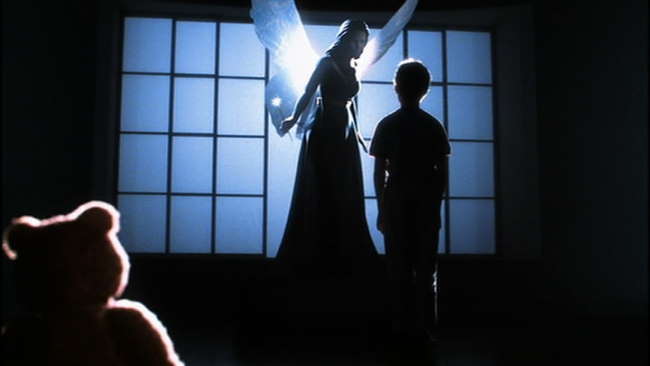
I'M DUELLING A TRUCK!


Have you ever wanted to see Christine played by an 18-wheeler? No? Well, it's funny how big directors get started because it just so happens that such a film was made in 1971 by none other than Steven Spielberg. Yes, this is the same Steven Spielberg who later went on to make classics such as Jaws and Saving Private Ryan. Originally released as a television movie, Duel proved to be so popular that Universal Studios decided to give it a theatrical release. In this process, they unwittingly launched Spielberg's career and opened the door for him to make a variety of very different films from this one.

David Mann (Dennis Weaver) is an ordinary person going about a normal day. He is driving out to meet a colleague when he finds himself blocked by an old truck carrying ammonia. Out of frustration, he passes the truck, only to find himself being passed again. Initially, Mann dismisses this frustrating but seemingly brief encounter. That is until he begins to see the truck reappear everywhere he goes. After some time, it starts to become clear that the driver (who is never seen) has apparently developed a grudge against Mann, and will stop at nothing to kill him. Mann now realizes he is locked in a motorized duel, as he desperately tries to evade his attacker while the driver pulls every trick to mess with him and drive him off the road. To make matters worse, nobody believes him, and his attempts to find assistance only endanger the bystanders he comes across. So basically, it's like a feature-length version of the biplane sequence from North by Northwest.

Funnily enough, this one is actually better than you would expect from a film with this kind of premise. The narrative is fast-paced and straight forward, and while there might not be much to the central character he does manage to carry the audience through. It is definitely a simplistic film. Outside of the people he occasionally runs into, Mann is pretty much the only character of significance, and a lot of the action is focused purely on the chase. Even the film's treatment of Mann himself, rather than detailing his personal life beyond a brief telephone conversation, is primarily about his emotions and his reactions to the unusual situation he has found himself caught in.

The decision to hide the truck driver is also an interesting touch. We never get a clear glimpse of his (or her?) face. All we see is a pair of boots that indicate little about the driver's appearance. Aside from eliminating the emotional repercussions of killing the driver at the end, it does have the effect of making this person a lot more intimidating. We never know quite what is going through their head, or why they have become so determined to kill this one man. As a result, the truck itself becomes a character in its own right. This creates an interesting dynamic of man vs. machine that continues throughout the film.


Spielberg's Duel makes for an interesting experience, especially for one who is familiar with his later work. Compared to the types of films he is known for, Duel is a strange experience. Like many directors' early work, it does not easily show the trademarks that they would develop later in their career. Even disregarding the later films, Duel still remains an adrenaline-packed thriller that creates constant tension and suspense, even if it can be described as simply as "Christine meets the cropduster scene from North by Northwest." It's an unusual movie, but still an interesting one to see if only for a glimpse into Spielberg's early career. 

Monday, 14 July 2014

Against the Crowd Blogathon: Is Kingdom of the Crystal Skull Really that Bad?


So it's a bit late to participate in Wendell Ottley's Against the Crowd Blogathon but I've only contributed half of what he asked for. I did a long-winded rant about John Carpenter's Halloween, but I also needed to find a movie everybody else hated that I actually liked. I could certainly find a few just by browsing John Carpenter's filmography. Even if they had their flaws I personally enjoyed Escape From L.A. and Ghosts of Mars and I even found thought The Ward had some good scares. Still, I wanted to find something a bit different.

I recall I was just getting back into the Indiana Jones franchise when I heard the news of a fourth movie in production. LEGO was producing sets based off the films and I had started to watch the original trilogy for the first time in years and quickly got hooked. There was a lot of hype for the plans to make a fourth Indiana Jones movie but like The Phantom Menace and Prometheus it received a whole bunch of negative backlash upon release. The strange thing is I actually kinda liked it, and I don't think a lot of the negative criticism is entirely fair.


First off, it was definitely a smart move to change the time period. I mean even if Harrison Ford agreed to dye his hair brown I don't think there would be any way they could make him look exactly like he did 33 years ago, so updating the setting to reflect the actor's aging makes perfect sense. Furthermore, the original trilogy was based on 1930's adventure serials. Kingdom of the Crystal Skull updated the time-frame to the 1950's, by which point those had gone out of style and been replaced by science fiction serials, so it's not too great a stretch to look at those for inspiration instead.

This gives me the perfect opportunity to address one of the biggest complaints about this film: the aliens. A lot of people have criticized the film for featuring aliens for various reasons. The biggest one is that supposedly it conflicts with the previous installments, specifically because of the presence of the Ark of the Covenant in Raiders of the Lost Ark which implies the Judeo-Christian God exists in this universe. 


The part that they overlook is that three different religions are "validated" in the original trilogy: Raiders of the Lost Ark draws from Judaism, The Temple of Doom draws from Hinduism, and The Last Crusade draws from Christianity. The films have never been fully consistent about what (if any) religious figures exist in this universe, so really there's no reason aliens couldn't be present either. You could also make the case that the "religious" artifacts featured in the previous films were also the products of these aliens and they're just sufficiently advanced as appear "magic" and inspire various religions.

I will also go ahead and address the other big criticism, which is the infamous "nuclear fridge" sequence. It is a bit of a strange choice on the part of Spielberg and Lucas but a lot of people insist that this scene is too unbelievable to be taken seriously. While I can see where they are coming from, I feel it is worth pointing out that the previous films weren't exactly grounded in reality.


Raiders of the Lost Ark had Indy getting dragged along a road by a fast-moving truck and still being able to beat up a bunch of armed men with only a few bruises to show for it. The Temple of Doom has an equally unrealistic scene where Indy his companions escape from a plane by jumping out in a life raft while at a high altitude (the Mythbusters even tested this and proved it to be impossible; it could be done with an escape slide but that's not what was used in the movie). 


That same movie also featured a man ripping out a prisoner's still-beating heart with his bare hands. The Last Crusade had Indy stop a pursuing Nazi by jamming a flagpole into the wheel of his motorcycle causing it to flip into the air (also tested and proved impossible by the Mythbusters). While it's still a strange idea, by Indy's standards the fridge scene really isn't that far-fetched.

A lot of people also complained about Indy having a son, but I didn't think Shia LaBeouf was that bad in the role. (Yes, I'm defending one of his movies. You can start pelting me with rotten fruit now) The idea of giving Indy a son was actually an interesting choice, especially given the last film was about Indy's relationship to his father. 

That's actually another thing, a lot of people have criticized the choice to kill off Henry Jones Sr. because it supposedly conflicts with the events of The Last Crusade, even though it was addressed in that movie. While the Holy Grail has healing powers (even healing what might otherwise have been a lethal gunshot wound), the only way to get eternal life from it would require you to remain in its presence (as that knight had done), which means staying in those ruins because the grail isn't allowed leave.

Now one choice that I think was a very good one was the decision to bring back Marion Ravenwood, Indy's original love interest, instead of trying to find him a new one like The Temple of Doom and The Last Crusade did. Marion was probably the best of the various love interests. She had the right balance of qualities. Willie Scott was too much of a damsel in distress, always screaming and finding ways to cause lots of trouble (even Indy got fed up with her at times). Elsa being a femme fatale was an interesting turn but Marion was the most complex. She was strong and certainly capable of being tough but also had her limits, and that made her the best fit for Indy. 


Now, is Kingdom of the Crystal Skull as good as Raiders of the Lost Ark? I don't know if I'd go that far, but I personally think it's a fun little adventure movie that really doesn't deserve a lot of the backlash it's gotten since its release. It's got some great action, takes the franchise in a few interesting new directions, and even addresses some of the issues of the previous installments.

Saturday, 3 May 2014

The Three Science Fiction Classics of 1982


In 1982 Steven Spielberg won over thousands of viewers with the release of his iconic science fiction movie E.T.: The Extra-Terrestrial. This family film about the friendship between a young boy and an alien accidentally stranded on Earth made a huge impact on the science fiction genre, with a balance of comedy and drama, solid relationships, and some impressive special effects. At the time, Spielberg was at the top of his game, but his success was not without a price.


What many people forget is that Spielberg wasn't the only one making a science fiction film at the time. Two other newly-established directors were also creating their own. One was Ridley Scott, who had established himself with 1979's Alien and was now working on an adaptation of the Philip K. Dick novel Do Androids Dream of Electric Sheep which would be released under the title of Blade Runner. At the same time, John Carpenter, riding the success of Halloween was working on his latest project, an adaptation of John W. Campbell's novella Who Goes There? which would become arguably one of his best horror films: The Thing.

Both these films were huge flops at the box office. They were critically panned and it was not until years later that they finally started to get the recognition they deserve. Why? There's plenty of reasons but one that frequently comes up is the success of E.T.: The Extraterrestrial. Audiences were so in awe of the family fun of E.T. that they didn't seem to care much for the much bleaker atmosphere of the other two movies.


I do find this interesting because having finally watched E.T. for the first time in years, I would say that Blade Runner and The Thing may have actually been better films. E.T. is an enjoyable movie but when you get down to it there are a lot of story problems and plot holes. For one thing, as solid as the relationship between the kids and E.T. was, I personally felt a lot of the cast was underdeveloped. There were those three characters who liked to bully Elliot and then suddenly they decide to help him during the climax with no clear motivation. They also don't really do a whole lot to help outside of following Elliot on bicycles.

There was also that strange man with the keys. Throughout the first three quarters of the film we never see his face. He is kept mysterious and the only indication of his identity is a distinct set of keys on his belt that tend to make a jingly noise whenever he walks. There is this certain intimidating vibe to the character, but we have no idea who he is, almost as if they're building up to a twist. So then we come to the big reveal and the man with the keys turns out to be... some guy who wears keys on his belt. Seriously, he doesn't even get a name, and suddenly he's treated as being somewhat sympathetic despite being played as frightening for most of the film.


The mother could also have been a more interesting character if she had found out about the alien sooner. Elliot had no problem introducing E.T. to his siblings, why not also his mother? Sure, it would have been a shock but her gradual warming up to his presence could have been an emotional touch instead of getting cheap laughs out of her failing to notice when they're both in the same room.

The stories of the other two movies are far more complex and I'd say far more interesting. The alien is hostile in The Thing, but what makes that film so interesting is how it affects the characters themselves. They have to deal with the paranoia that comes from relying entirely on themselves since the alien could be anyone. With E.T. you have a relationship forming between the kid and the alien, but with The Thing you have the alien tearing apart the already strenuous relationships between the protagonists.


Meanwhile, Blade Runner has a bit more depth and an intriguing atmosphere. With E.T. you don't get a whole lot of depth to the characters outside of a basic dynamic between each. Blade Runner lets you dive into the minds of Rick, Rachel, and the other characters. It raises philosophical questions about the nature of humanity, none of which have a solid answer. The character of Roy Batty himself is a very psychologically-driven villain, and we get to see into his mind as to why he acts the way he does, certainly a more complex character than the guy with the keys.

The relationship between Rick and Rachel may well be stronger than the bond between Elliot and E.T. ever will be. With Elliot and E.T. you just have two friends from unlikely sources, whereas Blade Runner deals more with the social and ethical consequences of the relationship. Rick is a man trained to kill replicants, and yet he falls in love with one who doesn't even know her true identity.


So why did E.T.: The Extraterrestrial become such a hit while two better films were left in its wake and only gained their deserved recognition later on? Well, at the time the concept was revolutionary. Spielberg had previously explore the themes of benevolent alien visitors in Close Encounters of the Third Kind (parallels to which are pretty clear in E.T.), but the idea of a children's movie, and in particular a child's friendship with an alien was pretty unusual. We do see that sort of dynamic in The Day the Earth Stood Still but there the alien had a goal. It was treated as a superior being intentionally visiting Earth with a plan, as opposed to an innocent alien who gets left behind by accident.

It is interesting to compare these three movies. All three of them came out in the same year of 1982, and yet they are all so different. E.T. became a huge box office success and won four Oscars, while leaving The Thing and Blade Runner, both far superior films in terms of atmosphere and story, to fail horrendously.