Pageviews from the past week

Showing posts with label Mel Brooks. Show all posts

Sunday, 22 June 2014

1967 in Film Blogathon: The Producers


Mel Brooks is a great comedic genius, but like most directors his first major hit was quite a bit different from what he would become known for in later years. Nowadays Brooks is probably known for his parodies, usually involving a deliberately over-the-top narrative filled to the brim with fourth wall breaks and pop culture references. However, looking back at his first film, The Producers, gives us something quite a bit different, although it did include future collaborator Gene Wilder. There seems to be some dispute over whether this film came out in 1967 or 1968, but since IMDB lists the former year I'm going to assume that this is a valid choice for The Rosebud Cinema's 1967 in Film Blogathon.

Zero Mostell plays the role of Max, a wealthy but struggling theater producer who hasn't had a good break for some time. Enter Gene Wilder as Leo Bloom, an accountant sent to manage Max's books. Within moments of looking through said books, Leo notices a serious case of fraud that could incriminate Max, and then figures out a convoluted plan by which more money could be made from a flop than a box office success. Max is overjoyed by the idea and, after convincing Bloom that his honesty isn't getting him anywhere, enlists his help in putting together the worst play of all time, finding it in the form of a script written by a psycho former Nazi called Springtime For Hitler.


Naturally this inevitably leads to a whole bunch of encounters with weird characters, including the incompetent cross-dressing director of the play; the writer who makes no effort to conceal his Nazi affiliation in public (to the point where he wears a German helmet in front of countless witnesses and openly talks about how kind a man he thought Hitler was); Max's decision to reward his hard work with "a toy" in the form of a super attractive gibberish-speaking receptionist who understands "go to work" as stripping off her clothes and dancing to rock and roll music; the terrible actor nicknamed "LSD" who accidentally gets cast in the role of Hitler after walking into the wrong audition; and many others. Hilarity ensues as the two leads enlist all these people as part of their scheme all the while trying to keep up the illusion that they think the play is a grand masterpiece.


It is hard to compare this to Brooks' later films in just how different it is. You can see early traces of Brooks' sense of humor and the chances he is willing to take. After all, right here he was hardly above making jokes about the Nazis, and would later on revisit that territory in even greater depth (going as far as to even make fun of the Holocaust itself) with his later film To Be Or Not To Be (which even had a music video that clearly drew from Springtime For Hitler, even drawing at least one line directly from The Producers). There are a few small instances of Zero Mostell addressing the camera as well; Brooks would absolutely demolish the fourth wall in Blazing SaddlesHigh AnxietySpaceballs, and Robin Hood: Men in Tights, among other films, so this early foreshadowing is an interesting touch.

But what of the film itself. Well, it is a lot of fun. Gene Wilder and Zero Mostel play off of each other nicely. Mostell is obviously a scoundrel who does a lot of ethically questionable things but at the same time he is given some depth and in fact is full of redeeming qualities that you might not realize up until the very end. Gene Wilder is the nervous wreck who becomes Mostel's partner in crime, going from a boring office job to what he hopes to be something more exciting. On some level he also serves as the voice of reason to Mostel's craziness. The rest of the cast is of course creative and distinct enough that even if they don't have much screen time they make their scenes memorable enough.

If you prefer the more zany nature of Brooks' later films, you probably won't be as big on this one, and it does take some time to get to the really funny parts, but if you want a creative and well-thought out comedy or you just want to see how a great comedian got his start, this is quite a bit of fun and definitely worth it's hour and half running time.


Tuesday, 22 April 2014

Movies About Making Movies


It is easy to forget how much can go into the process of making a movie. Typically, the cast and crew are fairly large, you have to assemble sets, keep people organized, acquire costumes, deal with any problems experienced by the cast or crew, and figure out how to solve that one frustrating obstacle that you never saw coming.

I say this from experience, just making a movie with just five actors and myself doing the camerawork in highschool was difficult enough, with the cast constantly failing to show up no matter how clearly I told them when we were working, to problems with the costumes, the one guy who brought in all this great stuff but couldn't keep it as school and kept forgetting to bring it in when I actually needed it, the guy who caused so much trouble on set he was "fired" and later actively tried to sabotage the production to the point where it took the presence of the Vice Principal to keep him off the set.

Long story short, a five-minute short film that was supposed to be shot in a week ended up taking something closer to two or three months. This was in high school, with a budget of $0.00, a very small cast, and no other crew besides myself. Now imagine having to manage a dozen crew members with different jobs, plus the actors who all have their personal lives as well combined with any number of problems that occur on set that cause shooting a crucial scene to get delayed. Naturally, when one of my film studies classes started with Living in Oblivion, I didn't have too much trouble sympathizing with Steve Buscemi's role of the hapless director.


Indeed, there is something interesting to be found in this area. Movies are great to watch, but it is interesting once in a while to see a well-executed movie that draws attention to the process of... well... making a movie which in itself can be a good set-up for comedy or drama. Living in Oblivion is probably one of the most straight forward examples. I have also discussed the more surreal approaches explored with David Lynch's Inland Empire and Federico Fellini's  (dang it, why did Fellini give his movies titles that were really annoying to type?). Lynch's thriller Mulholland Dr. does not actually center around the production of a specific movie, but it does use the Hollywood filmmaking scene as a backdrop and certainly has plenty of scenes taking place on film sets.


It is curious to see how many different films approach this topic. Living in Oblivion deals with the subject of filmmaking head-on with a decent balance of comedy and drama. Compare that to a more obviously comedic approach, such as an underrated masterpiece by Mel Brooks. Before there was Epic Movie, Scary Movie, and Disaster Movie, there was the great cinematic genius that was... Silent Movie.


In Silent Movie, Mel Brooks takes on a more over-the-top slapstick adventure presented entirely as a silent movie (with only one word of spoken dialogue from a very unlikely source). In this film, Brooks himself takes on the role of a washed-up director who tries to save "Big Picture Studios" from being bought out by the evil conglomerate known as "Engulf and Devour" with his latest project... a silent movie.

Brooks' film centers entirely around the production of this movie (which is made all the more hilarious by the fact that we find out absolutely nothing about the film itself beyond the fact that its a silent movie and apparently a really good one), but instead opts to focus on a slightly different aspect from many such films. Living in Oblivion, Inland Empire, and all deal with movies during their production phase (the phase in which you actually get out the cameras and start shooting it). Silent Movie opts for something slightly different by focusing more on pre-production (basically the phase in which you have to get everything ready before you can start shooting).

In particular, we do get a really bizarre look at two particular aspects of pre-production: money and casting. The "Studio Chief" played by Sid Ceasar is initially skeptical of a silent movie saving his studio, claiming that "slapstick is DEAD!" (though he is proven wrong within seconds of saying that when he falls backward in his chair, slides through his desk, and crashes into the wall for no apparent reason). As funny as it is, one of the first steps to making a movie is simply getting money by convincing an executive you've got something that will sell, which Mel Brooks eventually does by offering to try and get the biggest names in Hollywood to sign on. Much of the rest of the movie centers around the comedic antics Brooks and his partners inevitably get up to when they try to approach various movie stars.

Want a surefire way to get an Oscar-winning actress to star in your movie? Dress up in suits of armor and then approach her in a public cafeteria. What could possibly go wrong?


Meanwhile, Mulholland Dr. focuses less on the production of a specific movie and more on the idea of breaking into the business. We see this in the character of Betty, an aspiring and extremely idealistic actress trying to make her big break. We even get some scenes of her auditioning, and in the final act, we see her alternate persona  of "Diane" (I've discussed the relationship between both in a previous article) recounting how she met Camilla because they were both auditioning for a part. The problem of course, is that Camilla may have been using some questionable methods of getting to the top (namely having sex with the director), while Diane is trying to do so more honestly and is having much more trouble, something I realized after corresponding with some fellow fans of the movie on the IMDB boards with regards to my previous discussion of its meaning.


That said, even the ones that deal with production can go in very different directions. As I've discussed previously, Inland Empire and both depict in a surreal manner the psychological experiences of an individual's struggle to make a film, but one deals with a director taking on what is implied to be an extremely ambitious project, and the other centers on the stress experienced by an actress trying to cope with a demanding role. 

In addition to all that, we can occasionally get movies that focus on post-production (the final phase of making a movie, where the footage recorded in the production phase is edited), a good example being Singin' in the Rain. Technically this movie touches on both production and post-production, seeing as it deals with the struggles faced by studios during the transition from the end of the silent era into the first "talking pictures". However, a lot of the movie centers around the editing phase as well, when the studio decides to save their latest disaster by re-editing it into a musical, which is interesting given the movie itself is played as a musical. 
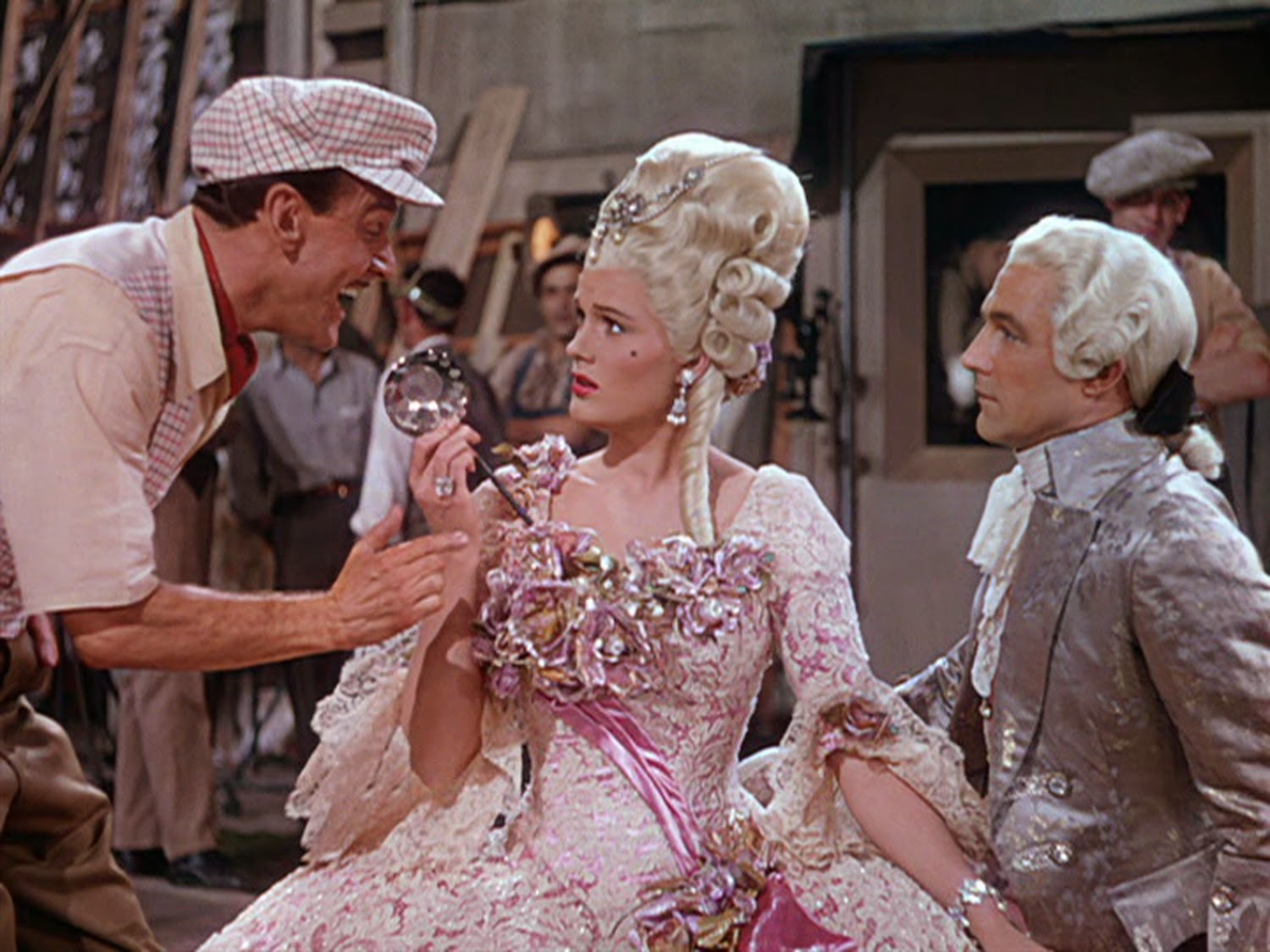


There are many different approaches one can take when emphasizing the filmmaking process. In this article alone I have discussed only one film that addresses the issue straight on, with three others that provide a more surreal approach, one that provides a comedic slapstick take on Hollywood, and another structured as a musical comedy. There are tons of others that all deal with this idea in their own unique way.

Monday, 17 February 2014

Why I Love Westerns


I've been saying a lot of negative things lately and doing a few hateful reviews, so I decided for this one to do something a bit more positive and look at something I like. As you may have already figured out I'm quite fond of the science fiction genre, but I've decided here to look at another area in which I have a certain appreciation for. That area is the Western.

It's hard to say just what it is about the Western that I enjoy. It's a genre that can be simultaneously formulaic and unpredictable. Usually you have some idea what you're getting into. You know there's probably going to be a showdown of some sort, though you can't be sure if it's going to be a one-on-one shootout between the hero and the villain (as in For a Few Dollars More, Once Upon a Time in the West, The Outlaw Josey Wales, Blazing Saddles, and Sam Raimi's The Quick and the Dead), a three-way Mexican stand-off (the famous climax of The Good, the Bad, and the Ugly, helped by the incredible music of Ennio Morricone), a survival course past numerous outlaws in order to get to the station before your train arrives (both versions of 3:10 to Yuma) a tense fight that goes on to include most if not all of the main cast (the shootout near the end of Rio Bravo), our heroes are going to be hopelessly outgunned but go out in a blaze of glory (Butch Cassidy and the Sundance Kid) or they're going to subvert your expeditions and skip any kind of showdown all together (as in No Country for Old Men and Red River, although both by very different means).

One of the most memorable showdowns in any Western.

Despite being a very formulaic genre, the Western does also seem to lend itself to a variety of memorable and lovable characters. From Clint Eastwood's "Man With No Name" to John Wayne as Chance in Rio Bravo to Bart in Blazing Saddles and his best friend Jim (most people call him... Jim) to the mysterious heroine of Raimi's The Quick and the Dead, not to mention Rooster Cogburn and Mattie Ross in both versions of True Grit.

How could we discuss Westerns without bringing up Clint Eastwood's "Man With No Name"?

John Wayne in Red River memorably shifts back and forth between hero, anti-hero, and villain.

The Dude in an eye patch. What's not to love?

It's not just the heroes either. For every good Western you need not just a great hero but also a great villain to stand in their way. There's plenty of those to go around: Lee Van Cleef as Angel Eyes in The Good, the Bad, and the Ugly, Henry Fonda as Frank in Once Upon a Time in the West (a role cast specifically to surprise audiences expecting him to play the hero), Harvey Korman as Hedy Hedley Lamarr in Blazing Saddles, and John Wayne as Tom Dunson in Red River.

The interactions between Hedley Lamarr and his right hand man Taggart are a source of comedic gold in Blazing Saddles.


I can't understand a word this guy says, but dang it his rousing speech in Authentic Frontier Gibberish is just so inspiring.

Then of course we've often got the impressive landscapes to enjoy. They vary between movies but usually in a Western you can expect to see plenty of desert, which allows for some excellent scenery. 

The very first shot of The Good, the Bad, and the Ugly we get an impressive landscape shot only for some outlaw to shove his ugly mug in front of the camera.

Even a modern Western like No Country For Old Men can't avoid the incredible desert landscapes.

Perhaps the interesting thing about Westerns is the fact that they play a significant role in film history. After all, one of the most significant early motion pictures was Edwin S. Porter's The Great Train Robbery. Contrary to popular belief, this was not the first motion picture to tell a story (that area had already been explored by Georges Méliès, most famously in A Trip to the Moon a year earlier). However, it was significant in being one of the first to explore then-revolutionary editing techniques such as crosscutting.

This scene might not look like much now, but when audiences first saw it 1903 they thought they were actually about to get shot.

Of course naturally it should hardly be a surprise that some of the biggest directors have made Westerns at some point. John Ford's name became synonymous with the Western, Howard Hawks is know to have done at least two great ones (Red River and Rio Bravo). Even one of my all-time favorite directors, Sergio Leone made a career primarily of making Spaghetti Westerns. In the present day we have people like The Coen Brothers (most memorably No Country for Old Men and True Grit, with some Western influence clearly present in The Big Lebowski). Another of my favorite directors, John Carpenter, even made his 1998 film Vampires because the script seemed to resemble a Western and you can certainly see that in the film's frequent use of desert landscapes and ghost towns.